2026 Diplomas – Master Type Design

Published
June 24, 2026

Discover the diploma projects from the Master Type Design.


Projects

Ruslan Abbas – Sekular

TYPE DESIGN

Ruslan Abbas – Sekular

by Ruslan Abbas

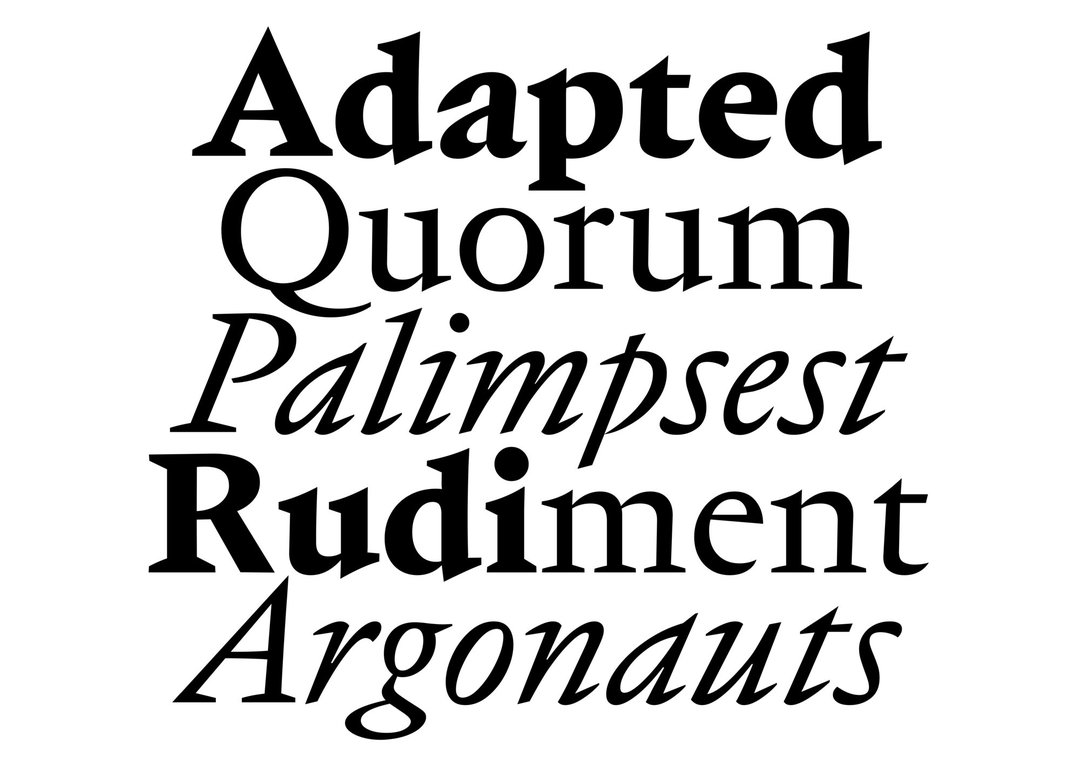
Sekular is a variable display typeface rooted in Gothic Cursive, the late-medieval script of merchants, notaries, accountants, and chancelleries. Rather than treating it as a historical revival, the project reactivates its logic for the present: an age of billionaires, platforms, rent extraction, and techno-feudal infrastructures. Developed through drawing, interpolation, typographic research, and newspaper-specimen design, Sekular connects a script born from the weakening of feudal literacy monopolies to today's new forms of economic enclosure. It is not a revival, but a reflection on power, writing, and transition.

Kriszta Bolcsik – TYPE BETWEEN RESOLUTIONS

TYPE DESIGN

Kriszta Bolcsik – TYPE BETWEEN RESOLUTIONS

by Kriszta Bolcsik

The visual language of 9-pin dot matrix printing is not obsolete but unresolved. TYPE BETWEEN RESOLUTIONS emerges from its mechanical output logic, focusing on the structure and behaviour of draft (SSL) printing. This project explores how these low-resolution, mechanically produced forms can inform contemporary type design. It combines historical research with practical experimentation, including the development of custom tools to generate and print glyphs. Through this process, TYPE BETWEEN RESOLUTIONS investigates questions of legibility, rhythm, and system-based construction, aiming to produce a typeface that translates the constraints of obsolete technologies into a contemporary typographic language.

Orlando Brunner – Kadenz Grotesk

TYPE DESIGN

Orlando Brunner – Kadenz Grotesk

by Orlando Brunner

Kadenz Grotesk explores the aspect of rhythm and how this influences how a typeface is perceived once set in text. Based on research conducted to follow-up on the written thesis, this project examines various interpretations of typographic rhythm and compares them to understand their impact on the appearance of text and on font design choices. Using the grotesque style as basis, the results of this research are translated into design practice, ultimately leading to the production of one typeface in four distinct styles: Optical, Metric, Syncope and Mono. Each style reflects a different approach to rhythm, and provides a visual representation of how it affects the appearance of text.

Yannick de Kalbermatten – Verso

TYPE DESIGN

Yannick de Kalbermatten – Verso

by Yannick de Kalbermatten

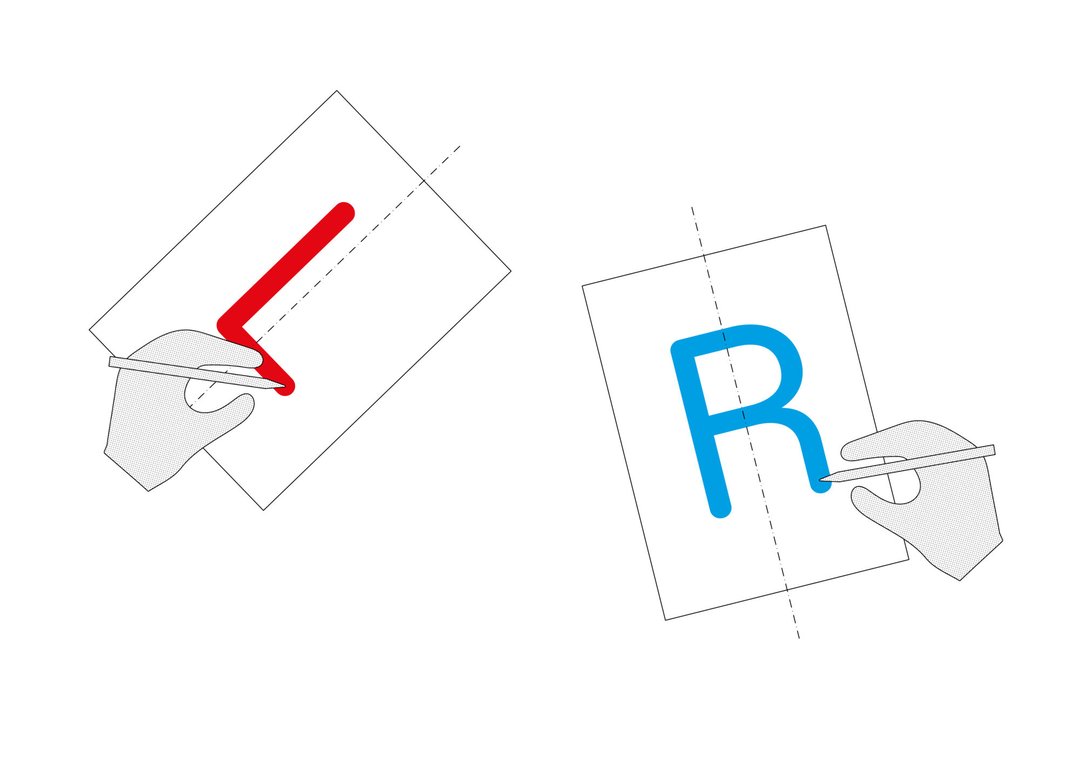
Verso is a typeface family composed of three upright styles: Left, Right, and Ambidextal, and a slanted axis ranging from backslanted to slanted. The project comes from a study of left-handed writing practices and how they adapt to systems designed for right-handed use. This often results in unusual writing positions, with shifts in wrist angle, page rotation, and overall gesture. Informed by a survey of around fifty participants, including twenty-one left-handed writers, Verso highlights recurring strategies such as inverted stroke directions and adjusted writing postures. Rather than opposing left- and right-handed writing, Verso builds a continuous space between them where gesture, direction, and form shift within a single family.

Katarzyna Friedrich – Material Type

TYPE DESIGN

Katarzyna Friedrich – Material Type

by Katarzyna Friedrich

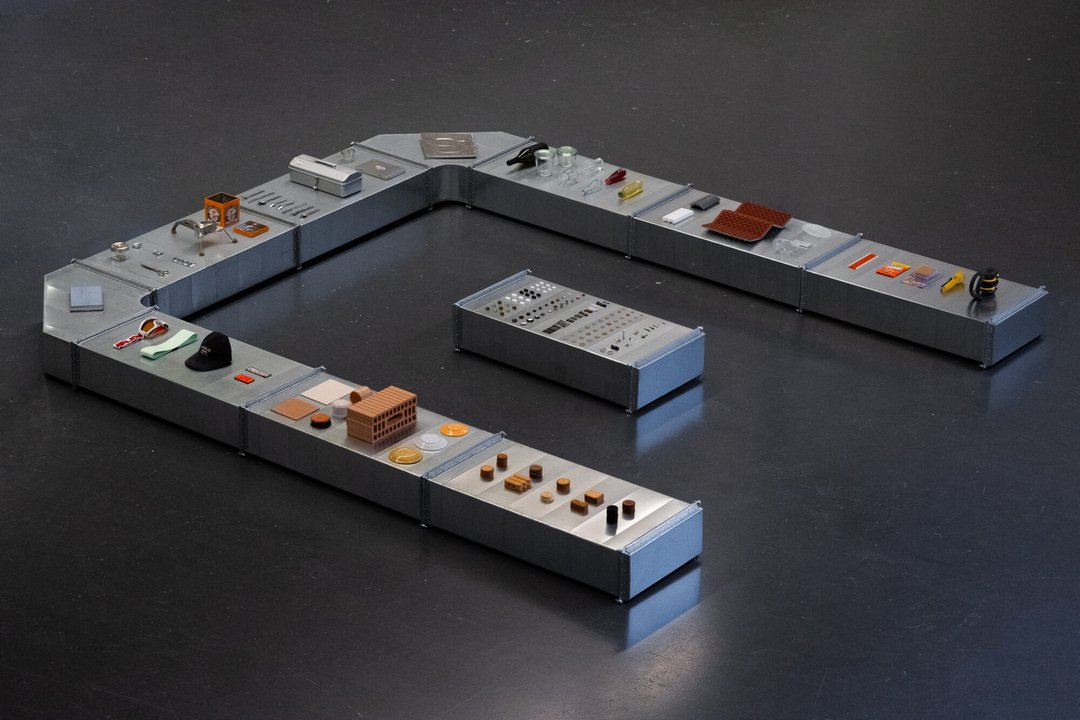
Material Type is a research project at the intersection of multiple design disciplines that investigates the materiality of type. It examines typography across different materials and production technologies, from metal stamping to injection molding. This research analyzes their preparation, constraints, manufacturing processes, environmental factors and visual outcomes, as each process affects letterforms in unique ways. As knowledge in this area is fragmented, Material Type proposes a sample of instructive technological-typographic taxonomy: a comparative guide that supports informed decisions, improves collaboration, reduces prototyping, and encourages more sustainable design practices.

Chantal Hochuli – Campo

TYPE DESIGN

Chantal Hochuli – Campo

by Chantal Hochuli

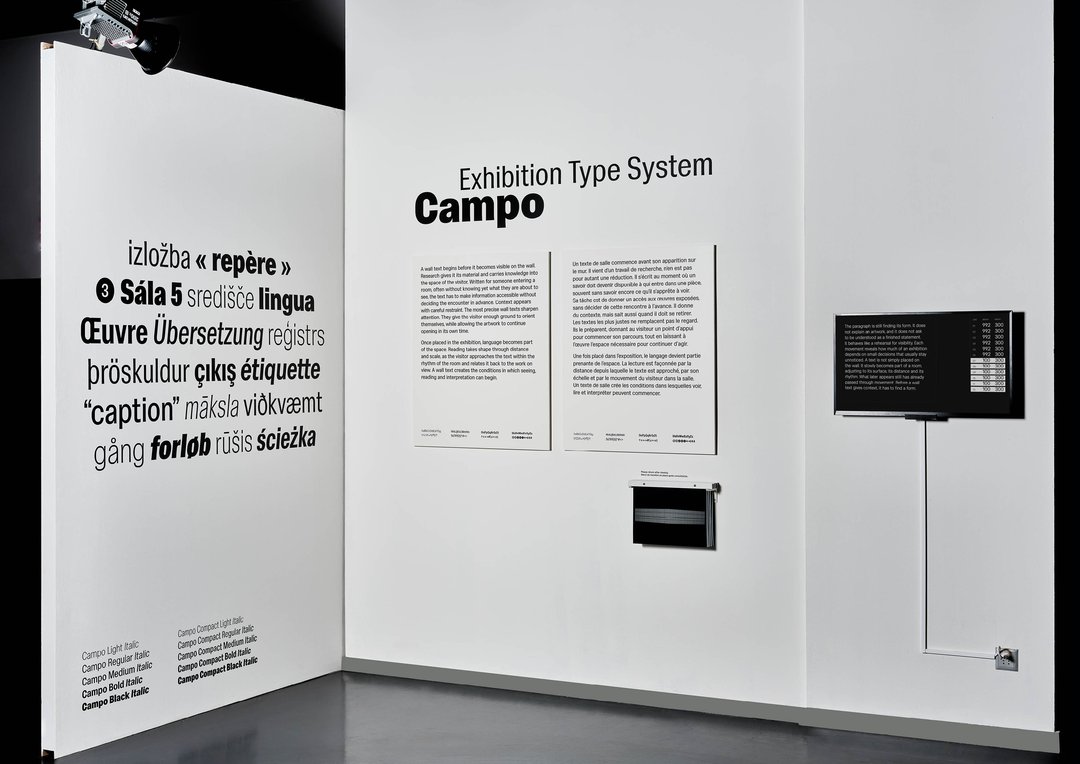
Campo is a variable typeface that is optimized for setting exhibition texts. Developed for wall texts, captions, translations and spatial information, it responds to fixed formats filled with varying amounts of content through a controlled width range. The project addresses a recurring problem in exhibition graphics: finding ways to fit text into limited space without resorting to artificial compression or repeated manual adjustments. Weight and italic axes extend the system for hierarchy. In this research, museum labels and exhibition texts are compared to evaluate how width, spacing and stroke modulation affect text blocks. Campo gathers these observations in a variable Sans Serif with subtly flared terminals.

Lina Kaltenberg – Hypotax

TYPE DESIGN

Lina Kaltenberg – Hypotax

by Lina Kaltenberg

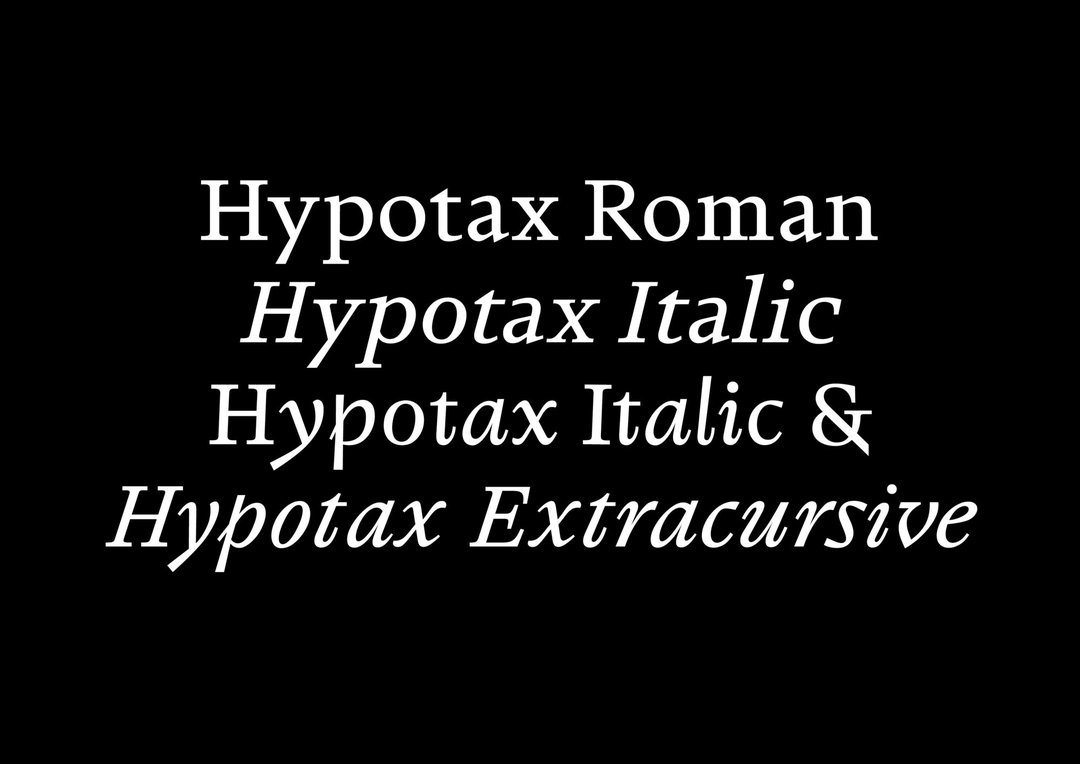
Hypotax is multiitalic type family composed of four textstyles: Roman, Slant, Cursive and Extracursive. The typesystem explores how typography can reveal textual structures before the content is fully read, easing visual comprehension of referenced material. Each style is assigned a specific relational function, such as indicating quotation depth, contextual information, or emphasis. By embedding relational information directly into the typeface, Hypotax proposes an alternative typographic hierarchy that makes textual connections perceptible at a glance.

Jahn Koutrios – Draft – 2026 #2

TYPE DESIGN

Jahn Koutrios – Draft – 2026 #2

by Jahn Koutrios

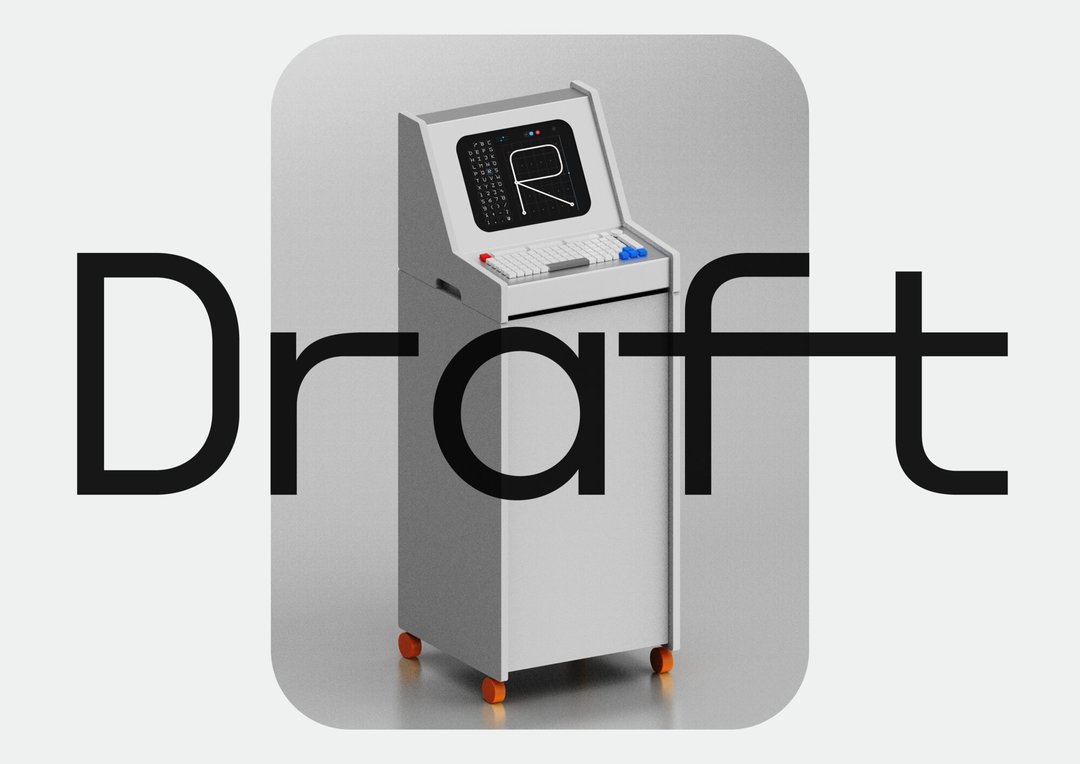
Draft is a typeface, an app, and a method: an infinite plane where thinking can unfold nonlinearly. Ideas can spread out, pause, gather, connect, frame one another, and move as thought changes shape. The typeface carries the rhythm of the app, shifting between a monospaced structure for loose thinking on the grid and a proportional style for slower, more deliberate reflection. App and typeface grow together, exploring note-taking as a spatial practice: a way of working where a line can become text, path, boundary, gesture, or simply shape.

Odin Lowsley – Voyant

TYPE DESIGN

Odin Lowsley – Voyant

by Odin Lowsley

Form born from function, Voyant questions the current modalities of type drawn for various size contexts. Built on a foundation of character identification research, and polished through personal experimentation, its structure is redrawn from scratch for three separate size ranges, each with consideration of their respective contexts. The radically exaggerated shapes — required for recognition in the smallest applications — create a new source from which the design of larger cuts is informed. It produces unexpected moments that strike a balance between brutal simplification and the calligraphic traces of the human hand.

Mara Nolze – Mutual

TYPE DESIGN

Mara Nolze – Mutual

by Mara Nolze

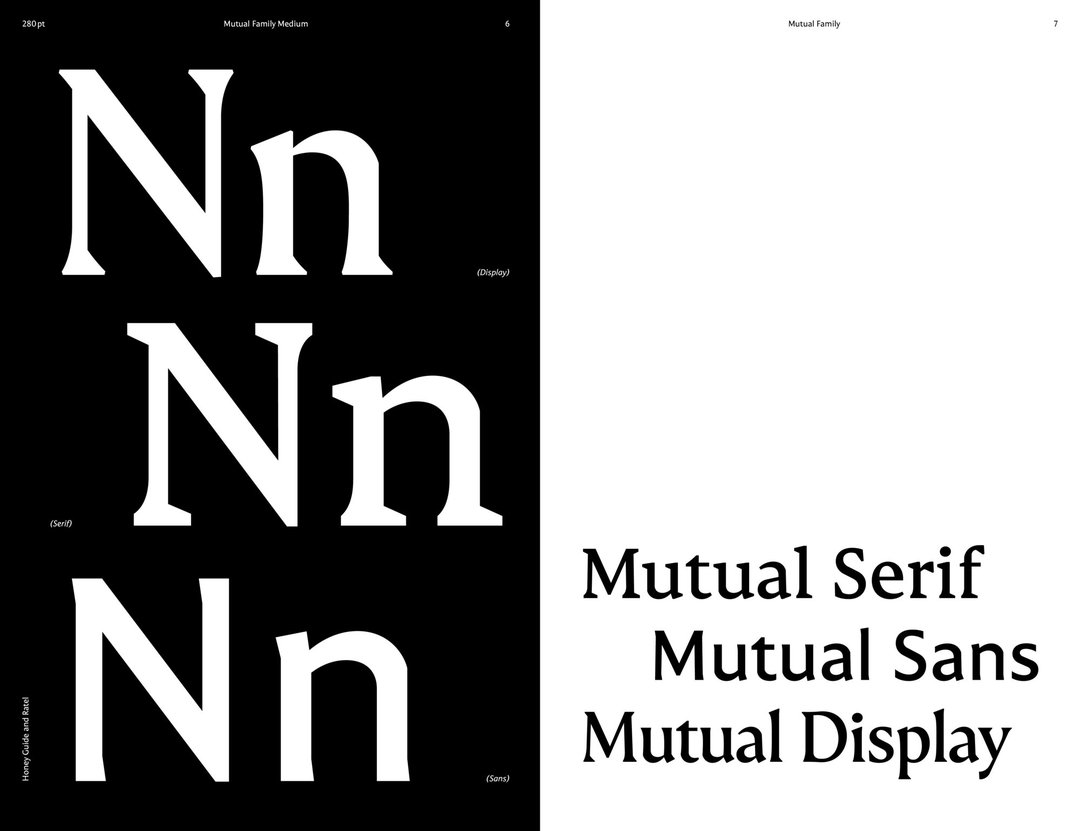
Mutual investigates how seemingly opposing typographic categories — Sans and Serif — can coexist. Its starting point is a French typographic movement from the mid-twentieth century, Graphie Latine. In reaction to the growing dominance of Swiss neo-grotesque typefaces, french designers argued for a renewal of typographic tradition through preserving the presence of the human body within letterforms. Mutual asks how typography can retain traces of human presence and movement without rejecting technological progress. The type family consists of three related styles: Display, Sans, Serif. Conceptually, the project can be understood as a form of mutualism: an interaction between species within a shared living system, from which all sides can benefit through exchange and relation.

Marie Schuster – Pinto

TYPE DESIGN

Marie Schuster – Pinto

by Marie Schuster

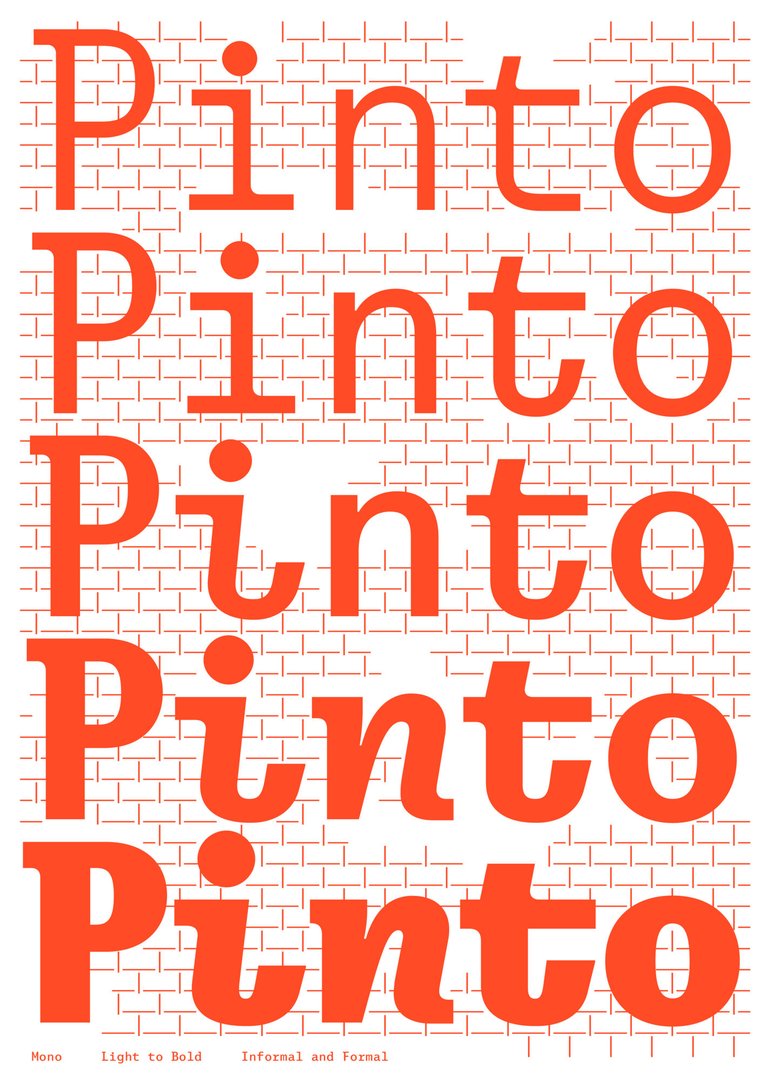
Almost no writing exists outside of technology. Whether we write with a brush, a pencil or a keyboard, our writing is always mediated by tools. Yet we still tend to perceive handwriting as something more personal and more human than typing. A handwritten note often carries emotional weight that a typed message does not, even when the words are identical. Pinto is a monospace typeface that explores the space between the movement of the hand and typographic construction. Taking inspiration from early sketches by W. A. Dwiggins for the Underwood typewriter and handwriting models from the 16th century to the present day, it creates a dialogue between expression and standardisation, keeping a playful character while questioning conventional letter constructions.

Jacob Tegel – Syndikat

TYPE DESIGN

Jacob Tegel – Syndikat

by Jacob Tegel

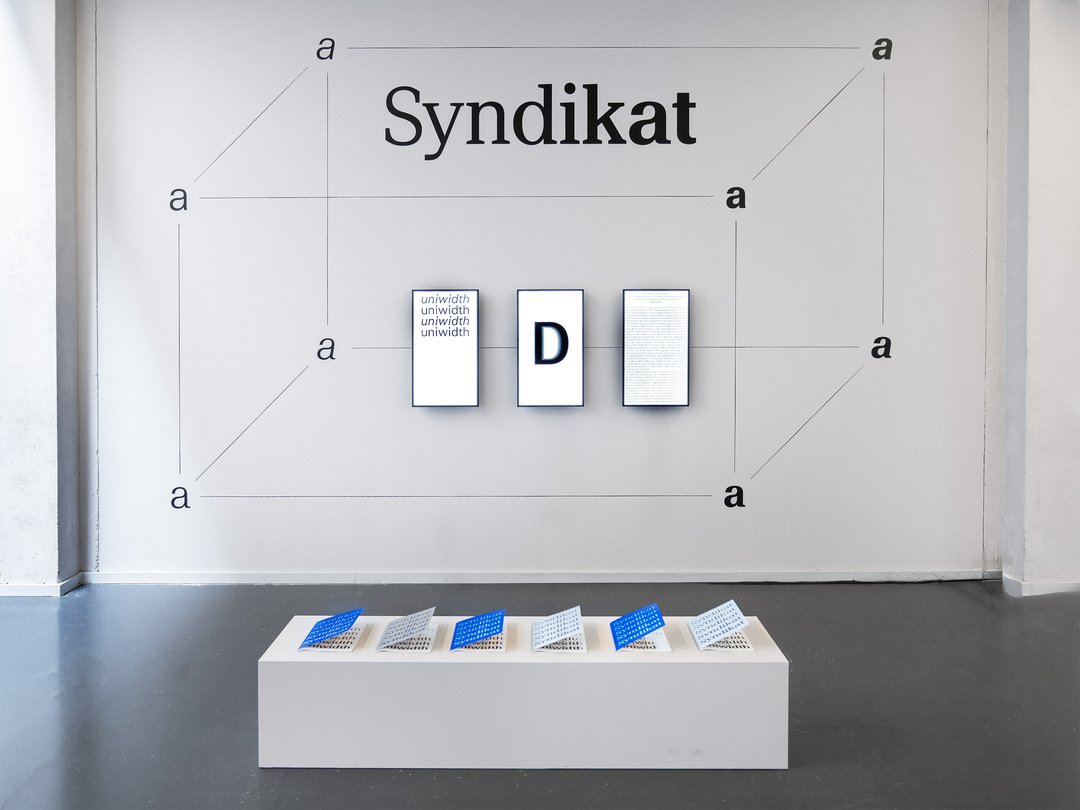
Driven by the pursuit of a uniwidth (duplexed/multiplexed) superfamily, Syndikat builds upon the rich history of mid-century German type design. Designed for reading, the family contains both Sans and Serif styles across five weights with corresponding obliques, unified by identical character widths and font dimensions. This typeface allows for extensive flexibility in complex typographic systems, providing the freedom to interchangably use any of the styles without ever affecting the typesetting.

Mim Pornpiya Tejapaibul – Laisen

TYPE DESIGN

Mim Pornpiya Tejapaibul – Laisen

by Mim Pornpiya Tejapaibul

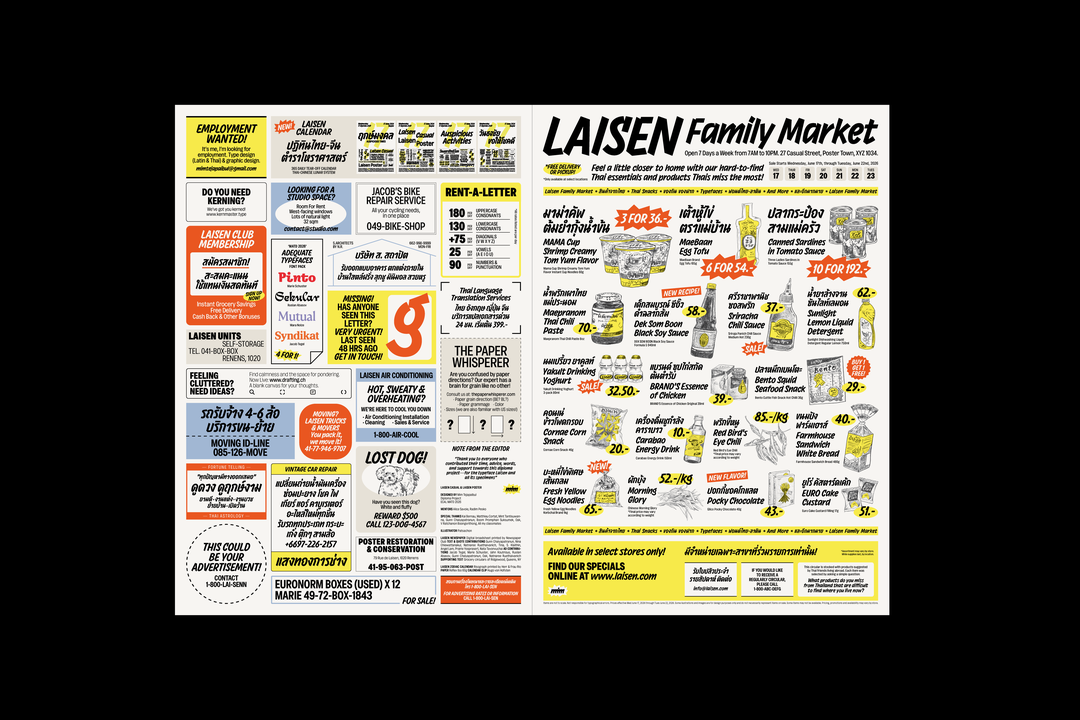
Laisen is a Thai-Latin display typeface inspired by the vernacular signage of Bangkok. It explores the harmony through two complementing styles designed to work independently and together across signage, posters, advertisements, and other display contexts. The Casual style draws from marker signwriting: fast, expressive, and shaped by the human hand, it captures qualities that emerge naturally from writing. The Poster style evolves directly from the Casual into a warm Sans Serif with open counters and narrow proportions, in multiple weights. Individually, the two styles embody contrasting voices – expressive and personal on the one hand, informative and objective on the other. However, Laisen still forms a unified voice expressing the diverse typography found in Bangkok's streetscape.

Unlisted page: accessible only by direct link, hidden from the site and search results.