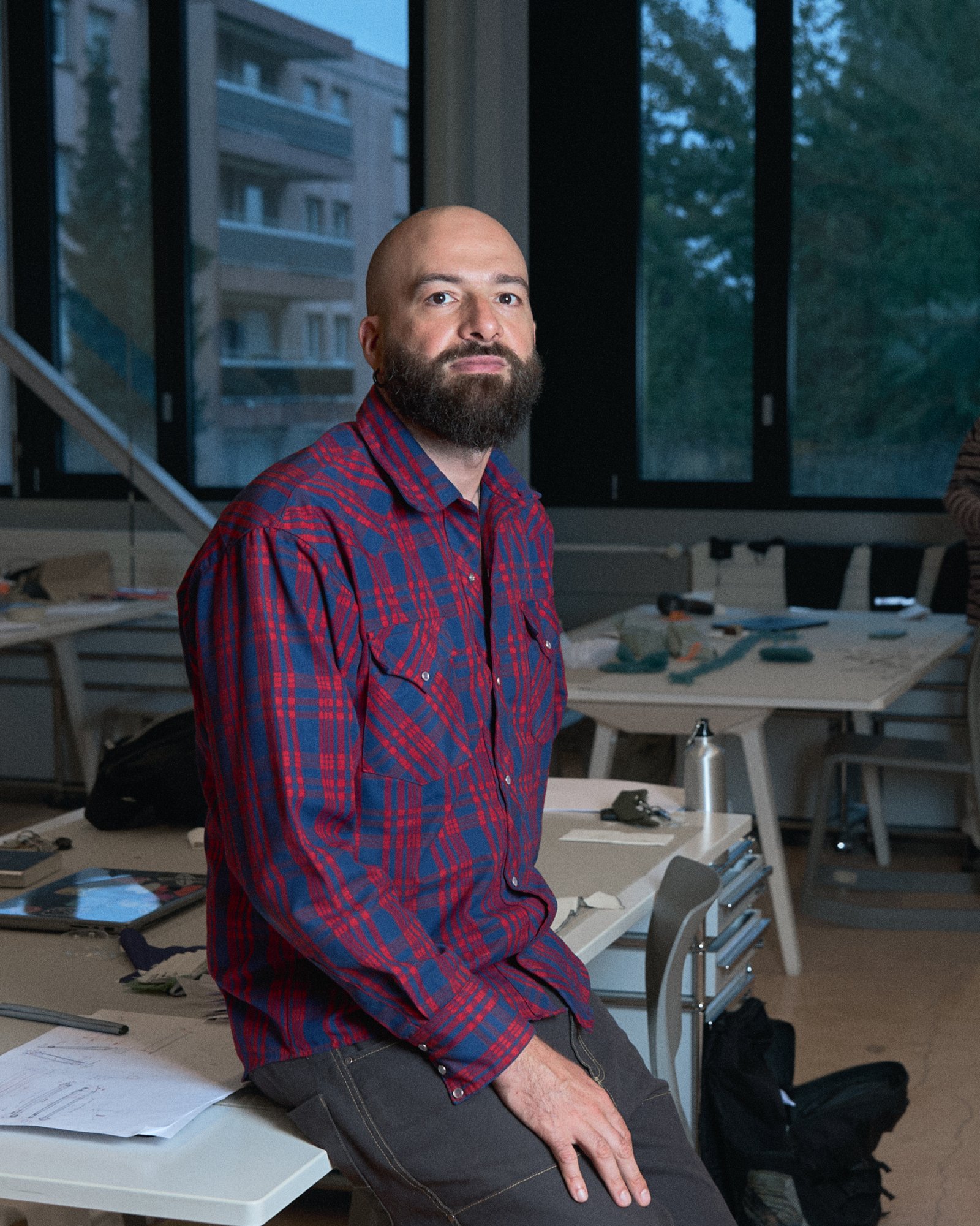
An interview with designer Fabien Cappello, an ECAL resident at La Becque during the fall semester of 2026.
The ECAL Residencies in La Becque, which are part of the partnership between ECAL and La Becque, offer an international guest the opportunity to pursue a personal project in La Becque while teaching at ECAL for one semester.
After graduating from ECAL in 2007, Fabien Cappello has collaborated with numerous international brands and has been running a furniture and product design studio in Mexico for the past decade. Twenty years after earning his degree, these six months at ECAL thus mark a symbolic return. "This residency makes a lot of sense, both personally and professionally, because it offers me a break in a familiar environment, one that has, at the same time, changed significantly."
The French-born designer did indeed complete his studies at the former ECAL campus in Bussigny. "We studied in an industrial building that hadn’t been specifically renovated to house an art school. But that was also interesting because we could do anything. There were lots of small spaces where we could give free rein to our creativity."
This special time will also be an opportunity to reconnect with the academic world. "I’m going to take advantage of the classes I’ll be teaching at ECAL this semester to get a feel for the school’s atmosphere, spend time in the library, and talk with teaching assistants and professors. As for La Becque, I’ll continue working with my team, who have stayed in Mexico. Since I have several clients in Europe, this will make it easier for me to stay in touch with them, especially since we’ll be in the same time zone."
During the fall semester of 2026, Fabien Capello will teach courses to the Bachelor Industrial Design students and lead a workshop with the Master Product Design students. "The project with the Bachelor students is very structured, involving a real client and a specific space where the work will be realized." The project will indeed take shape at the Ouchy-Olympique metro station, commissioned by the Olympic Museum, Lausanne Public Transportation, and the City of Lausanne. The work planned with the Master students, on the other hand, is intended to be more conceptual. "I’m providing them with a production technique called hojalata, which in Mexico refers to the crafting of iron objects such as watering cans, buckets, vases, and all kinds of everyday items found in local markets or city centers. The idea is for the students to design pieces based on this technique, and then for me to have them produced in Mexico."
With nearly twenty years of professional experience since graduating from ECAL, Fabien Cappello has the necessary perspective to offer students valuable advice… And if he had to choose just one piece of advice? "The most important thing is to remember that what we learn in art school, and especially in industrial design, can be applied on a wide range of scales and in many different contexts. We must never get stuck on the preconceived notion, common in the early 2000s, that designers work exclusively for large companies within specific industries. Today, the concept of public space is much more prominent. Twenty years ago, I never would have imagined what my practice would look like today. We cannot predict the future of design. That is why it is essential for students to remain open to the various fields of application for the skills and knowledge they are acquiring."
fabiencappello.com
@fabien.cappello