Shin Young
Park

Projects

The Mind Reader Interface

DIGITAL EXPERIENCE DESIGN

The Mind Reader Interface

with Gaël Hugo, Paul Lëon

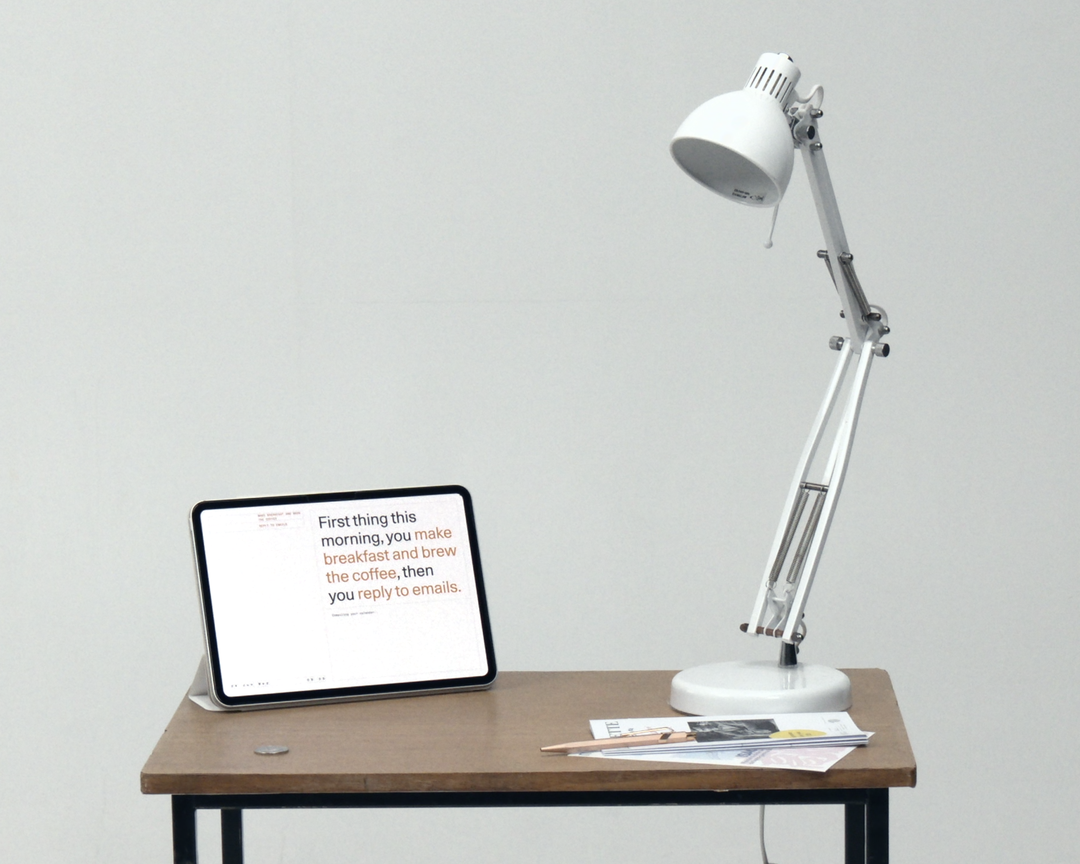
The Mind Reader Interface shifts computing from the reactive to the proactive: from a system that obeys commands to one that anticipates them. Where smart environments cast their users as pilots issuing constant instructions, this project removes the friction of instruction altogether. Intention is no longer declared through a screen or a button. It is inferred. Reading context, habit and the signals of presence, the interface acts before it is asked. It sheds the form of the device to become a Ghost in the Room that senses rather than obeys. The user no longer pilots the space; they inhabit it. The system does not read thoughts, only traces, and stages the distance between anticipation and understanding: what we gain, and what we quietly surrender, when a space begins to act on our behalf.

Ethical, Accessible and Mindful Design

DIGITAL EXPERIENCE DESIGN

Ethical, Accessible and Mindful Design

with Irene Pereyra

Ethical, Accessible & Mindful Design is a one-week module that trains students to examine the ethical dimensions of design decisions. Through practice, students learn to design experiences that are inclusive, transparent, and considerate of their broader social impact. This semester, the module took low-vision accessibility as its central design constraint. Working under the brief Goodbye to All …, students were asked to guide a user through a permanent, irreversible, and non-negotiable farewell. Beyond WCAG compliance, the exercise required sustained attention to contrast across all interface states, legible typography, keyboard-only navigation, focus visibility, and layout integrity at both 100% and 300% zoom, without loss of hierarchy or readability.

RE-STRUCTURE

DIGITAL EXPERIENCE DESIGN

RE-STRUCTURE

with RNDR STUDIO

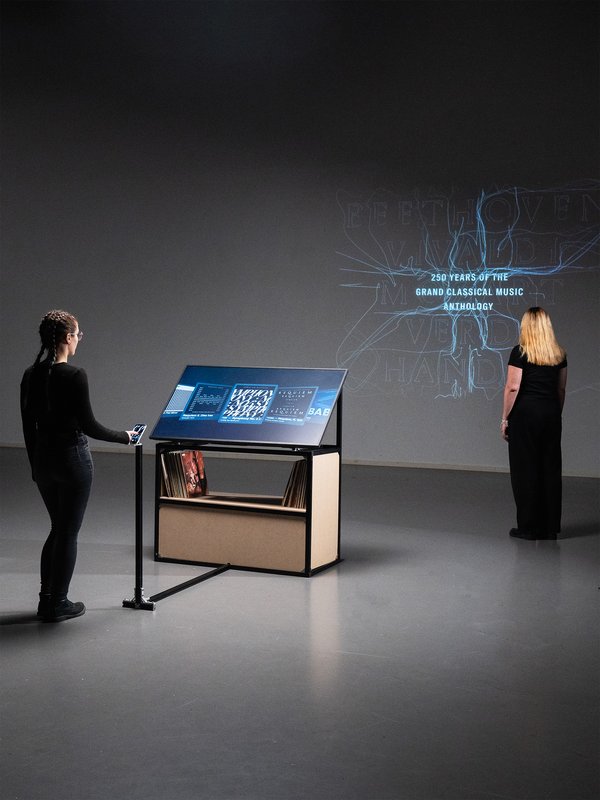
During this one-week workshop, Master Digital Experience Design students used machine learning tools to decompose music videos into their constituent parts: segmented scenes, detected gestures, extracted colors, analyzed beats, separated audio stems, transforming linear audiovisual artifacts into structured datasets. These components were then reimagined as interactive, non-linear systems: explorable maps, generative timelines, rhythm-driven interfaces, and self-recomposing structures built with the OPENRNDR framework.

The Modular Mindset

DIGITAL EXPERIENCE DESIGN

The Modular Mindset

with Antonin Waterkeyn

From connected watches to large-scale billboards, digital interfaces now operate across all scales. Designing a visual identity in this context requires thinking in terms of systems that can adapt to multiple formats, uses, and rhythms. This workshop explores the creation of modular, animated identities for a fictional music label, drawing on motion design and procedural logic. Using Cavalry, students develop dynamic visual systems that transform according to precise rules, while maintaining graphic coherence and a strong relationship to the sound universe.