Résultats pour “Ella needs some help: Bigger BoobsByMaster-TF” (524)

Collaboration with Hermès – 2013 The collaboration with Hermes allowed the students from the Master of Advanced Studies in Design for Luxury and Craftsmanship to discover the universe of window displays, where supports, lighting and colours need to draw your eye to the objects being showcased. Fabien Gerlier s project is a device allowing the viewer to read the display in two stages. At first the viewer sees the sculptural metal and marble displays. Then, on approaching the vitrine, the viewer sees the silhouettes of athletes in the projected shadows. The composition of the displays and Hermes products create, with the light, a series of archetypal shadow silhouettes of various athletes each practicing a different sport.

The Iceland Whale Bone Project Each year some fifteen whales get stranded on the coasts of Iceland. A whole local tradition is being kept alive around the bones of these gentle giants, often used in their raw state but rarely worked on by designers. In January 2013, 17 ECAL Product Design Master students went to the Iceland Academy of the Arts in Reykjavik to attend a workshop led by Icelandic designer Brynjar Sigurðarson. According to him “the idea was to collect various types of bones on the beach, but also shark skin or teeth, or even bits of plastic waste. From this starting point, the ECAL students who had come from all corners of the earth were supposed to draw on the atmosphere of this particular environment to create objects”. From the skull of a Minke whale repainted like a car body to cutters using shark s teeth, via ship models whose centreboard is made from whale vertebrae, masks put together using the remains of marine animals and contemporary materials, and including a geometric decorative object made of bone and placed on a pedestal, this surprisingly poetic selection is the fruit of a reflection on contrasts between the old and the new and the meeting of the primitive and the progressive. Each year some fifteen whales get stranded on the coasts of Iceland. A whole local tradition is being kept alive around the bones of these gentle giants, often used in their raw state but rarely worked on by designers. In January 2013, 17 ECAL Product Design Master students went to the Iceland Academy of the Arts in Reykjavik to attend a workshop led by Icelandic designer Brynjar Sigurðarson. According to him “the idea was to collect various types of bones on the beach, but also shark skin or teeth, or even bits of plastic waste. From this starting point, the ECAL students who had come from all corners of the earth were supposed to draw on the atmosphere of this particular environment to create objects”. From the skull of a Minke whale repainted like a car body to cutters using shark s teeth, via ship models whose centreboard is made from whale vertebrae, masks put together using the remains of marine animals and contemporary materials, and including a geometric decorative object made of bone and placed on a pedestal, this surprisingly poetic selection is the fruit of a reflection on contrasts between the old and the new and the meeting of the primitive and the progressive.

ECAL Milano 2013: "The Iceland Whale Bone Project",09–14.04.2013,Spazio Orso 16, Milan “The Iceland Whale Bone Project” offers experimental research based on bones of beached whales collected by ECAL Product Design Master students. This work was initiated on the occasion of a workshop in Iceland with designer Brynjar Sigurðarson. Each year some fifteen whales get stranded on the coasts of Iceland. A whole local tradition is being kept alive around the bones of these gentle giants, often used in their raw state but rarely worked on by designers. In January 2013, 17 ECAL Product Design Master students went to the Iceland Academy of the Arts in Reykjavik to attend a workshop led by Icelandic designer Brynjar Sigurðarson. According to him “the idea was to collect various types of bones on the beach, but also shark skin or teeth, or even bits of plastic waste. From this starting point, the ECAL students who had come from all corners of the earth were supposed to draw on the atmosphere of this particular environment to create objects”. From the skull of a Minke whale repainted like a car body to cutters using shark s teeth, via ship models whose centreboard is made from whale vertebrae, masks put together using the remains of marine animals and contemporary materials, and including a geometric decorative object made of bone and placed on a pedestal, this surprisingly poetic selection is the fruit of a reflection on contrasts between the old and the new and the meeting of the primitive and the progressive.

New collaboration ECAL/Vacheron Constantin,06.03.2013,Auditorium Leenaards, ECAL With the generous support of Vacheron Constantin, ECAL/Ecole cantonale d art de Lausanne, featuring among the world s top ten universities of art and design, is resuming the former MAS in Luxury Industry and Design, henceforth provided as the Master of Advanced Studies in Design for Luxury & Craftsmanship. Under this new heading, the programme intends to highlight various types of know-how and give young industrial designers the opportunity to investigate, over the course of a year, sectors of excellence as diverse as the arts & crafts, fine watch-making, tableware or specific techniques using noble materials. The contribution of such as prestigious manufacture as Vacheron Constantin, which has shone over the watchmaking industry for more than 250 years and is actively involved in promoting outstanding craftsmen, is a token of the richness of this curriculum and ensures its continuity. Master of Advanced Studies in Design for Luxury & Craftsmanship Switzerland is a privileged country in terms of know-how in the field of luxury. Building on this tradition, this Master of Advanced Studies is for the holders of a Bachelor or Master s degree wishing to further their knowledge in industrial design and investigate sectors of excellence as diverse as fine watch-making, tableware or specific techniques using noble materials. Through collaborations with prestigious brands – some with a century-old heritage – and workshops provided by major actors on the international scene, students experiment all production stages: from designing an object to its completion, via 3D rendering or photography. They also have the benefit of brand identity analyses and conferences delivered by experts in the field, as well as tours of luxury goods manufacturers. Many projects are singled out by partner companies to be produced, exhibited and published in the international press. After one year at ECAL, the students are able to submit a varied portfolio to the highest professional standards. Highly sought after by international agencies and world-leading companies, they also often have the opportunity of simultaneously establishing their own business. Graduates are frequently offered internship opportunities right at the end of their curriculum – often leading to steady employment. Head Nicolas Le Moigne Professors Thilo Brunner, Alexandre Gaillard, André Vladimir Heiz, Tomas Kral, Xavier Perrenoud, Julien Wegmüller, Cédric Widmer Visiting Professors Ronan Bouroullec (Paris), Pierre Charpin (Paris), Ligia Dias (Paris), Jaime Hayon (Valence), Nicolas Le Moigne, Luca Nichetto (Venice), Christian Schwamkrug (Zell am See), Alexander Taylor (London), Bethan Laura Wood (London)... Qualification Requirements College of higher education degree (Bachelor or Master level) in 3D design or related field Entrance Exam By portfolio Duration 1 year Online application : 3 May 2013 Application file submission : 8 May 2013 Interviews : 3 to 7 June 2013 Annual Tuition Fees CHF 8,000 Credits 60 Qualification Awarded Master of Advanced Studies HES-SO in Design for Luxury and Craftsmanship Vacheron Constantin Founded in Geneva in 1755, Vacheron Constantin is the world s oldest watch manufacturer engaged in uninterrupted activity for over 250 years. Founders of the very spirit of technical and precious Fine Watchmaking, the men and women of Vacheron Constantin continue to design, develop and produce exceptional timepieces true to the brand s three fundamentals: perfectly mastered techniques, inspired and harmonious aesthetics, and an extremely high level of finishing. Pursuing its longstanding ties with the world of art and culture, Vacheron Constantin is committed to fostering Artistic Crafts that play such a key role in contemporary creativity, while highlighting the excellence achieved by combining these talents with those of Design. The brand is also a privileged partner of a number of cultural institutions such as the Opéra National de Paris, the French Institut National des Métiers d Art, the Barbier-Mueller Museum Cultural Foundation and the Orchestre de la Suisse Romande.

Swing Lamps This project questions the light in relation with the workspace and was about to develop an office lamp that is flexible enough to respond the needs in this environment. Before their diploma semester, the 3rd year students were asked to create unexpected and simple articulations to enhance the value of the movement and the quality of the light.

Basics of Creativity André Vladimir Heiz The fruit of the research project “Didactica” 1. In every sense of creativity Hailed as the “bible for designers” on the German radio, the “Basics of Creativity” broach all branches of Arts and Crafts. The methods concerning the artistic know-how dwell on the decisive transition to formation, information and transformation. Mind the gap! Practise builds the bridge between imagination and realization, form and function and leads the way to appropriate solutions. It begins by presenting the decisive perspectives from which processes, projects and products can be confined and analysed. Each volume covers a different point of view : Volume 1: Processes and programs Volume 2: Structures and systems Volume 3: Sign and Context Volume 4: Identities and Differences There has never been a standard reference like this one, dealing with all areas of design, close to the trigger moment when making a decision makes the difference and sense bythe way – for designers of all types, architects and artists as well. 2. The harvest of research “Basics of Creativity” represent a prototype of research through, about and essentially for Design. Experimental adventures, empirical grounded approaches, scientific investigations and good many case studies permitted to build up the topics as a whole. A united research team explored different approaches to bring out an optimal presentation. In response to the research goal for enlightening pictures and tools, designers opened the doors of their archives and studios and contributed insightful examples. Research gave all the time we need to find out innovative entries for perception and production. “Basics of creativity” are a hotbed of ideas in order to break patterns. 3. Love is the thing What would love be without an outstanding declaration? What would things and signs be without having a remarkable impact? Designers, craftsmen and artists have to show and tell what they mean by developing their traces really and practically. Indeed they have to understand increasingly well how they manage projects and products, within their daily round work as a go-between, carrying the creative process through a convincing solution. Theories of perception and production scout out the possibilities and conditions due to artistic specificities and aims. Whatever it is a matter of developing a font, an urban concept, a logo, public art, product design, communication or research – precise perception defines the way the problem initially is framed. 4. What comes it down to? Open it, look at it, read and pace up and down the “Wonderland” of the “Basics”. You ll light upon a salutary example, fall on significant observations and follow the logical demonstration of diagrams. Readers and observers are taken by the hand and guided along gently with a good sense of humour. Each spread is a discovery, couched in the rhythm of knowledge acquisition. Drop in and space out: examples help with orientation. Like glasses or scissors, a pen or necessary software-tools “Basics of Creativity” come in handy. All you have to do is to make a break, close your windows and open one of the volumes of the “Basics”. Here we go, do it straight away!Main applicantECAL/University of Art and Design LausanneSupported byECAL/University of Art and Design Lausanne Strategic fund of the University of Applied Sciences Western Switzerland (HES-SO RCDAV) ZHdK Office fédéral de la Culture Office fédéral de la formation professionnelle et de la technologie Fondation Vitra Fondation Jan Michalski Atelier Pfister Pour cent culturel Migros Design Center Langenthal and a welcome swarm of designers and artistsPeriod2006 – 2012DisseminationPublications André-Vladimir Heiz Les bases de la création, 1408 pages, ISBN 978-3-7212-0839-9, Niggli/Sulgen 2013. André-Vladimir Heiz Grundlagen der Gestaltung, 1436 Seiten, ISBN 978-3-7212-0805-4, Niggli/Sulgen 2012.

ECAL and zai at blickfang Zurich,23–25.11.2012,Blickfang, Zurich On the occasion of blickfang Zurich (23-25 November 2012), the students of the Master of Advanced Studies in Luxury Industry and Design at the ECAL/University of Art and Design Lausanne present objects realized in collaboration with zai, a Swiss manufacturer of skis based in Disentis (GR). These projects have been developed through a workshop with the British designer Alexander Taylor. The four projects, presented as prototypes, have been developed from a series of tough specifications set by the Swiss company. The challenge was to create highly functional objects such as snow shoes or tools while using, if possible, leftovers from the zai ski production.The results embody the no-compromise approach of the company and some are bound to become products in the near future. Essenz snowshoes Romain Deleury & Emelie Lundquist Made from punched and folded aluminum sheets, the Essenz snowshoes are extremely light. In-depth research was performed, many mock-ups were built, and during the process “test and trial” proved crucial. We studied different methods to treat the metal to make it as light and resistant as possible. The choice of material for the Essenz snowshoes was aluminium, a material that was often associated with Swiss expertise, to the point that it was nicknamed “Swiss gold” in the 50 s. The body consists of sheets that have been folded, pierced and punched to give lightness in addition to enhanced rigidity. The two side parts are made of steel to hold the binding and are riveted together with the front part of the shoe. The aluminium surfaces are anodised black, hardening the aluminium and protecting against corrosion. Core axe Kacper Hamilton The Core axe consists of a helve and two interchangeable heads. The straight shaft helve re- sembles a tomahawk, made from a sandwich of zaiìra® and ash wood. The layering construction is inspired by zai s process and philosophy of making skis using raw and contrasting materials. The helve has been refined to be slim and lightweight; thereby generating greater striking momentum and more efficiency when cutting or splitting wood. The heads are made from forged high carbon steel. They can be changed using the integrated quick release system; this allows for secure head attachment, easier sharpening and safer transportation. Each head has a different function, one is for felling trees and the other for splitting logs of wood. Higo knife & tool Kacper Hamilton The Higo collection is influenced by the traditional Japanese ‘Higonokami knife. The Higo tool contains two essential screwdriver heads for adjusting ski bindings, whilst the Higo knife contains a short robust blade. The slim profile of these accessories gives extra safety when carried close to the body whilst skiing. The Higo collection are one handed operational devices. They can be easily opened, locked and closed; providing utmost efficiency in mountain conditions. Both have an automatic locking mechanism, ensuring that they are always safely stored and handled. The unibody of each object is machined out of a single piece of aluminium, therefore making it strong and durable. Rope tool Léo Rodriguez During the visit of the zai factory we discovered their universe which I really liked. The rough aspect of their skis and search for extreme efficiency inspired me for my project. One thing that caught my attention is the fact that they were always carrying the screwdriver in their ski shoes to avoid injuries while skiing. I then decided to make a set of retractable tools using the same components as you can find in their skis. Based on archaic tools, they are composed of three pieces; the handle, the tool and the rope to join them. www.zai.ch blickfang Zurich 23 I 24 I 25 November 2012 Kongresshaus Enge, Zurich Friday and Saturday 11am to à 10pm Sunday 11am to 7pm www.kongresshaus.ch www.blickfang.com

Workshop A C E Thinking about a local material, snow seemed to be a quite obvious choice, as it is also an important cultural and economical aspect for Switzerland. When the snow season approaches a whole aesthetics covers our streets, a lot of snow items pop up in stores. Would it be possible to invent new ones, to redesign some or just to play with this winter aesthetics? This is what we will try to find out during this week workshop.

Laurence Favre – Nwa-Mankamana Subjective exploration of a Swiss missionary s archives (films and letters) in South Africa. Documentary / 28mn Synopsis In 1947, Marie Tinguely leaves her homeland to go work in a hospital for the Swiss mission in the South African bush. After her death, the films shot over 25 years as a missionary, as well as some of the letters she wrote are found in a family apartment. I decide to explore them. Festivals and Awards 2013 Nyon, Festival Visions du Réel, compétition internationale

Alexandre Grognuz – Rocklub Through my diploma work, I became interested in creating a visual identity for a rock club. So I thought about the kind of support a club needed. This is how I began production of a newspaper that goes out every month and contains the programme of events and concerts. I also found it interesting to make posters that would be used as a communication support for the club. Creating the newspaper, I therefore anticipated that if one removes the staples, the newspaper turns into posters. It has a dual utility (programme and posters) to better encounter the needs of a music club. To avoid having too smooth a visual identity, and therefore to have something that matches with to the place I chose, I started to create a typography by hand using the photocopy machine and a cutter. I cut shapes and letters in order to create a typeface. This technique allowed me to experiment and discover new forms. So I kept this technique for the creation of the newspaper and posters. I tried to take advantage of the photocopy machine and paper cutter, and to turn the defects, disadvantages and contingencies of both techniques into assets. I really love this technique which allowed me to work differently and as little as possible with my computer. A technique which allowed me to experiment and discover more things with very few props. Alexandre Grognuz

Artforum 2011 / Annual Report My work consists in an Annual Report 2011 for the magazine Artforum International. I ve analysed the gallery advertisements of the 10 issues of this year and then created statistics showing the content/advertisements ratio and also the distribution of the number of ads per gallery and artist. Based on the results of these statistics, I then created a new generative graphic system which, with its simple geometric forms and its mathematical placements, recalls some aspects of Concrete Art. During this project I ve learned a lot about generative graphic systems, their advantages and difficulties. On the other hand this work has revealed interesting aspects concerning the development and the present situation of the international art market and its economic interdependences. Teo Schifferli My work consists in an Annual Report 2011 for the magazine Artforum International. I ve analysed the gallery advertisements of the 10 issues of this year and then created statistics showing the content/advertisements ratio and also the distribution of the number of ads per gallery and artist. Based on the results of these statistics, I then created a new generative graphic system which, with its simple geometric forms and its mathematical placements, recalls some aspects of Concrete Art. During this project I ve learned a lot about generative graphic systems, their advantages and difficulties. On the other hand this work has revealed interesting aspects concerning the development and the present situation of the international art market and its economic interdependences. Teo Schifferli

Julien Mercier – Made in Switzerland in China After discovering the existence of a replica of the village of Interlaken in China, I decided to go on site to document a phenomenon: the copy of Swiss (and extensively occidental) culture. Located in the middle of the mountains, one premise appeared: every single detail there was to see, from the Alphorn statues to the pigeons were the results of an intelligent, total design. In parallel, I decided to talk about the copy and this village immersively, adopting some similar processes and using Chinese means of production. A font was produced, hand copied by a Chinese copy artist, before being redigitsed, in order to obtain the copy of a classic Swiss font, whose shapes were renewed by this particular creative process. It finally takes the form of a book as well as an installation, showing the original outputs and documenting the whole process, many of which having involved a third party. Every one of these constitutive elements and the reason for their presence have a lot to do with the way they were produced. Copies, enriched by the justification of their own existence and by a new cultural context. Just like the village of Interlaken, in China. Julien Mercier After discovering the existence of a replica of the village of Interlaken in China, I decided to go on site to document a phenomenon: the copy of Swiss (and extensively occidental) culture. Located in the middle of the mountains, one premise appeared: every single detail there was to see, from the Alphorn statues to the pigeons were the results of an intelligent, total design. In parallel, I decided to talk about the copy and this village immersively, adopting some similar processes and using Chinese means of production. A font was produced, hand copied by a Chinese copy artist, before being redigitsed, in order to obtain the copy of a classic Swiss font, whose shapes were renewed by this particular creative process. It finally takes the form of a book as well as an installation, showing the original outputs and documenting the whole process, many of which having involved a third party. Every one of these constitutive elements and the reason for their presence have a lot to do with the way they were produced. Copies, enriched by the justification of their own existence and by a new cultural context. Just like the village of Interlaken, in China.Julien Mercier

Jennifer Niederhauser Schlup – La Vallée “My project has for theme the Vallée de Joux and its relationship with the watch industry. I have photographed the various aspects of the place, showing them from an unusual perspective. The photographs are manipulated, retouched and set up in order to create a fabricated reality and disturb the spectator. Presented along with a display, this project takes the form of a book. The whole becomes a fictional study. The hardest for me was to meet the inhabitants, the Combiers. My personal approach of the subject has allowed me to improve my technical skills. Some images required a particular setup. Having conducted this project over a long period of time, I have learned perseverance and to keep challenging my vision at all times.” Jennifer Niederhauser Schlup “My project has for theme the Vallée de Joux and its relationship with the watch industry. I have photographed the various aspects of the place, showing them from an unusual perspective. The photographs are manipulated, retouched and set up in order to create a fabricated reality and disturb the spectator. Presented along with a display, this project takes the form of a book. The whole becomes a fictional study. The hardest for me was to meet the inhabitants, the Combiers. My personal approach of the subject has allowed me to improve my technical skills. Some images required a particular setup. Having conducted this project over a long period of time, I have learned perseverance and to keep challenging my vision at all times.”Jennifer Niederhauser Schlup

Collaboration with Zai The students of the Master of Advanced Studies in Design for Luxury and Craftsmanship at the ECAL/Ecole cantonale d art de Lausanne are presenting objects created in collaboration with the Zai ski factory, based in Disentis (GR). These projects were developed in a workshop with the English designer Alexander Taylor. The four projects, presented as prototypes, were developed according to a strict set of specifications drawn up by the Graubünden company. The challenge was to create highly functional objects such as snowshoes or tools while using as much as possible of the off-cuts generated by the production of zai skis. The results reflect the company s uncompromising approach, and some of them will be going into series production in the near future. The "Core" axe consists of a handle and two interchangeable blades. The straight handle resembles a tomahawk and is made of different layers of zaiìra® and ash wood. The construction of the shaft from layers of different materials is inspired by the process of making zai skis using rough and contrasting construction materials. The shaft has been refined to be thin and light, which generates better momentum and more efficient movement when cutting a tree or log. The "Higo" collection is influenced by the traditional Japanese "Higonokami" knives. The Higo tool has two screwdrivers that are essential for adjusting ski bindings. The Higo knife has a short, robust blade. The slim profile of these accessories gives extra security when worn close to the body when skiing. The Essenz snowshoes are made from deep-drawn and bent aluminium sheets and are extremely light. Extensive research and numerous models were made. The "test and trial" process was decisive. We studied different design methods in order to make the metal as light and strong as possible.

O Signore Stracciarolo Outcast amongst outcasts. From boredom to religious devotion, we get a glimpse into the lives of a gypsy couple in the suburbs of Rome. Documentary / 9mn Synopsis Out of sight, out of mind. In San Basilio you find all kinds of outcasts. Despite living in a neighbourhood plagued with drugs and violence, where nobody trusts each other, Gianfranco and Giò, a Sinti gypsy couple, let us in to their caravan and their hidden lives. We share with them the boredom of daily routine, their religious devotion, some tender moments: the lives of this couple thrive in the face of this hostile environment. Festivals and Awards 2012 Nyon, Festival Visions du Réel

Namsa Leuba – Ya Kala Ben “ I am an African-European, born in Switzerland and my project was accomplished on a trip to Guinea Conakry. In this work, I was interested in the construction and deconstruction of the body as well as the depiction of the invisible. I have studied ritual artifacts common to the cosmology of Guineans; statuettes that are part of a ceremonial structure. They are from another world, they are the roots of the living. Thereby, I sought to touch the untouchable. Modesty, luck, fecundity or a channel for exorcism, those statuettes hold a cultural value through what they represent or symbolise. With this work, I transform these objects, cosmological symbols of a community, who traditionally have a signification when used as part of rituals. These objects are part of a collective that they must not be separated from, or risk loosing their value. They are not the gods of this community but their prayers. They are integrated in a rigorous symbolic order, where every component has its place. They are ritual tools that I have animated by staging live models and in a way to desecrate them by giving them another meaning; an unfamiliar meaning in the Guinean context. In recontextualizing these sacred objects through the lens, I brought them in a framework meant for Western aesthetic choices and taste. This photographic eye would make them speak differently. Throughout my fieldwork, I had to deal with sometimes violent reactions from Guineans who viewed my procedures/practices as a form of sacrilege. Some were afraid and were struck with astonishment. “

David Favrod – Gaijin – 2011 “I usually find it hard to speak about myself. I always stumble in the paradoxes of who am I? . In terms of factual information, I surely appear to be the most well informed person about my own self. But as soon as I need to communicate about who I am, I tend to do it through filters, selecting what I want to communicate, and how I wish to do it, in accordance with my interests and sensitivity. So what can be the objective value of the way that I picture my family and my life? How much does it concretely relates to reality or not? Gaijin is the japanese word meaning the foreigner .” David Favrod “I usually find it hard to speak about myself. I always stumble in the paradoxes of who am I? . In terms of factual information, I surely appear to be the most well informed person about my own self. But as soon as I need to communicate about who I am, I tend to do it through filters, selecting what I want to communicate, and how I wish to do it, in accordance with my interests and sensitivity. So what can be the objective value of the way that I picture my family and my life? How much does it concretely relates to reality or not? Gaijin is the japanese word meaning the foreigner .”David Favrod

Shabbat, thank god ! Why tell the truth if a lie can help me achieve my aims ? Here the doctrine of Yigael, youthful inner-city Don Juan that too often forgets that lying is an art. Fiction / 11min Synopsis Why tell the truth if a lie can help me achieve my aims ? Here the doctrine of Yigael, youthful inner-city Don Juan that too often forgets that lying is an art. Comment With great freedom and while responding perfectly to the given commission - a meeting between a boy and a girl, in a comedy register - Jean-Guillaume directs Shabbat, Thank God! guided by the desire to make films for the spectator, that is to say, with a sense of rhythm, narration and cutting always very instinctive. Valérie Donzelli / Actress, director

Tristan Aymon – Ultima donna An elderly man from a middle-class family finds himself forced to pass the time with a new companion. Fiction / 17min Synopsis An elderly man from a middle-class family finds himself forced to pass the time with a new companion. Comment In Ultima donna there is a bath scene, where we feel that desire circulates between the elderly body and the young body of the home help. But above all we witness the love, and therefore the respect with which Tristan Aymon films this intimacy. The emotion comes perhaps from the fact that we witness at this precise moment something that is beyond words: this is called cinema. And it is sometimes rare in films. Lionel Baier / Director Festivals Vaulx-en-Velin, Festival du Film Court francophone, Prix de la presse Alès, Festival Cinéma d Alès, Grand Prix du Jury Alès, Festival Cinéma d Alès, Mention spéciale du Jury étudiants Padova, River Film Festival, Best Film School Genève, Festival Tous Ecrans, Reflet d Or du meilleur court métrage suisse

Walking the Edit Developed in the framework of the Master cinema of the HES-SO, the project Walking the Edit seeks to combine the field of cinema and the territory of new technologies in order to try out the potentialities of narrative constructions between, on the one hand, an audio-visual geolocalized data base and, on the other hand, the recorded trajectory of a person passing through an urban space. Concretely, the device implemented during this research is as follows: Film making and indexing of the media A production team surveys a delimited territory and gather audiovisual fragments which reveal the specific characteristics of the space : details, portraits, meetings. Emphasis is placed on the uniqueness of the viewpoint and the intensity of the regard of the authors which document the reality. The collected images and sounds are then indexed and are assigned a geographical location on a digital map by the team of editors. Each audiovisual fragment constitutes a medium which is indexed according to objective and subjective attributes. Then, these attributes permit selection of the media according to the analysis of the visitor s trajectory. Realization of films by the visitors Equipped with an iPhone and the software created as part of the project, visitors wander through the urban space. They hear the soundtrack of the film they are walking and watch the editing process taking place on the screen of the IPhone. Their trajectory "awaken" the images and create links between them. Diffusion and exchanges Once the walk is completed, visitors become viewers. They can watch "their trajectories translated into films" on the project s internet website and they can publish them if they wish to do so. Each film thus generated makes it possible to (re)immerse oneself into the "digital memory" of the urban space. The process contributes to the construction of a collective memory of the city, made up of the various recorded walks: between the media documenting the territory and the imaginary of the walker, a living memory is consolidated; between the material city and the imaginary city, a third cinematographic city appears. A phase of valorization and widening of the project is currently supported with the help of various partners.Main applicantsECAL/University of Art and Design Lausanne Ulrich Fischer (project leader)Research teamLionel Baier, Thomas Isler, Michel Bühler, Jean-François Blanc, Dimitri Delcourt, Florence Guillermin, Jeanne Macheret, Pierre-Yves Borgeaud, Alexa Andrey, Nicolas Wagnières, Vincent Jacquier, Lionel Tardy, Daniel Sciboz, Gwenola Wagon, Pascal Amphoux, Nicolas GoyPeriod2007 – 2009Supported byECAL/University of Art and Design Lausanne Strategic fund of the University of Applied Sciences Western Switzerland (HES-SO RCDAV)DisseminationWebsite walking-the-edit.net

Cotonov Vanished A way of approaching the exercise of portrait, Cotonov Vanished returns to the dazzling career of a young and brilliant Russian interpreter embarked in the Cold War who, one day, mysteriously disappeared... Documentary Synopsis A way of approaching the exercise of portraiture, Cotonov Vanished returns to the dazzling career of a young and brilliant Russian interpreter embarked in the Cold War who, one day, mysteriously disappeared. To tell his story, one of his former teachers and colleagues, now retired, lends himself to the game of interview. With, in counter-field, a young woman who translates his words, a posteriori and in a booth. Starting from these visible devices, Andreas Fontana prefers the path of evocation and mise en abyme to the path of investigation. Here, no biographical retracement, but some facts and intuitions transmitted by the old man to which archives respond. Images through which a world where the USA and the USSR confront each other and the silhouette, absent or out of frame, of Cotonov, an anonymous young man with a crucial role to play: to ensure communication between the enemy heads of state. Comment After the Loterie Romande Prize "First steps" at the Festival Visions du Réel - Nyon and the Best Screenplay Prize at the 10th Festival du Film Court Francophone de Vaulx-en-Velin, Cotonov Vanished continues its brilliant international career with a third award, the Best Short Film Prize, given by one of the most prestigious festivals in Italy, the Festival dei Popoli. Andreas Fontana s short film was praised by the jury with this comment: "If someone living on Mars watched this short film he would understand the Earth much better." Festivals and awards Prix First steps, Festival Visions du Réel Prix du Meilleur court métrage, Festival dei Popoli, Florence Prix du Meilleur scénario, Festival du Film Court Francophone, Vaux-en-Velin 2011 Paris, Festival DocFrance Bruxelles, Festival Filmer à tout prix 2010 Buenos Aires, Festival Doc Buenos Aires Ekateringburg, Festival du Film "Russia" Paris, Festival Int. du Documentaire Étudiant de St-Ouen Barcelone, Festival L Alternativa Florence, Festival dei Popoli Lyon, Festival Doc en Courts Beyrut, Festival Int. du court-métrage des écoles de cinéma 2009 Nyon, Festival Visions du Réel Winterthur, Internationalen Kurzfilmtagen Vaux En Velin, Festival du Film Court Francophone de Vaulx en Velin Marseille, Festival International du Documentaire de Marseille Marseille, Festival Paroles et Musique Lussas, Etats Généraux du Documentaire

Tamara Lanfranconi – Oltre la Sicilia (Au-delà de la Sicile) When I was about twelve years old, my life and my father s life began to run parallel paths that crossed only from time to time; even in his most mature years he remains for me a mysterious, almost invented character. When his health began to worsen, I decided to make the first trip to my native land, Sicily, hoping to reconnect with him. Fiction Synopsis When I was about twelve years old, my life and my father s life began to run in two parallel paths that crossed only from time to time; even in his most mature years he remains for me a mysterious, almost invented character. When his health conditions started to worsen, I decided to make the first trip to my native land, Sicily, hoping to reconnect with him. My father left Palermo at the age of seven, in the March of 43, and he decided never to return there without ever giving me the opportunity to appropriate and share my roots with him. This journey represents for me the answer to his silence, a reply to an absence, but also a research that helps me to understand what symbolizes for me a land unknown and until now only imagined, to arrive at the conclusion that what I need to face is at the starting point. Tamara Lanfranconi
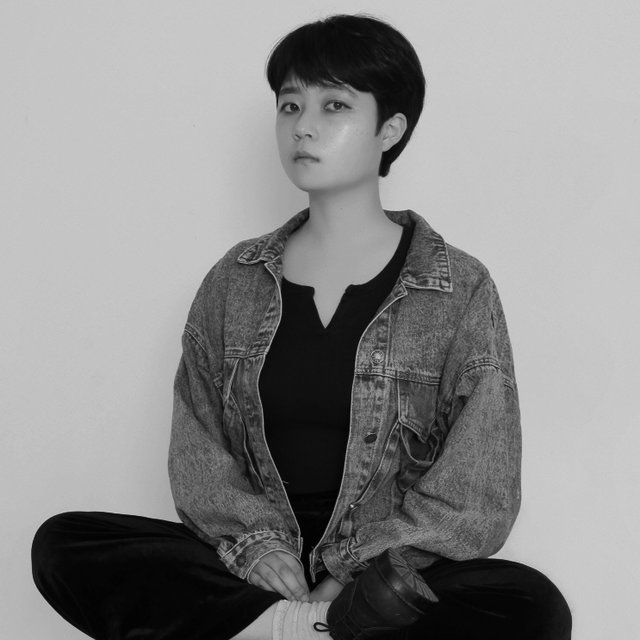
ECAL Resident at La Becque, fall semester 2022
Yehwan Song, born in 1995, is a Korean artist, graphic designer, and web developer.
She designs and develops experimental websites and interactive graphics driven by content structure instead of static templates and web design conventions. Through her projects, she tries to flip the general understanding of web design and subvert common user-experience behaviors, which oversimplify users' behavior. She pursues diversity above consistency and efficiency.
Her ongoing project, Anti User-friendly, challenges the concept of user- friendliness by creating a situation in which users need to learn, explore, understand and become conscious before they can use it, instead of repeating the same behavior they've been trained to do, as a form of self- care.

ECAL resident at La Becque - Spring semester 2023
As a partners at Perron–Roettinger, designer Brian Roettinger has worked on creative projects with some of the world’s biggest brands and musicians. Roettinger’s work is an uncanny union of punk ideology with a conceptually driven mode of modernist design. He frequently employs architectural strategies such as repetition and structure, while subverting this sense of order by manipulating the production process in unexpected or “wrong” ways (think pulling the sheet out of the printer before it is done). He continues to work with a wide variety of artists and brands taking an holistic approach to the design process from idea to completion. His work is diverse spanning album packaging, publications, branding, campaigns, and product design. He has been nominated for numerous awards included three Art Direction Grammy’s for album packaging.