Nothing is connected to everything; everything is connected to something

Joanna Wierzbicka – Nothing is connected to everything; everything is connected to something

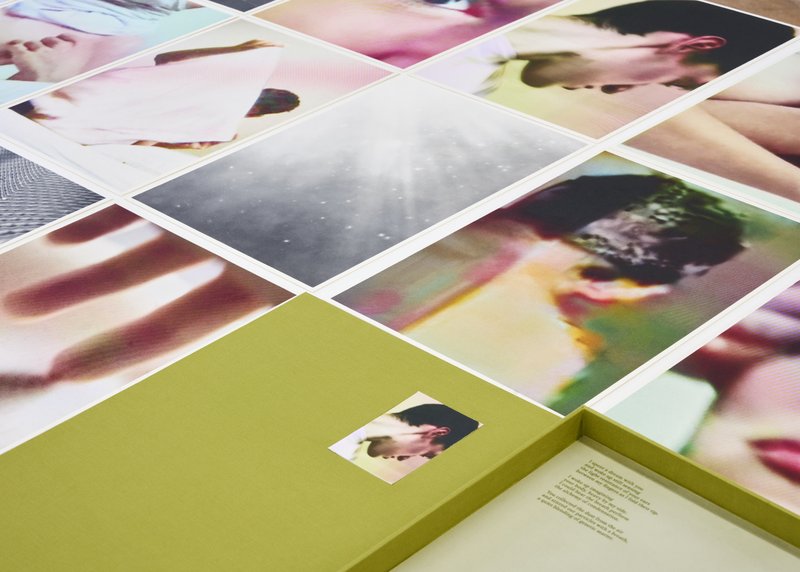
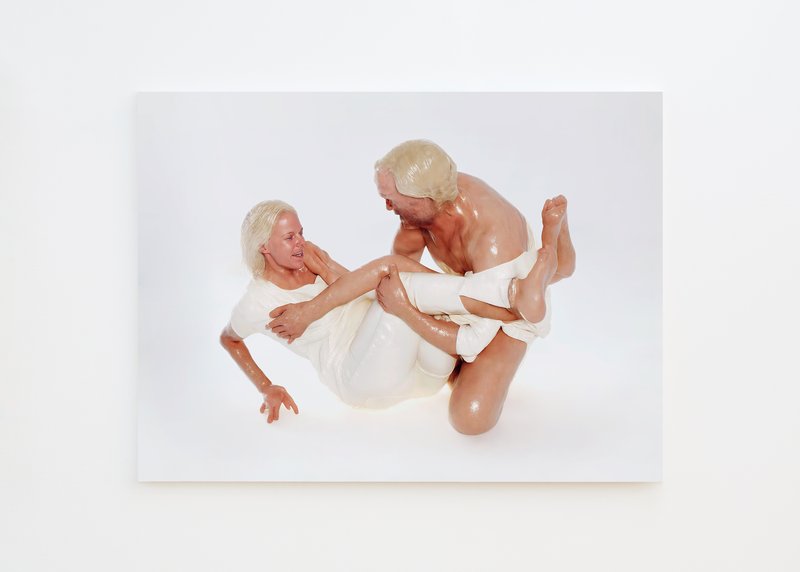
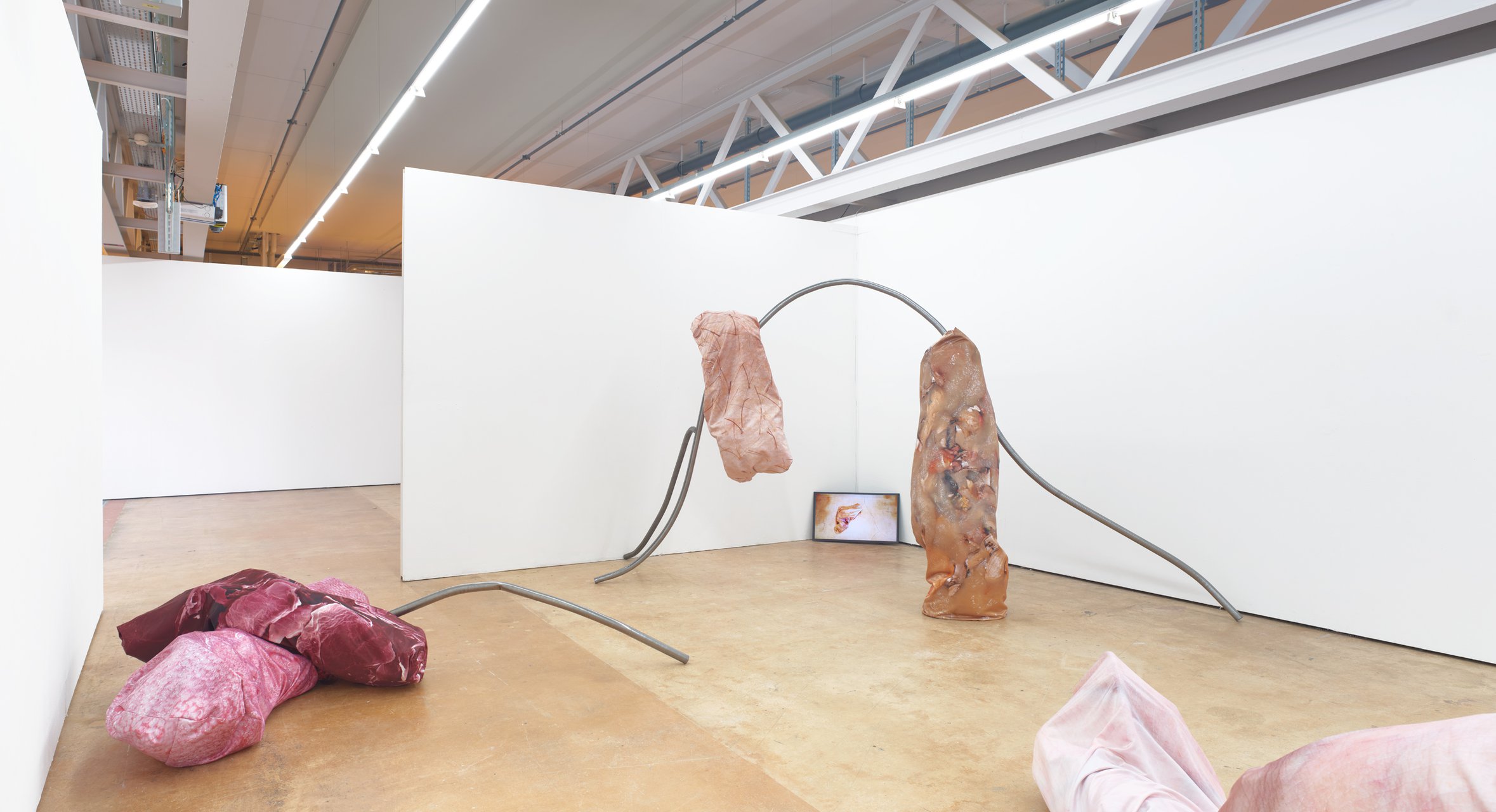
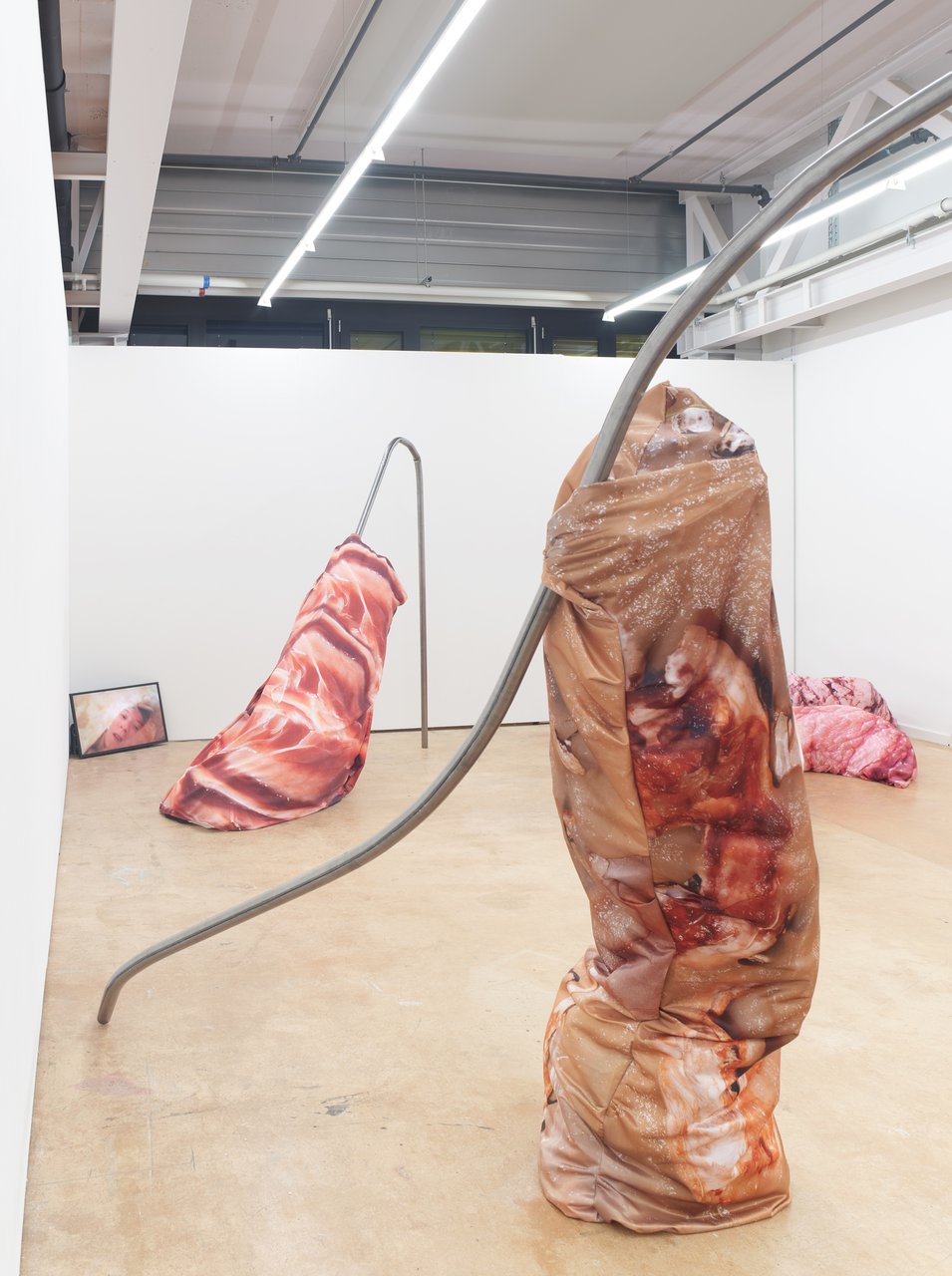
What is a body, where does it start, where does it end? How do we experience having a body and being a body, especially among other bodies? How can we resituate ourselves within earth others, and rethink relations on a wider level between human and nonhuman actants to account for a more ethical living? The project aims to interrogate the notion of bodily matter, recapture our corporeality and challenge the assumption that our bodies end at the skin. Instead, they are redefined as radically open systems, human and non-human assemblages, corporeal chimeras, microbiotic multi-species in the constant process of becoming. Matter, when recognised as an active agent, helps to acknowledge infinite interactions within complex networks of agency between various porous corporealities and entities. Trans-corporeality disrupts divisions between a body and the world. Bodies leave traces everywhere, ascribing themselves into various corporeal, technological, political narratives, but also traces are ascribed onto bodies - mediating and altering their flesh. As captured by Haraway in the figuration of compost - we are always becoming with others, together creating a lively matter of compost, composing and decomposing each other. “Nothing is connected to everything, everything is connected to something” takes a form of an installation, a speculative self-portrait as compost, built out of images of my own body (made with different apparatuses including Scanning Electron Microscope, digital microscopes) mixed with still lifes of food and different materials representing the transformation and movement, as in compost. Additionally, sculptures are accompanied by the video that expands on the idea of corporeal companionship and brings in the notion of uncanny-like lump of flesh covered with skin. It is a performative act, a result of wondering how to become a microorganism, a bacteria and if I am already enough of one. All the parts of installation, exploring the line between oppositions such as human/nonhuman, internal/external, self/the other, refer to the definition of an abject and are meant to translate that moment, or a sensation - how a breakdown in meaning, something expelled from “I” eventually comes to define “I”.

Diploma project (2021) by Joanna Wierzbicka

What is a body, where does it start, where does it end? How do we experience having a body and being a body, especially among other bodies? How can we resituate ourselves within earth others, and rethink relations on a wider level between human and nonhuman actants to account for a more ethical living?

The project aims to interrogate the notion of bodily matter, recapture our corporeality and challenge the assumption that our bodies end at the skin. Instead, they are redefined as radically open systems, human and non-human assemblages, corporeal chimeras, microbiotic multi-species in the constant process of becoming. Matter, when recognised as an active agent, helps to acknowledge infinite interactions within complex networks of agency between various porous corporealities and entities. Trans-corporeality disrupts divisions between a body and the world. Bodies leave traces everywhere, ascribing themselves into various corporeal, technological, political narratives, but also traces are ascribed onto bodies - mediating and altering their flesh. As captured by Haraway in the figuration of compost - we are always becoming with others, together creating a lively matter of compost, composing and decomposing each other.

“Nothing is connected to everything, everything is connected to something” takes a form of an installation, a speculative self-portrait as compost, built out of images of my own body (made with different apparatuses including Scanning Electron Microscope, digital microscopes) mixed with still lifes of food and different materials representing the transformation and movement, as in compost. Additionally, sculptures are accompanied by the video that expands on the idea of corporeal companionship and brings in the notion of uncanny-like lump of flesh covered with skin. It is a performative act, a result of wondering how to become a microorganism, a bacteria and if I am already enough of one. All the parts of installation, exploring the line between oppositions such as human/nonhuman, internal/external, self/the other, refer to the definition of an abject and are meant to translate that moment, or a sensation - how a breakdown in meaning, something expelled from “I” eventually comes to define “I”.
2021_MAP2_DIPLOMA_DOCU_WierzbickaJoanna_1.jpg
2021_MAP2_DIPLOMA_DOCU_WierzbickaJoanna_2.jpg
2021_MAP2_Diploma_YWierzbickaJoanna_NothingIsConnectedToEverythingEverythingIsConnectedToSomething_04.jpg
2021_MAP2_Diploma_YWierzbickaJoanna_NothingIsConnectedToEverythingEverythingIsConnectedToSomething_06.jpg

Projets similaires

Workshop - Rachel de Joode - 2026

MA PHOTOGRAPHY

Workshop - Rachel de Joode - 2026

with Rachel de Joode, Clément Lambelet

For this workshop, ECAL invited Rachel de Joode, Berlin-based artist whose practice explores the relationship between photography, sculpture, and digital images. During the week, students experimented with transforming photographic images into three-dimensional forms. Starting from simple concepts, they produced or gathered image material intended for printing and treated images as surfaces to cut, fold, layer, and assemble into sculptural objects. Through rapid tests and material experimentation, the workshop encouraged students to move repeatedly between image, surface, object, and documentation. By working with printing, scale, and spatial placement, they explored how photographic images can gain physical presence and occupy space beyond the screen.

Self-Initiated Project - Fall 2025 - MAP2

MA PHOTOGRAPHY

Self-Initiated Project - Fall 2025 - MAP2

with Elisa Medde

This module assists the students to develop into a finalized work a project that further expands their interests and research. The module gives the opportunity to take some of the ideas, skills and themes explores in the first semester and make into a brand new work that can take any possible form: a book, an installation, an online project, a performance.

Materialized Photography - Fall 2025 - MAP2

MA PHOTOGRAPHY

Materialized Photography - Fall 2025 - MAP2

with Mazaccio & Drowilal

The purpose of this class is to examine the relationships between photography — in a context shaped by the digital — and its various modes of display. Students will have to consider what a photograph may be materially and explore how an image’s meaning is derived from both the mode of its distribution and the material form that it assumes. Although the final outcome has to include photography in a third dimensional way ( installation ), projects may use and combine image-based practices such as digital photography, collage, CGI, projection, printmaking, sculpture, objects, or performance, to encourage an expanded approach to photographic practice. The idea is to challenge the different types of engagement possible with pictures today.

Soft Photography - Fall 2025 - MAP2

MA PHOTOGRAPHY

Soft Photography - Fall 2025 - MAP2

with Marco De Mutiis

The course, tutored by Marco De Mutiis, explored how emotions are being exploited and transformed by social media practices and aesthetics (e.g. influencer photography and CGI, operational beauty and weaponized cuteness), as well as through recent image technologies (e.g. generative AI platforms and text-to-image services).

Workshop - Simone C Niquille - 2025

MA PHOTOGRAPHY

Workshop - Simone C Niquille - 2025

with Simone Niquille, Milo Keller, Clément Lambelet

For this workshop, ECAL invited Simone C Niquille, Swiss designer and researcher based in Amsterdam whose practice investigates how digital images, computer vision, and 3D technologies shape the way bodies and objects are represented in contemporary visual culture. Through her research platform Technoflesh, Niquille examines the infrastructures behind digital imagery (from stock images and 3D assets to machine vision systems) and the cultural assumptions embedded in them. Her work reveals how datasets, rendering software, and visual standards influence how bodies, materials, and environments are modeled and understood.

Related courses