Misophonia – 2017 #2

Benoît Brun – Misophonia – 2017 #2

AKIRA is a lettering inspired by the japanese tuning. It uses shapes inspired by curves from tuned cars, ornaments, stickers and inspires motion. It’s a versatile lettering, with multiple possible variations for the same letter. The result of this research is a newspaper that uses grids taken from japanese dailies and mangas. These construction systems gave me the possibility to show off its modularity and to create strong black and white contrasts. This lettering aims to symbolize the movement or to be used as one alone, like a visual language.

Diploma project (2017) by Benoît Brun

AKIRA is a lettering inspired by the japanese tuning. It uses shapes inspired by curves from tuned cars, ornaments, stickers and inspires motion. It’s a versatile lettering, with multiple possible variations for the same letter.
The result of this research is a newspaper that uses grids taken from japanese dailies and mangas. These construction systems gave me the possibility to show off its modularity and to create strong black and white contrasts. This lettering aims to symbolize the movement or to be used as one alone, like a visual language.

Akira, Benoît Brun
Akira, Benoît Brun
Akira, Benoît Brun
Akira, Benoît Brun
Akira, Benoît Brun
Akira, Benoît Brun
Akira, Benoît Brun
Akira, Benoît Brun
Akira, Benoît Brun
Akira, Benoît Brun
Akira, Benoît Brun

1/11

Akira, Benoît Brun
Akira, Benoît Brun
Akira, Benoît Brun
Akira, Benoît Brun
Akira, Benoît Brun
Akira, Benoît Brun

1/6

Projets similaires

Type Design  BA2 – S1 2025

BA GRAPHIC DESIGN

Type Design BA2 – S1 2025

with Aurèle Sack

Second-year students were required to manually develop the lowercase letters of two typefaces.

Visual Identity – BA2 S1 2025

BA GRAPHIC DESIGN

Visual Identity – BA2 S1 2025

with Adeline Mollard

As part of the visual identity course led by Adeline Mollard, students developed a visual identity starting from a randomly selected business card. By appropriating one of its graphic elements and its title, each project offers a unique interpretation. The identity is then expanded across a range of formats, from business cards to F4 posters, including posters, flyers, business cards, and an animated poster.

Editorial Design – BA2 S1 2025

BA GRAPHIC DESIGN

Editorial Design – BA2 S1 2025

with Diego Bontognali

As part of this editorial design course, students developed a research-based project focused on the selection and design of texts around a shared theme. Based on a curated set of sources, each project presents two editions with identical content, produced in both a large and a small format.

Contextual Design – BA2 S1 2025

BA GRAPHIC DESIGN

Contextual Design – BA2 S1 2025

with Nicole Udry

Genius Loci, or the spirit of the place, refers to the unique identity or essence of a location. In architecture, this principle suggests that the specific characteristics of a place should be reflected and extended in a design. In the case of the second-year graphic design students, they have applied this principle to communication projects focused on promoting or extending the identity of a particular place through design. Their work likely explores how to visually capture and communicate the essence of a space, using graphic design elements that resonate with the architectural features or history of the place.

GEOFF HAN – WORK AND TURN

BA GRAPHIC DESIGN

GEOFF HAN – WORK AND TURN

by Leandra Adler, Cansu Celen, Layana Comte, Anaïs Dermont, Camille Genoud, Eve Gremaud, Eloïse Guillod, Mathis Harmant, Marie Hintzy, Matteo Lucca, Maxime Manera, Gaëtan Mauclair, Mathys Mauron, Emma Morisseau, Sara Pedersoli, Lucie Pittet, Hélène Prongué, Leonardo Mariucci, Alice Refachinho, Justine Renevey, Gaspard Schlatter, Laura Simons, Vu Toni Thien Duc, Maïa Yassin, Jonas Zesiger

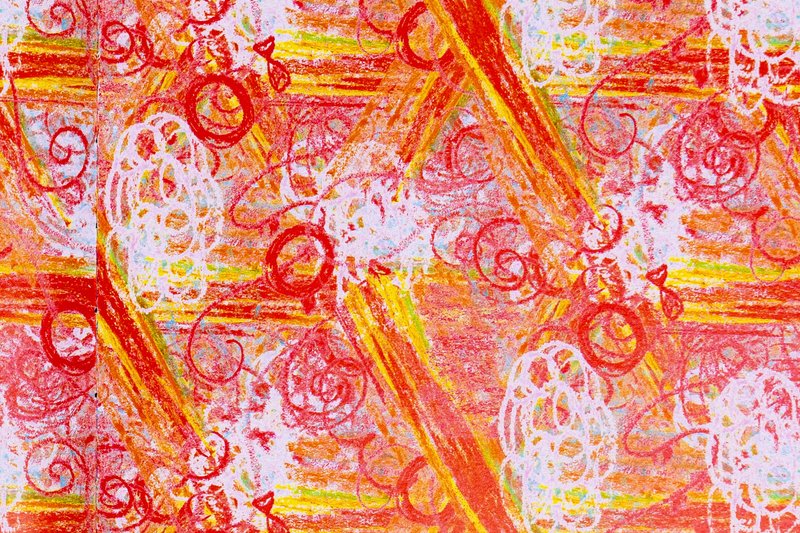
In November 2025, 27 ECAL students took part in Work and Turn, a workshop led by Geoff Han exploring the theme of labor and the often overlooked work that sustains the school. Located in a former IRIL knitwear factory in the industrial area of Renens, ECAL occupies a vast building whose daily functioning depends on many visible and invisible forms of labor. Over five days, students worked in small teams to produce a collective 96-page pocket-sized publication. Each pair created an 8-page photographic visual essay focusing on a specific aspect of labor at ECAL. Rather than relying on traditional portraits, the projects explored more poetic and indirect ways of documenting traces of work through spaces, gestures, materials, and infrastructures. The entire publication was manually printed on an offset press by the students themselves, in either black or red and black. The printing process was a central part of the workshop: participants prepared the plates, set up the press, and ran the prints. This hands-on production process echoed the theme of labor explored throughout the publication.  

Related courses