Temps Passé, Temps Réel

Hélène Portier – Temps Passé, Temps Réel

Bygone Times in Real Time is a design research project that explores new forms of engagement with various sources through an immersive installation. Using artificial intelligence, images posted on today’s social networks awaken two centuries of world heritage. Using such technologies to combine collections has opened up new challenges related to trust and credibility. Further experiments have been conducted in order to understand public perception and to define trust parameters related to content aggregation generated by artificial intelligence.

Collaboration with RTS, Institut de recherche Idiap, Musée suisse de l'appareil photographique and Confrérie des Vignerons.

Diploma project (2020) by Hélène Portier

vwamdu6b.jpg__0x1280_q85_subsampling-2.jpg
Temps Passé, Temps Réel

1/4

Projets similaires

Côme Brocas – MountResilience

MAS Design Research for Digital Innovation (EPFL+ECAL Lab)

Côme Brocas – MountResilience

by Côme Brocas

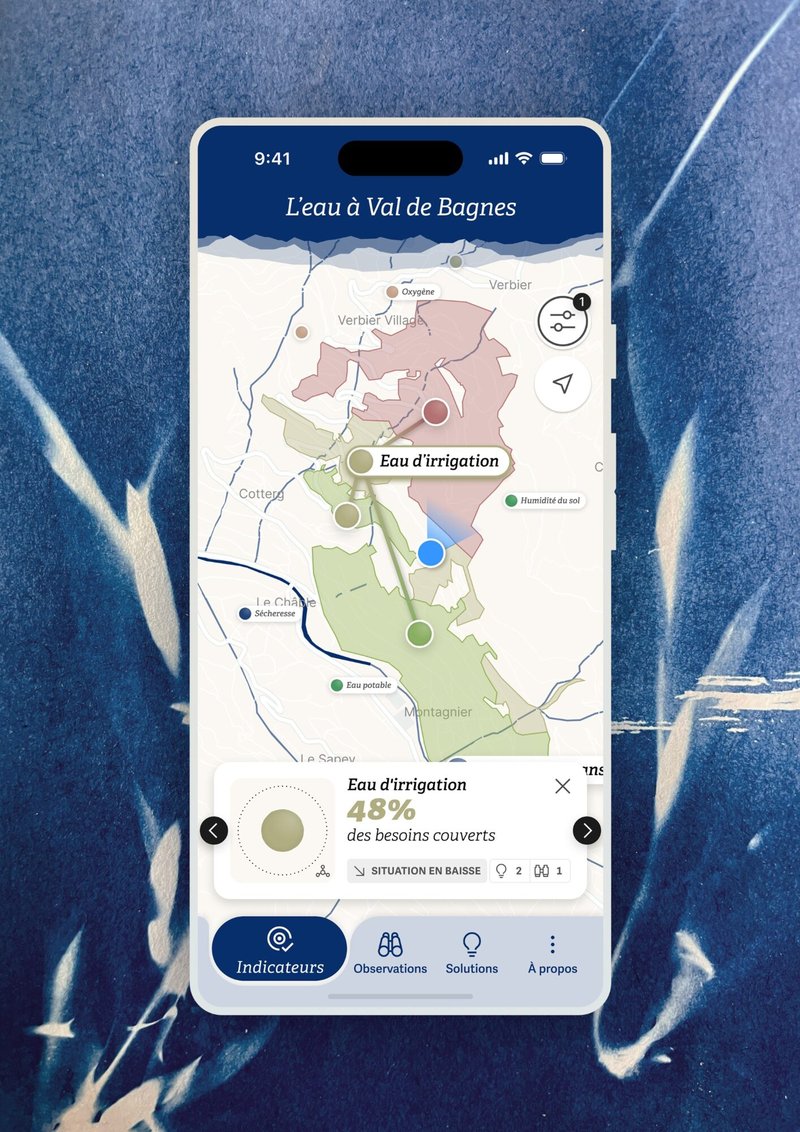
How can we facilitate dialogue, engagement, and decision-making in response to the challenges of water management and climate change in mountain regions? This replicable demonstrator from the European project MountResilience is the result of participatory and interdisciplinary research conducted in the heart of the Valais Alps. The web application brings together experts and the general public around three interconnected sections: relative indicators provide a shared overview of the situation in real time, participatory field observations foster engagement, and a catalog raises awareness of local solutions. The evaluative study of the tool identified several factors influencing engagement in the design of climate change adaptation solutions.
Zeynep Erol – Sofra – 2026 #1

MAS Design Research for Digital Innovation (EPFL+ECAL Lab)

Zeynep Erol – Sofra – 2026 #1

by Zeynep Erol

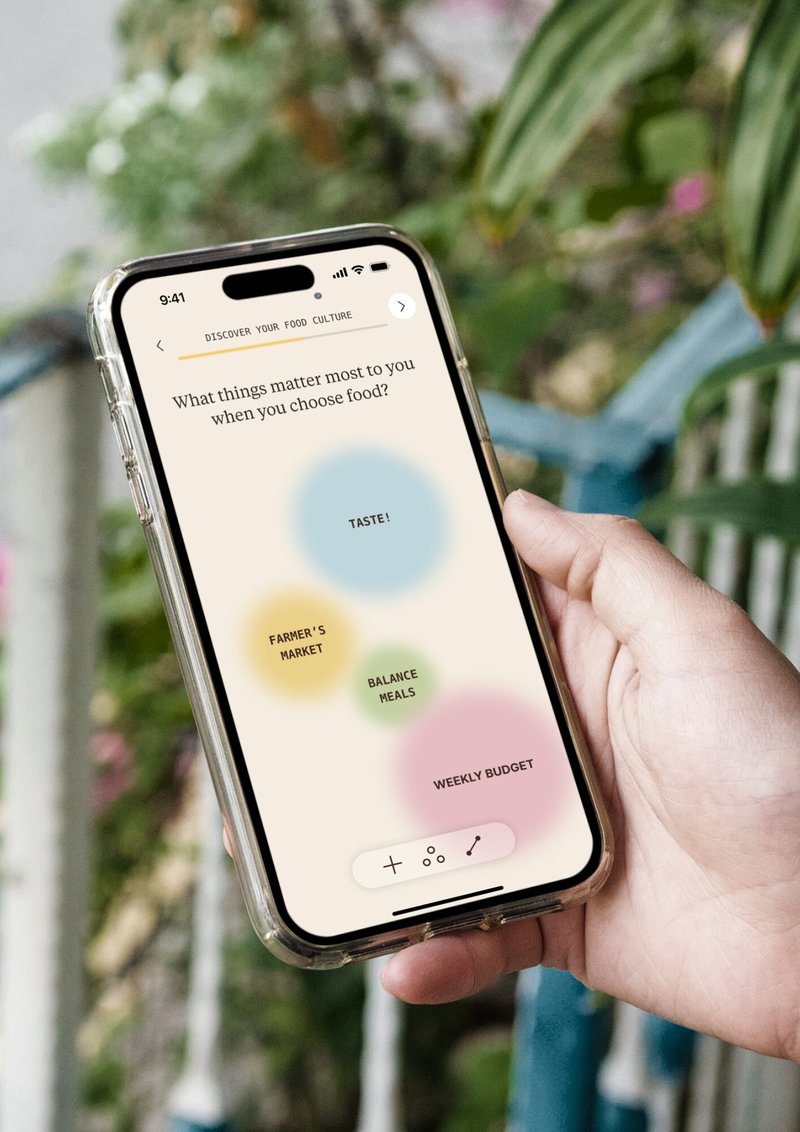
Sofra is a culturally adaptive conversational agent that supports dietary behaviour change by understanding how people relate to food. Developed within the EU SWITCH project, it builds a personal food culture from photos, mind maps, and voice notes that users provide to represent their everyday practices, motivations, and heritage. This profile shapes the agent's tone and suggestions, moving guidance from generic to grounded in each person's context. Developed through three user studies, the project shows how cultural resonance makes dietary support more relevant, respectful, and engaging. Combining interaction design and AI prompt engineering, Sofra challenges universal approaches to health technology and advocates for systems that adapt to, rather than flatten, cultural differences.

Sofia Lelis – Èvokâ II

MAS Design Research for Digital Innovation (EPFL+ECAL Lab)

Sofia Lelis – Èvokâ II

by Sofia Lelis

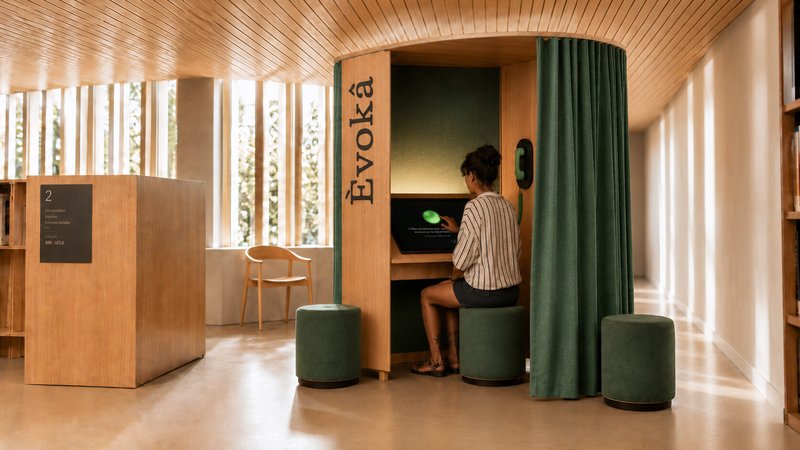
Èvokâ II is an interactive installation that invites visitors to the Cantonal and University Library of Fribourg to enter into dialogue with the archives. Through an AI-based conversational interface, a presence living within the collections gathers memories connected to the canton and, in return, reveals fragments, stories and traces of Fribourg's heritage. This design research project explores how digital archives can become more accessible and resonant, questioning what connects us to a collective identity: places, emotions, stories and lived memories. Developed with the Swiss Data Science Center and supported by the Swiss National Library, Èvokâ II transforms archival consultation into an intimate experience, between personal memory and shared history.

Andrea Pronzati – Praeludium

MAS Design Research for Digital Innovation (EPFL+ECAL Lab)

Andrea Pronzati – Praeludium

by Andrea Pronzati

Praeludium constitutes a reinterpretation of the classical music listening experience. Utilizing digital innovations and immersive spatial audio technology, Praeludium aims to heighten engagement, especially among younger audiences. It transforms conventional performances into multi-sensory encounters by integrating audio-reactive visuals and dynamic lighting, thereby animating classical compositions. By crafting an immersive ambiance, Praeludium serves as a bridge between traditional and contemporary audiences, encouraging them to engage with classical music in novel and stimulating ways.

Danpeng Cai – ANT

MAS Design Research for Digital Innovation (EPFL+ECAL Lab)

Danpeng Cai – ANT

by Danpeng Cai

ANT (Advancing neurofeedback in tinnitus) is a multidisciplinary research project focused on improving neurofeedback therapy for tinnitus. The design research part looked to establish a systematic process for the development of visual stimuli in this context. Through a series of iterative studies, this work aimed to optimize neurofeedback protocols, challenge traditional notions and oversights in the field, and develop comprehensive design guidelines. The project, funded by the Swiss National Science Foundation (SNSF), integrates insights in design (EPFL+ECAL Lab), cognitive psychology (Bern University of Applied Sciences and University of Fribourg), and clinical neuroscience (University and University Hospital Zurich), paving the way for future advances in neurofeedback therapy.

Related courses