Super Low Resolution

Super Low Resolution

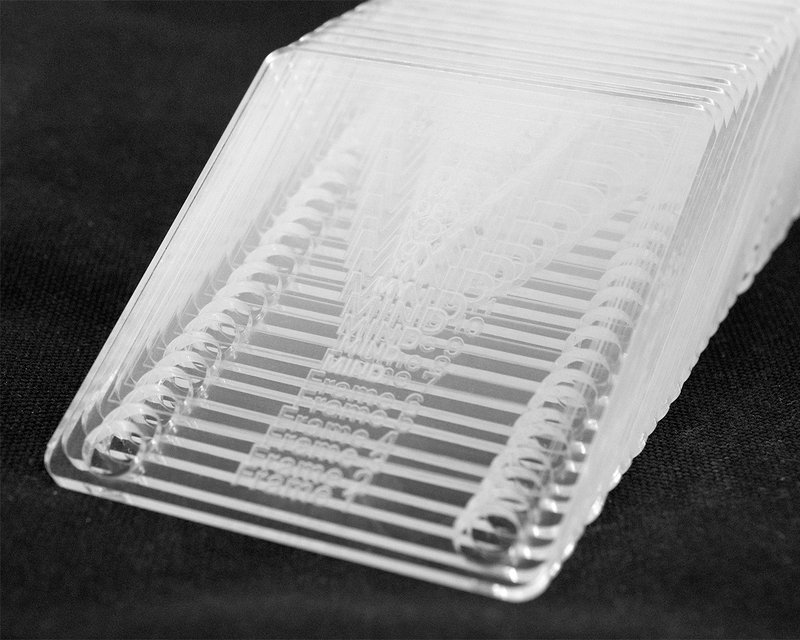
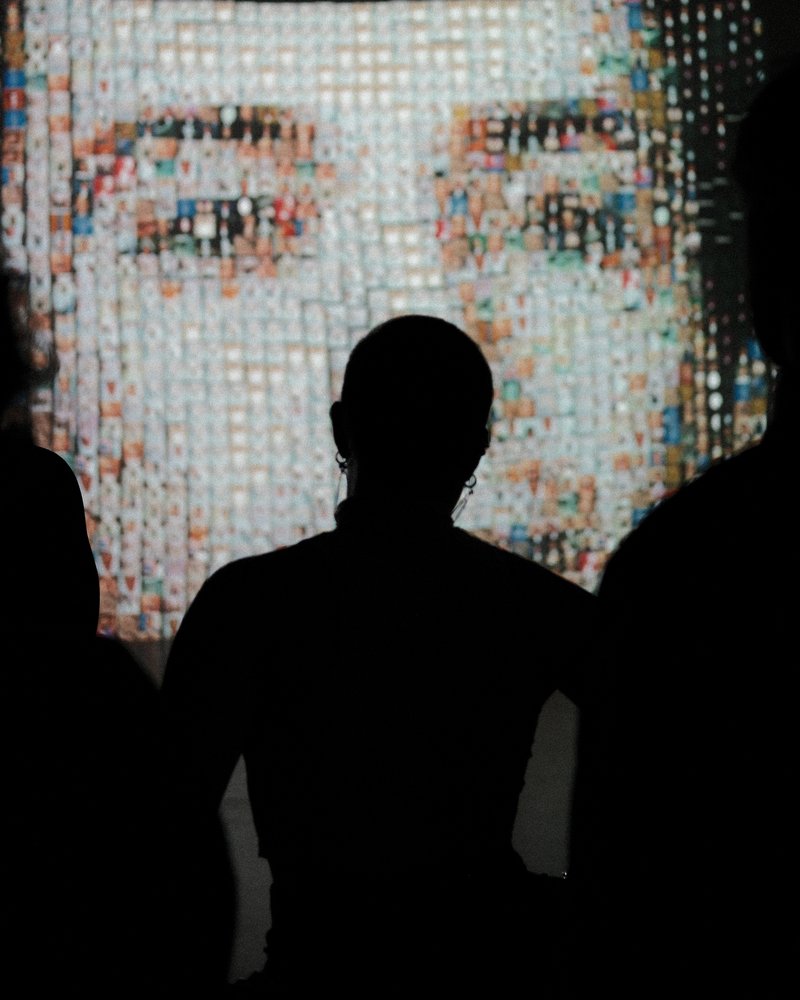
For a week, the first year students of the Media & Interaction Design Bachelor were given the challenge of creating interesting experiences using a super low resolution.

Project week led by Andreas Gysin and assisted by Callum Ross.

Workshop (2020)

Know-how
Creative coding
andreas-gysin-superlowres.png
Test the experiences
ECAL/Soraya Camina
ECAL/Soraya Camina
ECAL/Soraya Camina

1/3

Inspire Me ECAL/Elodie Anglade

1/3

ECAL/Martial Grin
ECAL/Martial Grin
ECAL/Martial Grin

1/3

ECAL/Lily Rose Hold
ECAL/Lily Rose Hold

1/2

Non stop Mapping ECAL/Antoine Contreras Salazar

1/2

Projects related to Creative coding

COUNTDOWN – 2025

BA MEDIA & INTERACTION DESIGN

COUNTDOWN – 2025

with Mario Von Rickenbach

The students worked on an interactive countdown in a web environment. Each day, they were tasked with creating a new sketch, culminating in their own collection, which could also be combined with projects from the entire class.

Enshittification - 2026

BA MEDIA & INTERACTION DESIGN

Enshittification - 2026

with Tibor Udvari

Many platforms degrade over time, shifting from useful tools into manipulative systems. In this workshop, we explore enshittification as a creative method by modifying existing websites or developing small web experiments that exaggerate friction, automation, overload, and disorientation in order to reveal the underlying logics.

Screen Design – 2025

BA MEDIA & INTERACTION DESIGN

Screen Design – 2025

with Harry Bloch

Websites developed over the course of a semester based on books chosen by students, which they adapted into web experiences as part of Harry Bloch's Screen Design course, second year of the Bachelor's degree in Visual Communication.

Reverse DIffusion – 2026

BA MEDIA & INTERACTION DESIGN

Reverse DIffusion – 2026

with Matthieu Minguet, Jamy Herrmann

This workshop explores the use of real-time video streams as a medium for transforming reality. Through live capture or interface-based processes, participants experiment with different ways of altering images using locally run diffusion models. The video stream is approached as raw material, opening up new perspectives on how reality can be perceived and transformed.

RE-STRUCTURE

MA DIGITAL EXPERIENCE DESIGN

RE-STRUCTURE

with RNDR STUDIO

During this one-week workshop, Master Digital Experience Design students used machine learning tools to decompose music videos into their constituent parts: segmented scenes, detected gestures, extracted colors, analyzed beats, separated audio stems, transforming linear audiovisual artifacts into structured datasets. These components were then reimagined as interactive, non-linear systems: explorable maps, generative timelines, rhythm-driven interfaces, and self-recomposing structures built with the OPENRNDR framework.

Related courses