The Mind Reader Interface

The Mind Reader Interface

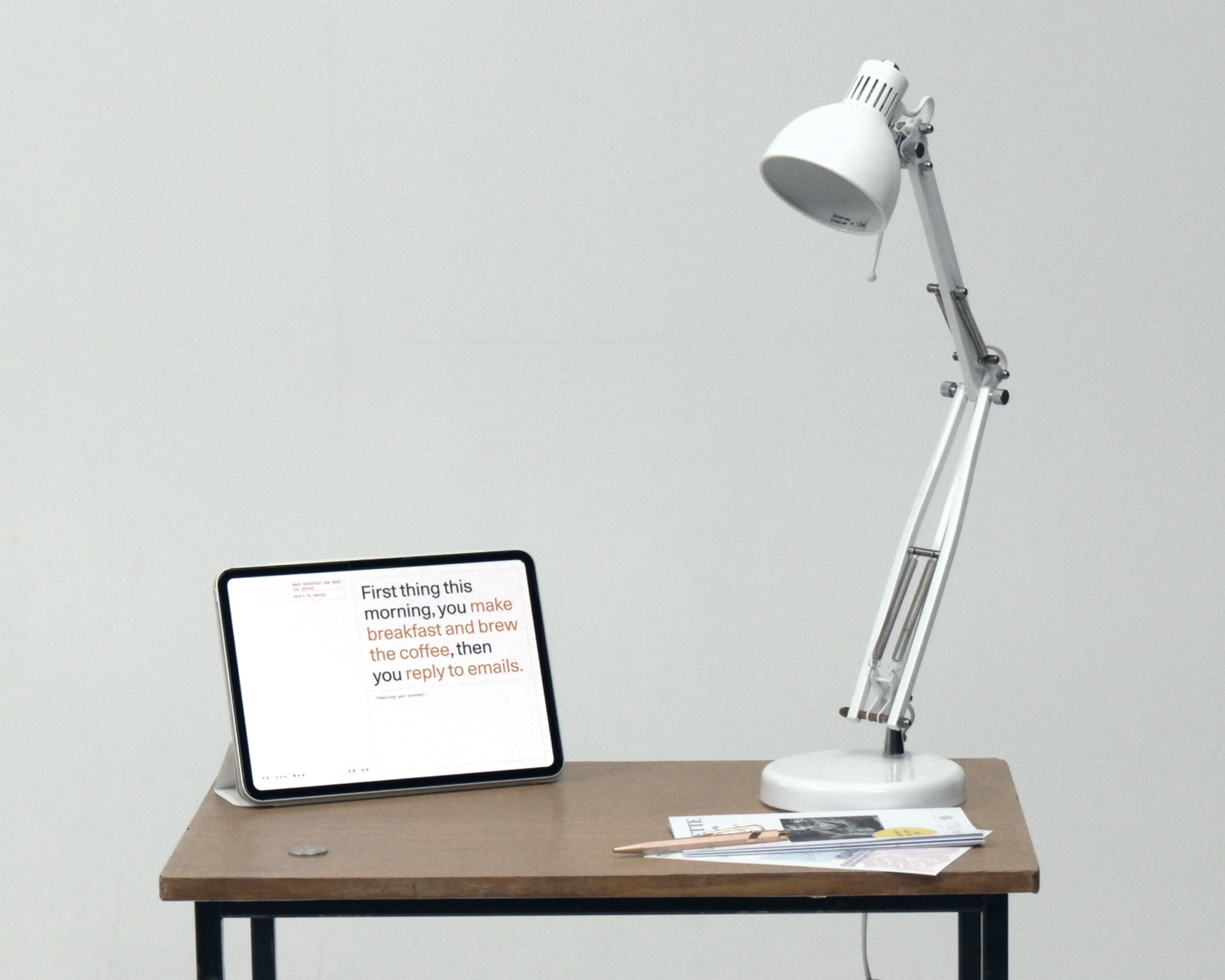
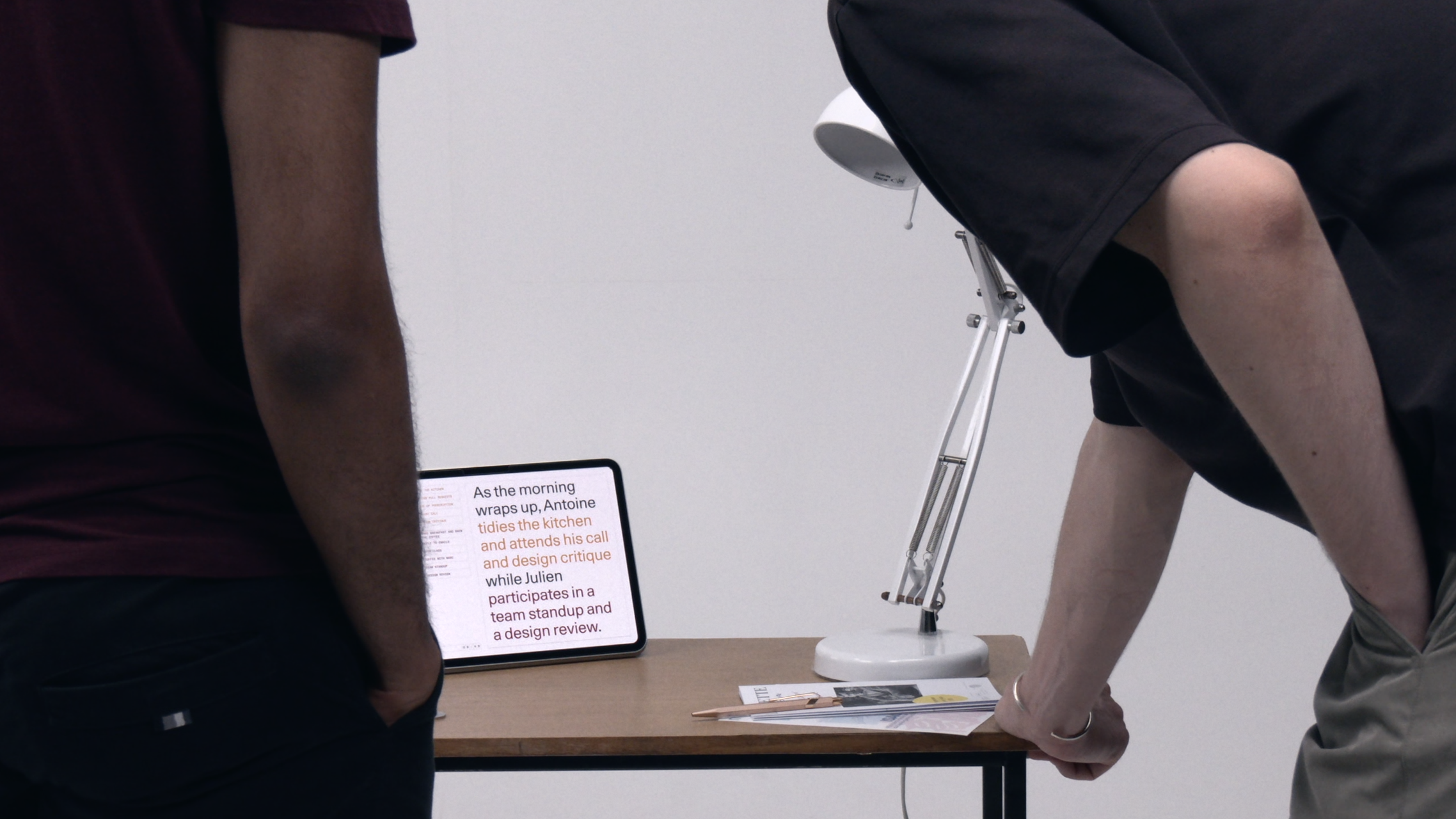
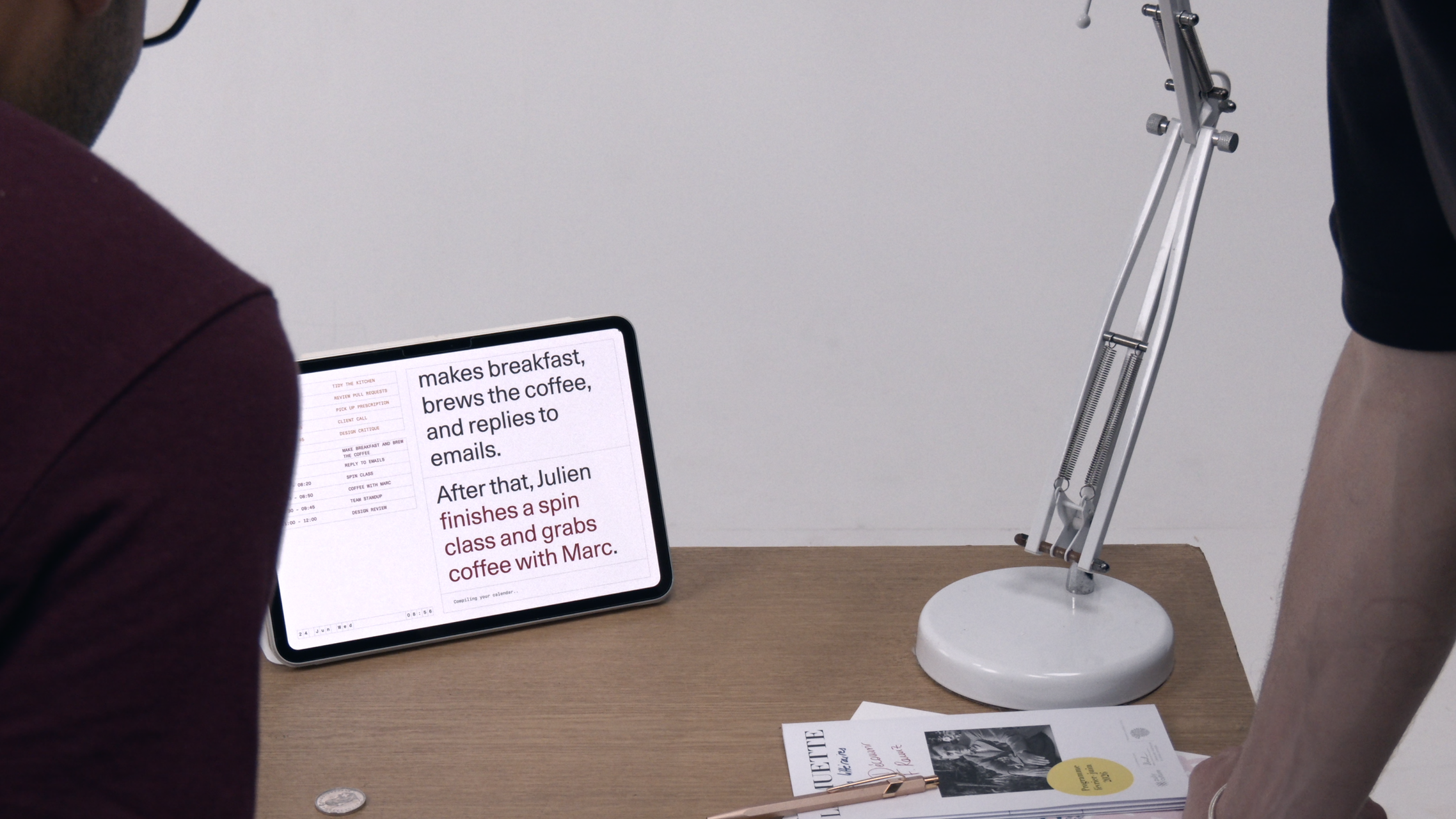
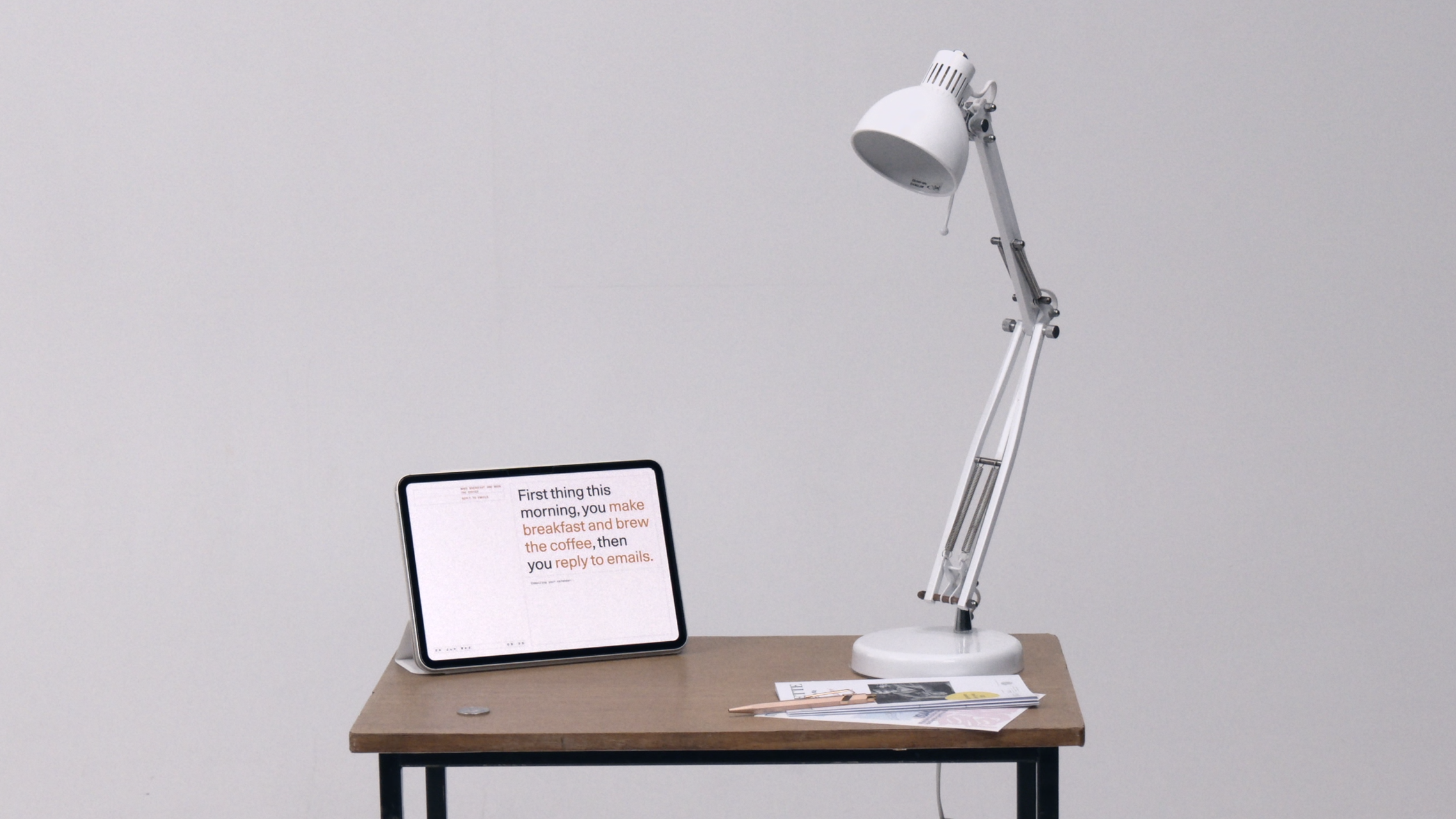
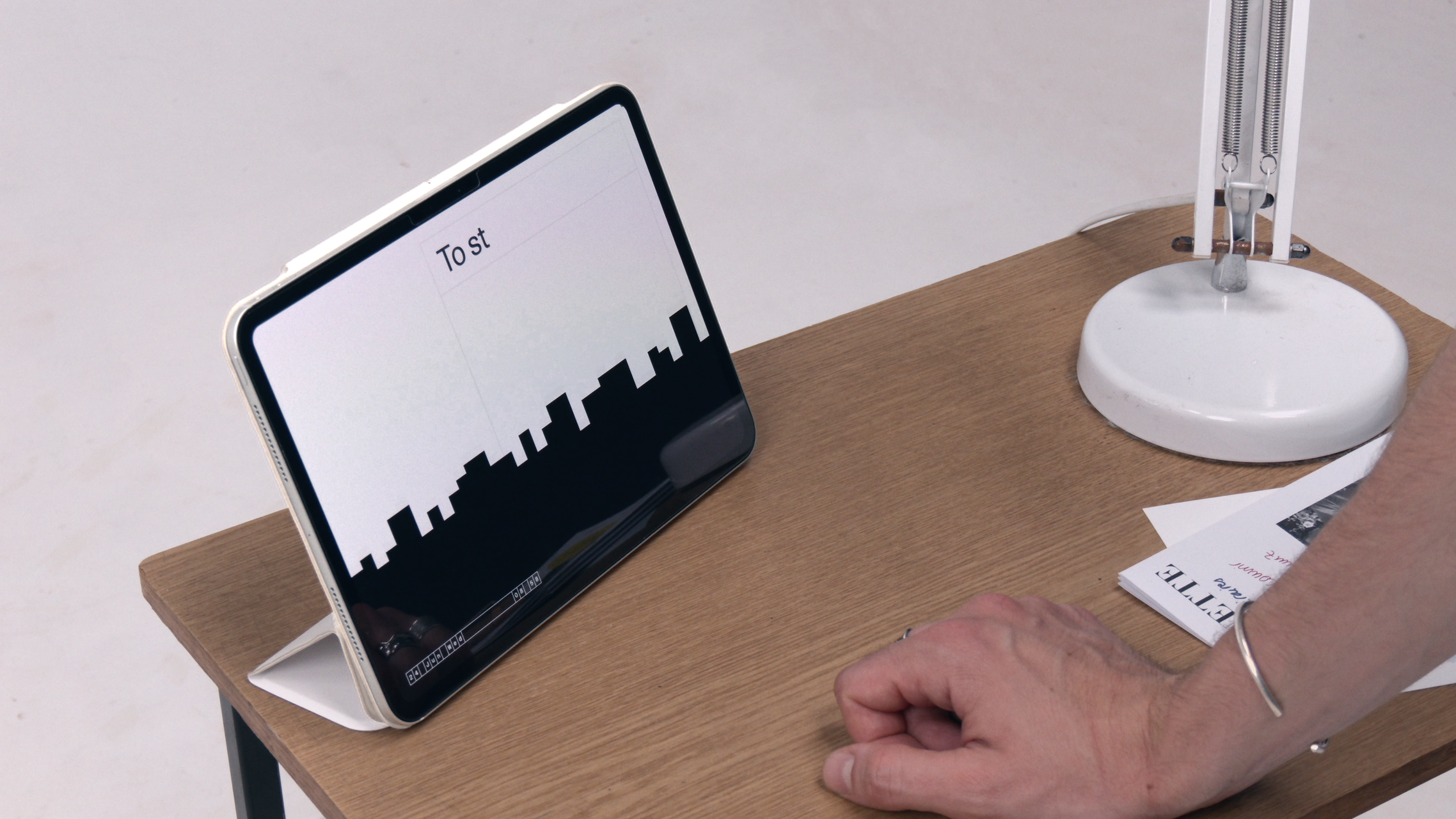
The Mind Reader Interface shifts computing from the reactive to the proactive: from a system that obeys commands to one that anticipates them. Where smart environments cast their users as pilots issuing constant instructions, this project removes the friction of instruction altogether. Intention is no longer declared through a screen or a button. It is inferred.

Reading context, habit and the signals of presence, the interface acts before it is asked. It sheds the form of the device to become a Ghost in the Room that senses rather than obeys. The user no longer pilots the space; they inhabit it. The system does not read thoughts, only traces, and stages the distance between anticipation and understanding: what we gain, and what we quietly surrender, when a space begins to act on our behalf.

Studio project (2026) with Gaël Hugo, Paul Lëon

Assistants
Martial Grin
Students
Marc Facchinetti, Gwenaëlle Gustin, Shin Young Park, Rishab Sachidanand, Emilie Müller, Thomas Neyroud
Know-how
Tangible Interaction, UX/UI, Creative coding, Data visualization

1/5

Ghost in the Lines

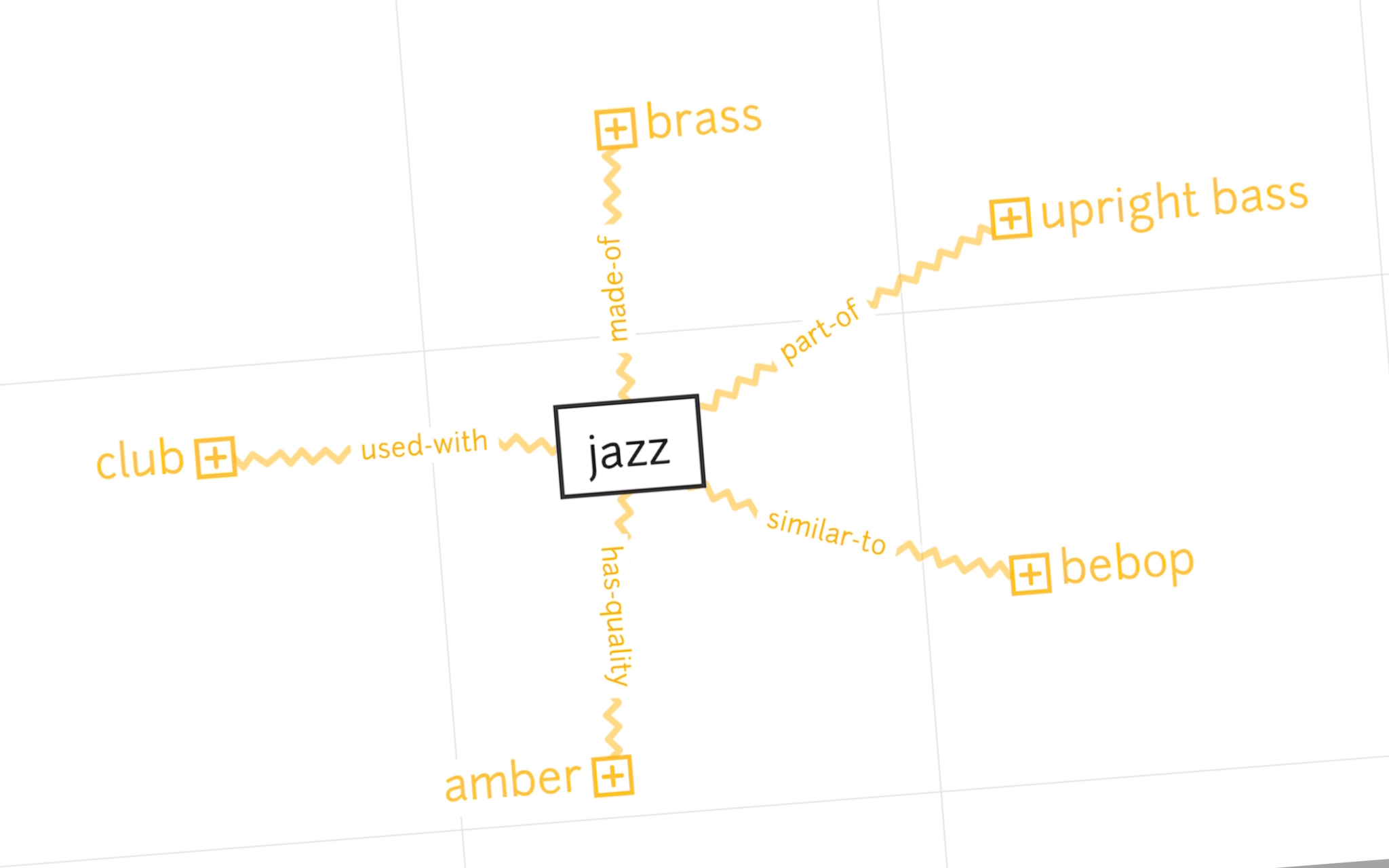
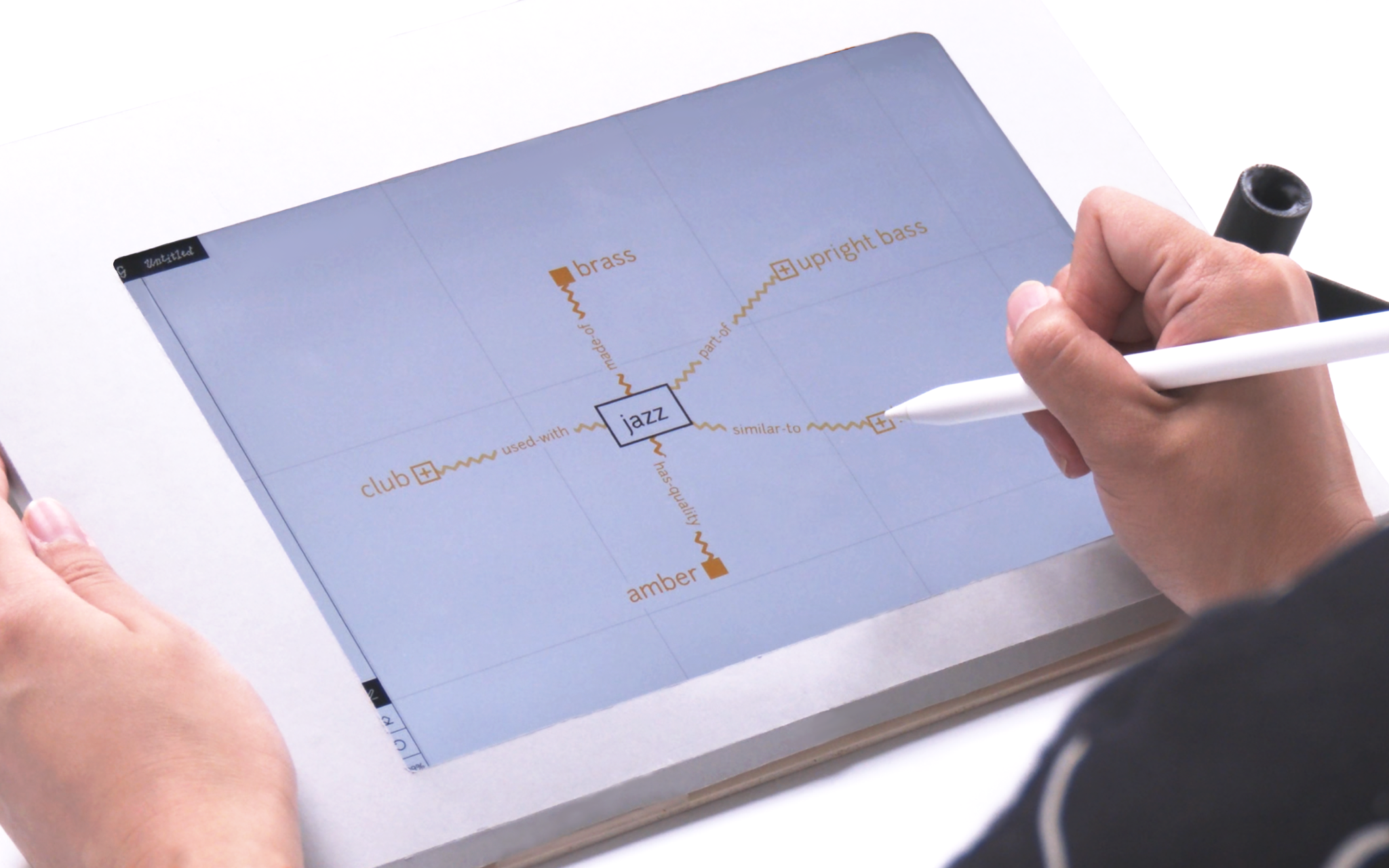
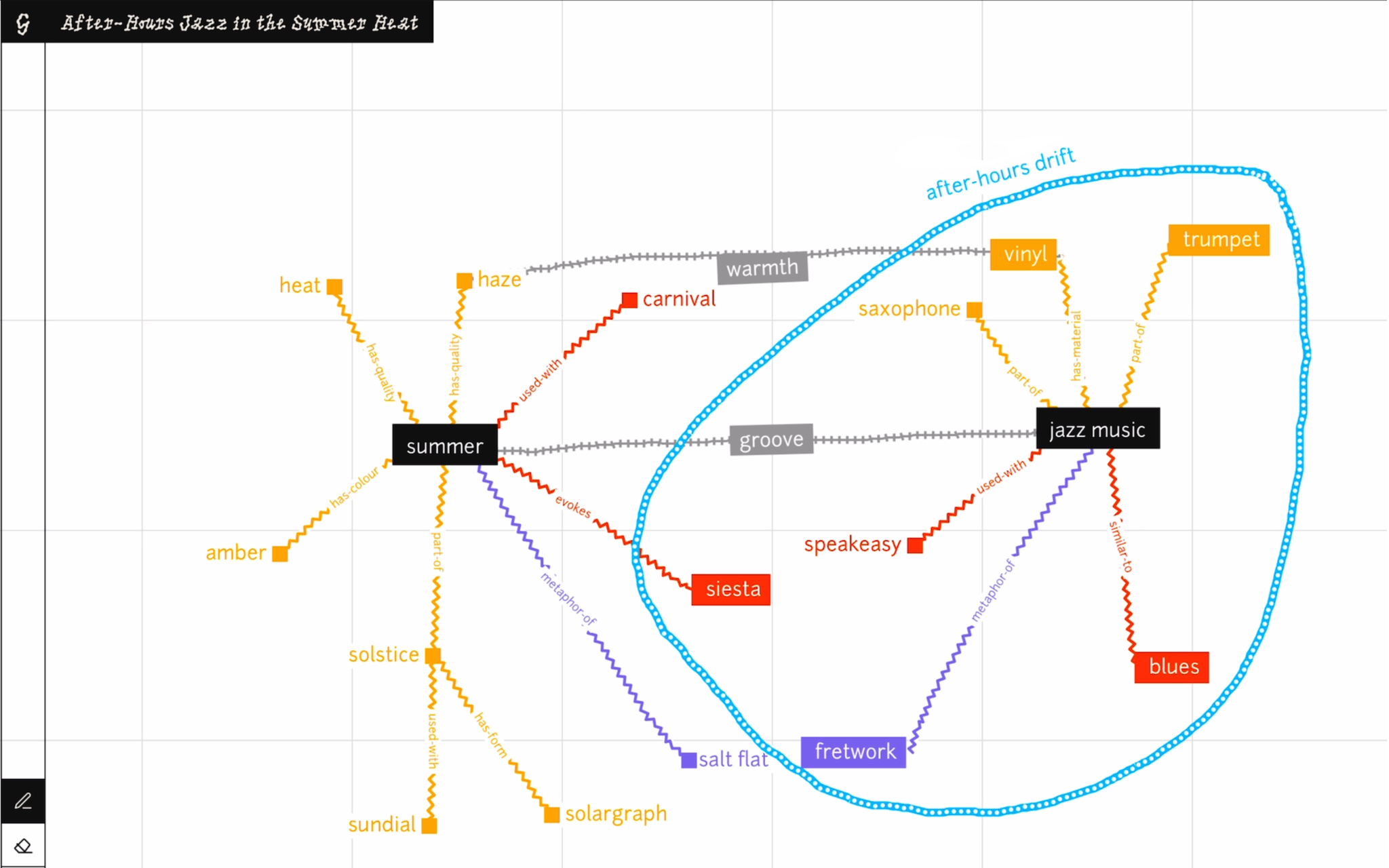
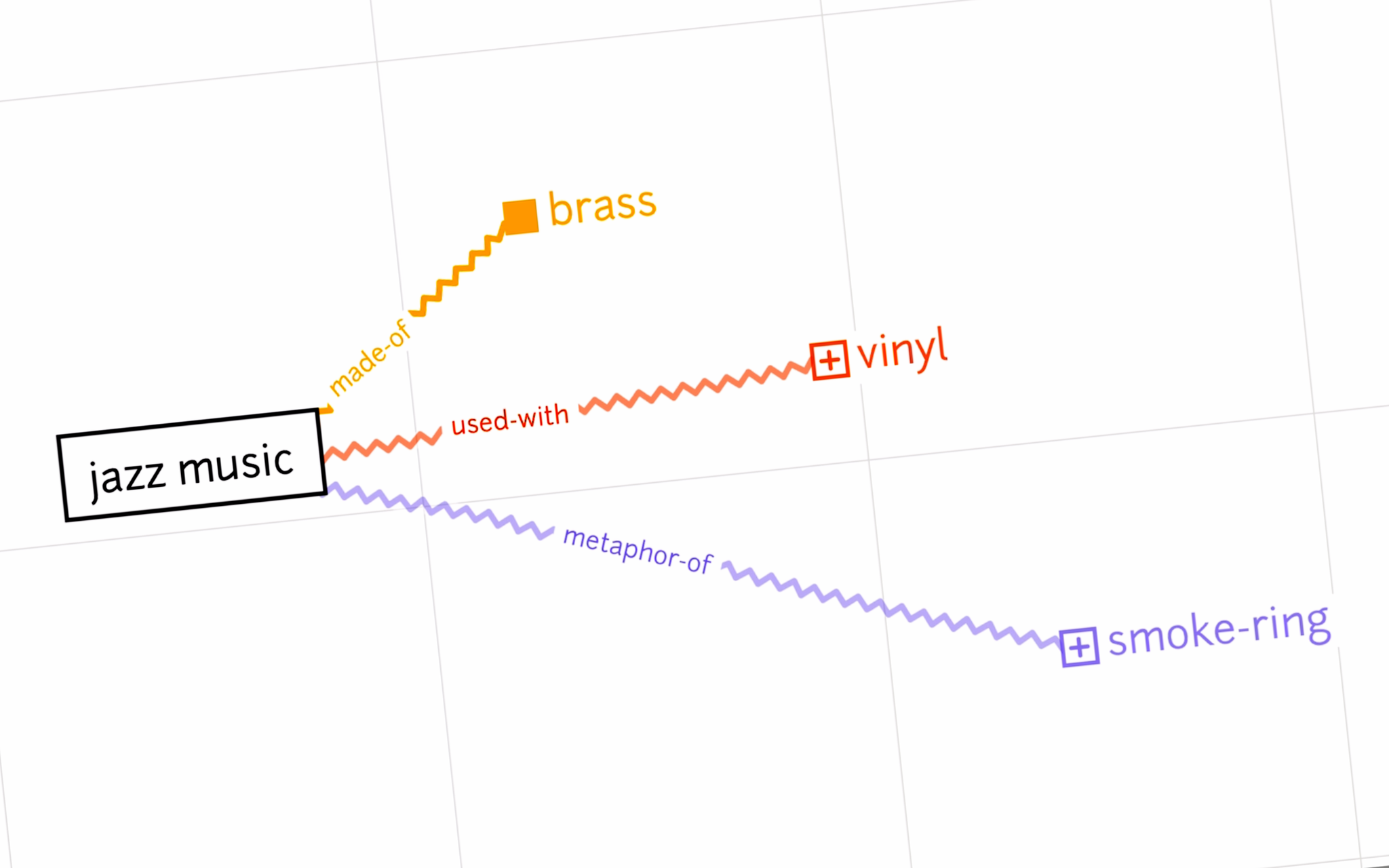
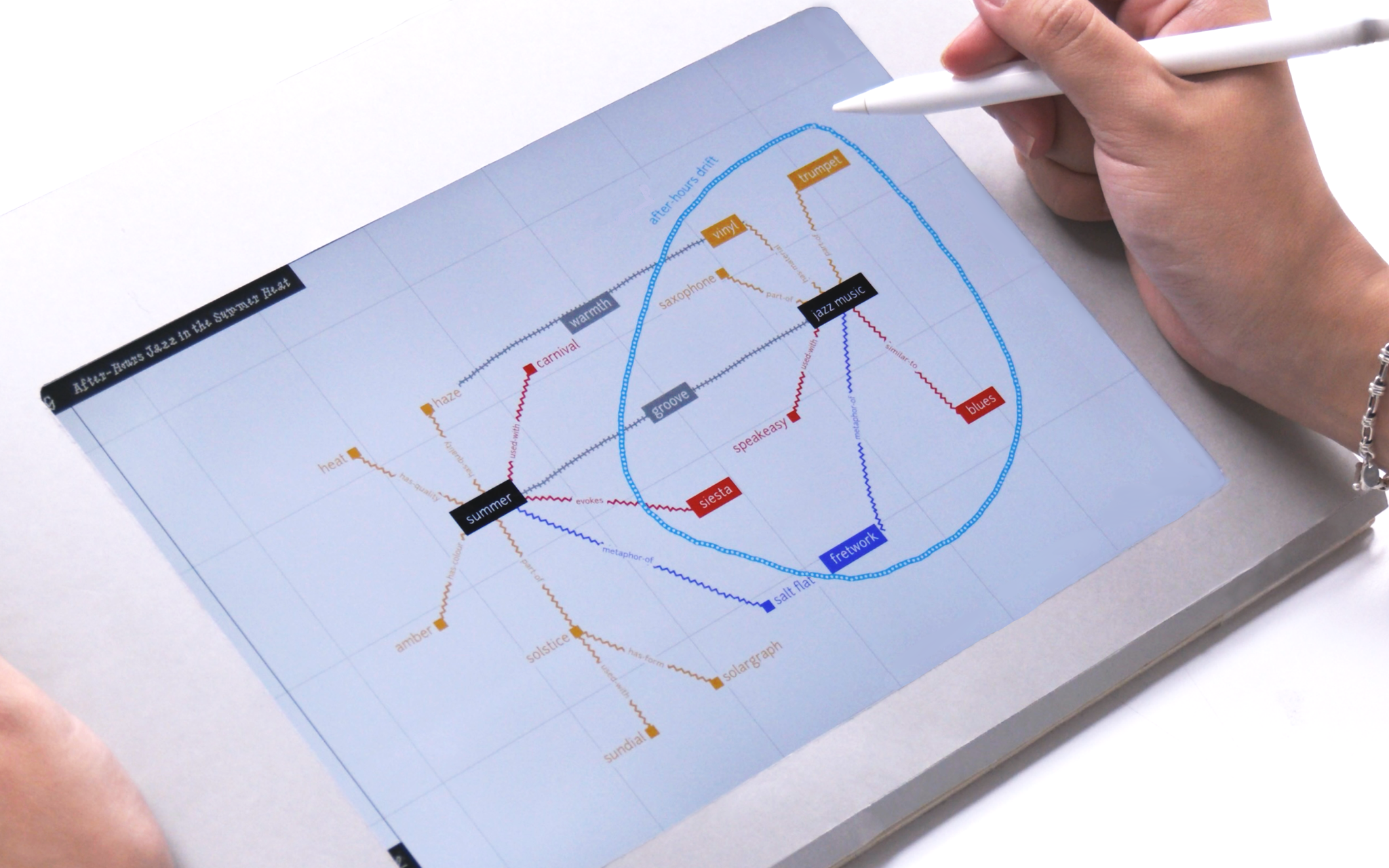
Ghost in the Lines is an ideation companion for creative practitioners. It builds on what a creator already does when mind-mapping: brainstorming in keywords, then combining and connecting them. As those lines take shape, the AI follows them and offers ghost suggestions from the context of the map and the strokes that grow from it. It supports open, serendipitous exploration while helping a design direction converge.

The pen stroke itself is the instruction. A line drawn out from a word asks for a leap, and its length sets how far that leap reaches. A loop around a cluster asks what those fragments fuse into. The drawing carries the intent. To preserve the agency of the creator, a word written by hand where a ghost would land takes priority over the suggestion. As the board fills, a quiet background agent reads the whole canvas and articulates one or more design directions.


Par Shinyoung Park


NOMAD

Nomad is a smart wearable that uses music cues in your headphones to guide you around the city.  It uses spatialized audio to guide the user, replacing screen-based navigation with their own music library, positioned in 3D around the body.  
 

This project question our sense of orientation. It aims to go back to screenless navigation and reduce that habit of pulling out our phone when we’re lost. Can we navigate through a city without constantly looking at a screen?
 

Par Emilie Müller

1/4


4.png

DON'T

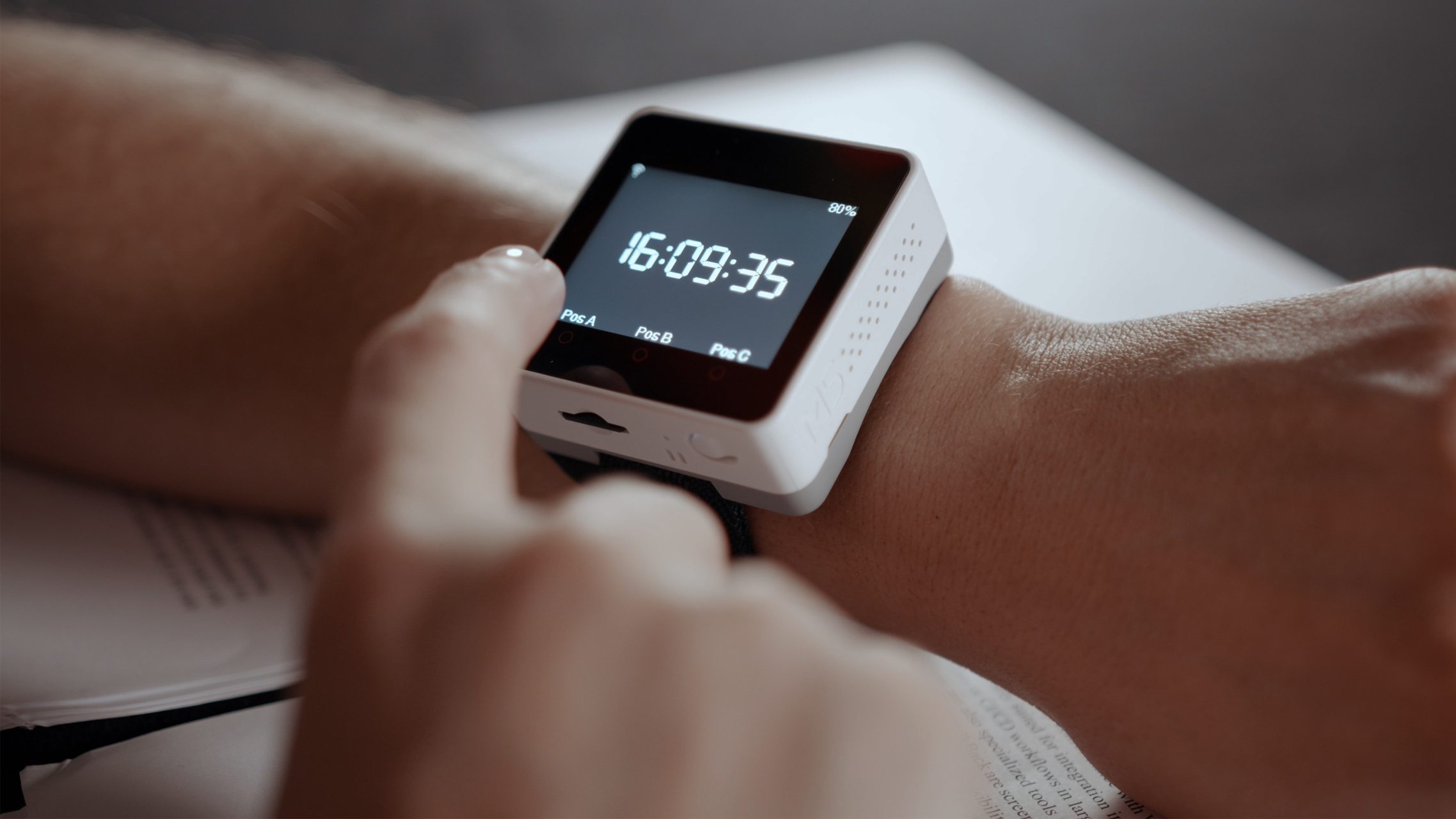
When you have body-focused repetitive behavior such as skin picking, nails biting or hair pulling, it often happens unconsciously. It starts with placing your hand on your cheek and ends with bleeding cuticles. 

This smartwatch anticipates an episode by emitting vibrations that help you become aware when your wrist is in a specific (predefined) position and small movements are detected. The vibrations intensify if the undesirable behaviour is detected continuously. Up to three positions can be registered as "unwanted".

Par Gwenaëlle Gustin


Reckoner

Reckoner is a note taking and comparison tool. It is a vocal-driven software working on mobile with barely any UI. The goal is to accompany or replace on-paper annotations and let the reader speak their mind as they're reading while minimising the digital presence and distractions. The software is built to detect the intent of any entry, whether it is a rhetorical question, a comparison with old notes, a quote, and so on. It works with a queuing system so that the tool is always available, even during processing. Reckoner removes the manual transcription step to build a digital collection of annotations and uses cross-referencing to suggest links between the existing notes upon processing. The project works with an open-source LLM run locally and edits markdown files so that it can be plugged into different note-taking software. In this version, Obsidian is used for its graph view and links visualisation.
 

Par Thomas Neyroud

1/4


1/4

Semantic

Text on the web is static, whereas reading preferences are dynamic. One person prefers to skim an article or want a gist, while another might be reading to improve their vocabulary or another is learning the language. Each brings a different intent with interacting with text on the web. With large language models, the economics or re-writing changes where the web can adapt to the personality, preference and need of the person using it. 

This is a new kind of reading surface where readers can mould the text itself, change it to their reading preferences. A passage can be tuned for detail, vocabulary complexity, and the voice. Respecting authorship and the source, the original is always available and easy to reinstate. This shifts the mental model from a document that is consumed as-is to something more fluid; a text that can be precisely dailed in, turning reading into a direct conversation with the material.
 

Par Rishab Sachidanand


Tune TONE


Tune Tone is an audio interaction system that explores implicit and intent-based interaction through head movement and attention. Instead of relying on buttons, sliders, or voice commands, the system interprets subtle body cues to adapt the listening experience in real time.

Using an IMU sensor embedded in a wearable module, the system detects different types of head movements and translates them into audio behaviors. Rhythmic nodding gradually increases volume, turning towards a person redistributes audio to the opposite ear to facilitate conversation, and shifts in attention trigger atmospheric audio filtering.

The project investigates how listening interfaces can move beyond explicit control and become responsive to context, attention, and bodily behavior, creating a more fluid and intuitive relationship between the user and sound.
 

Par Marc Facchinetti

Projects related to Data visualization

Viktor Gagné – Serialized Saplings

BA MEDIA & INTERACTION DESIGN

Viktor Gagné – Serialized Saplings

by Viktor Gagné

The weight of materials produced by humans is now believed to exceed that of all terrestrial biomass. How will these artifacts integrate into the rest of the environment in a million years? Serialized Saplings is an interactive installation that speculates on a potential form of vegetation to come, heavily altered by the excesses of human production, here crystallized through the symbol of the electrical outlet. By manipulating the connections of several power strips, the participant is invited to program the "genetic code" of hybrid plant species that do not yet exist and whose appearance resembles our industrial standards. This generated vegetation is then classified in the form of a digital herbarium that can be consulted and studied.

Elena Biasi – Magnetic Fragments

BA MEDIA & INTERACTION DESIGN

Elena Biasi – Magnetic Fragments

with Pauline Saglio, Christophe Guignard, Laura Nieder, Alain Bellet, Gaël Hugo, Lara Défayes

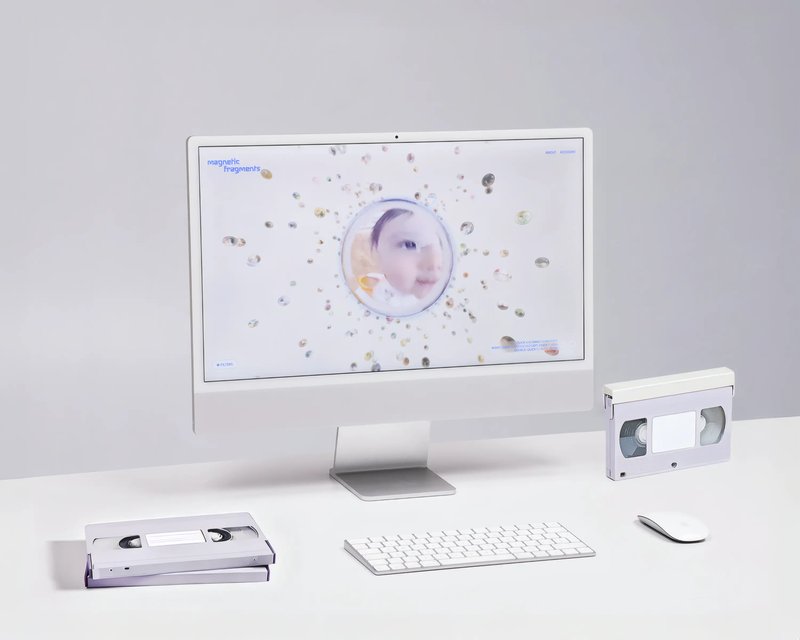
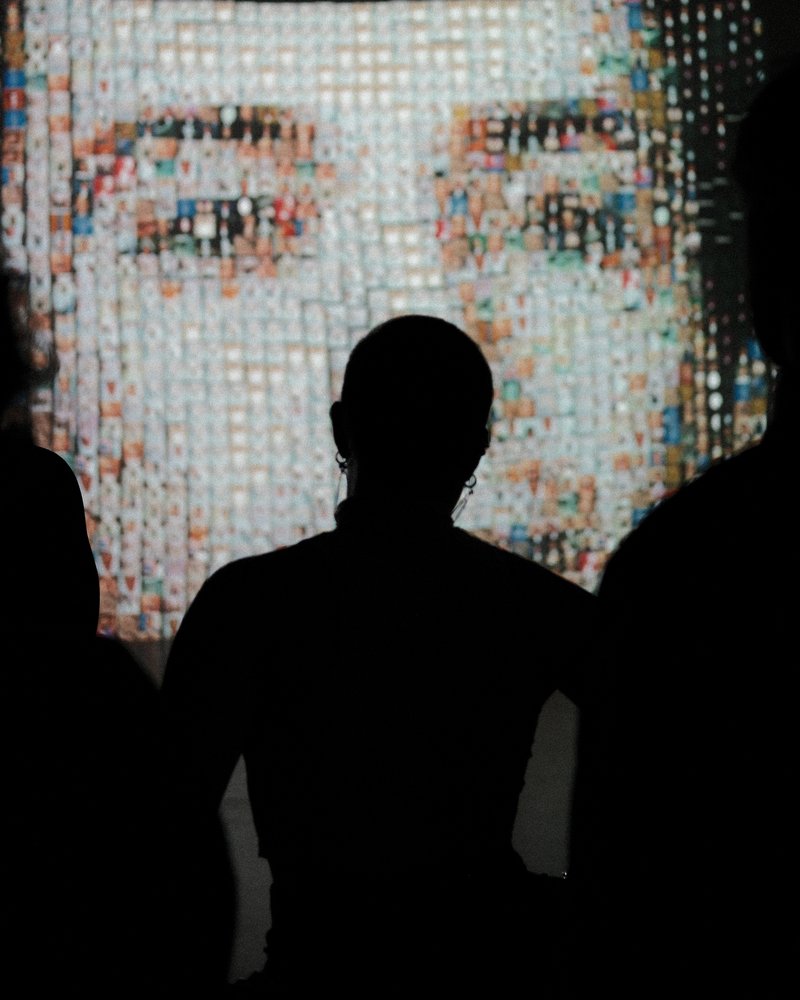
Before the rise of digital technology and social networks, everyday moments were captured on analog media and watched with family in one uninterrupted flow. These long VHS tapes, composed of successive sequences, gradually disappeared, victims of their obsolescence. Magnetic Fragments offers a way to rediscover these forgotten memories through a three-dimensional web interface, where each bubble represents a memory to explore and comment on. Designed for a private circle, the collaborative platform allows free navigation, revisiting each memory fragments in a dynamic way and breaking with the monotonous structure of past viewings. Magnetic Fragments thus becomes a space for intergenerational transmission, where the past is shared in the present.

Emilie Müller – Librarynth

BA GRAPHIC DESIGN

Emilie Müller – Librarynth

by Emilie Müller

It is good to believe that the library is resilient. Not as a relic of the past, but as a presence that reinvents itself, oscillating between the tangible and the intangible. It's not a question of denying the digital, nor of clinging to our yellowed pages. But to understand that if we accept the library as a moving space, an organism that mutates with the times, then its future may not be so bleak. My diploma is a non-linear immersive library, conceived as a virtual house. Each piece evokes one of six themes from the Jan Michalski Foundation's Varia collection. In the form of a web interface, the project celebrates the serendipity inherent in physical libraries, while questioning how digital technology can translate the book experience.

RE-STRUCTURE

MA DIGITAL EXPERIENCE DESIGN

RE-STRUCTURE

with RNDR STUDIO

During this one-week workshop, Master Digital Experience Design students used machine learning tools to decompose music videos into their constituent parts: segmented scenes, detected gestures, extracted colors, analyzed beats, separated audio stems, transforming linear audiovisual artifacts into structured datasets. These components were then reimagined as interactive, non-linear systems: explorable maps, generative timelines, rhythm-driven interfaces, and self-recomposing structures built with the OPENRNDR framework.

Evan Kelly – Invisible Network

BA MEDIA & INTERACTION DESIGN

Evan Kelly – Invisible Network

with Alain Bellet, Christophe Guignard, Gaël Hugo, Laura Nieder, Pauline Saglio

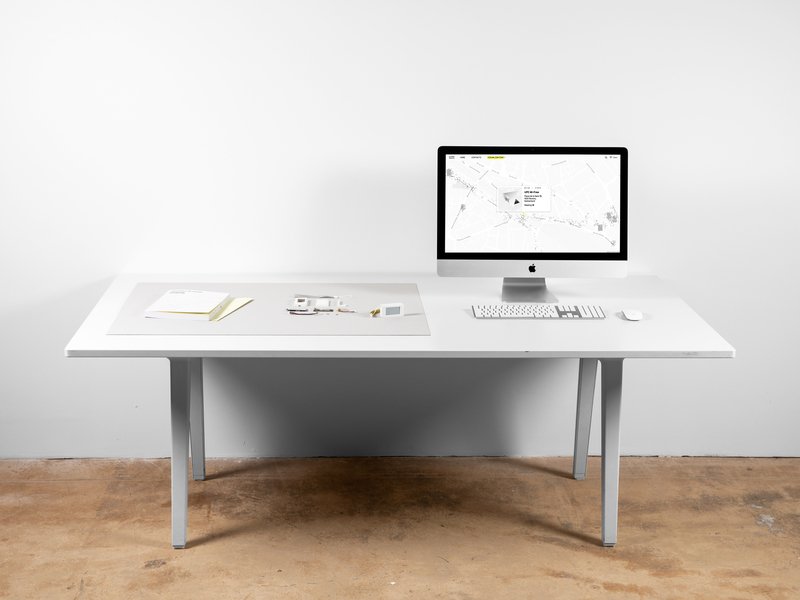
Invisible Network is a portable device that makes the invisible and autonomous communications of machines perceptible and tangible. The way they interact with each other is akin to the modes of human communication, thus creating a real social network of machines. This device mediates between users and the machines around them. Via the screen it transmits fragments of its continuous and silent communications in the form of human social metaphors.

Related courses