Ripley

David Massara – Ripley

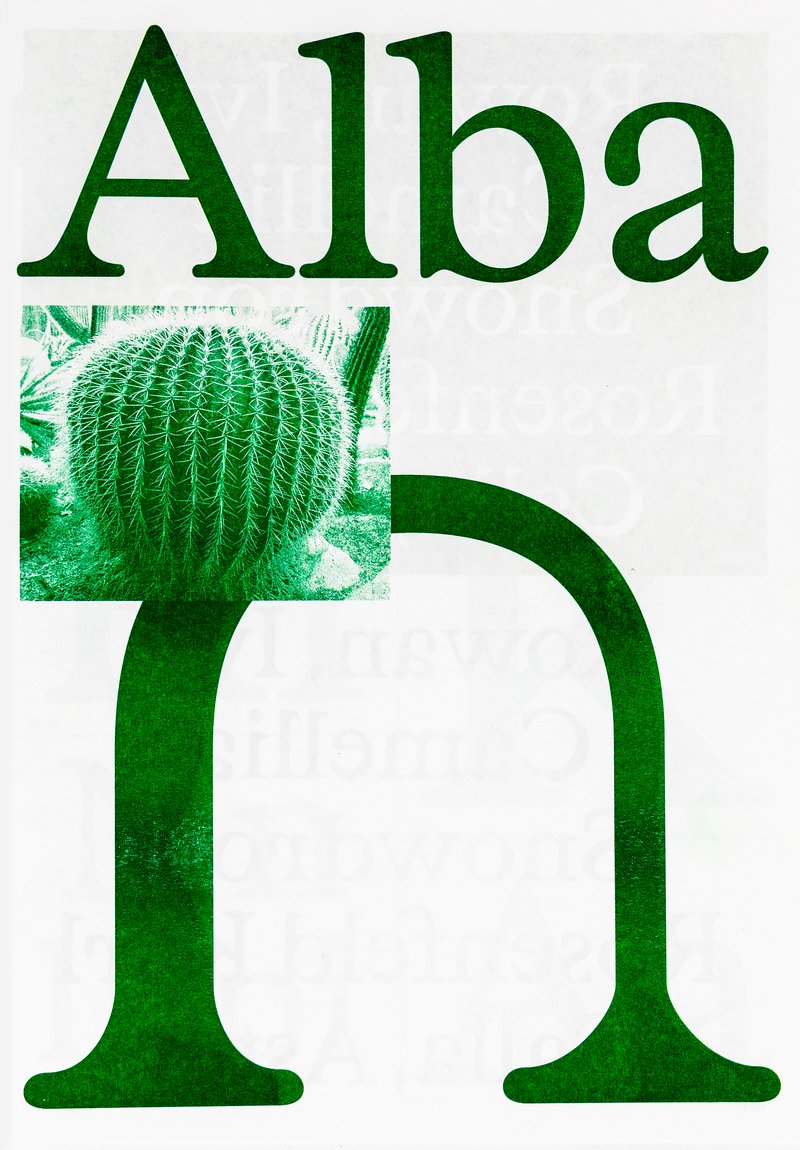
Ripley considers how to optimize legibility in an on-screen environment; the idea  is to transpose the legibility rules of body text from print to new media. This typeface is a toolbox that combines a multitude of axes to provide the reader  with ideal reading comfort. Furthermore, the font itself is programmed to respond to  light sources. It adapts to ambient surrounding light changes throughout the day, increasing  readability, in order to protect the reader from eye strain. This project confirmed my ambition to continue my career in the fi eld of typography.

Diploma project (2019) by David Massara

Know-how
Type design

Ripley considers how to optimize legibility in an on-screen environment; the idea is to transpose the legibility rules of body text from print to new media.

This typeface is a toolbox that combines a multitude of axes to provide the reader with ideal reading comfort. Furthermore, the font itself is programmed to respond to light sources. It adapts to ambient surrounding light changes throughout the day, increasing readability, in order to protect the reader from eye strain.

This project confirmed my ambition to continue my career in the fi eld of typography.

Ripley — David Massara

1/7

Ripley — David Massara

1/4

Ripley — David Massara

Projects related to Type design

Diego Steiner – Hybrid Modules

BA GRAPHIC DESIGN

Diego Steiner – Hybrid Modules

by Diego Steiner

Hybrid Modules explores the link between traditional craftsmanship and contemporary technologies through the creation of a 3D-printed modular typographic tool for use with a manual letterpress. Designed on a grid, the modular alphabet becomes a set of physical dies, which can be inserted by hand into the press. The slow, repetitive process becomes an integral part of the visual language, making visible the time and care of the gesture. A series of A2 posters promotes a series of fictitious conferences entitled “ART, CRAFT & TECHNOLOGY - Guests in Switzerland”.

Type Design - BA1 S1 2025-2026

BA GRAPHIC DESIGN

Type Design - BA1 S1 2025-2026

with Robert Huber

First-year students were invited to manually sketch the typographic skeleton of lowercase alphabet letters. The objective was to maintain the proportions, curves, and characteristic axes of each letter while paying close attention to visual coherence and consistency in the drawing.

Type Design  BA2 – S1 2025

BA GRAPHIC DESIGN

Type Design BA2 – S1 2025

with Aurèle Sack

Second-year students were required to manually develop the lowercase letters of two typefaces.

Type Design BA3 – S1 25–26

BA GRAPHIC DESIGN

Type Design BA3 – S1 25–26

with Aurèle Sack

The third-year students had to develop a typeface and digitize it.

Stephanie Wilson – Iconic

MA TYPE DESIGN

Stephanie Wilson – Iconic

by Stephanie Wilson

Iconic stands at the intersection of typography, social research, and inclusive design. It addresses a growing concern: making reading more accessible for senior readers. Through the development of a typeface named Iconic, the project aims to enhance reading comfort while offering an aesthetic, functional, and adaptable typeface suited to the changes associated with aging. The project was created in collaboration with senior-lab, a Swiss platform dedicated to enhancing the quality of life for seniors. Grounded in a participatory methodology, this collaboration enabled a reality-based approach: available in serif, sans serif, sans semibold, and italics, Iconic was designed based on feedback and testimonials gathered from seniors during sessions held at ECAL.

Related courses