There Will Be Blood

There Will Be Blood

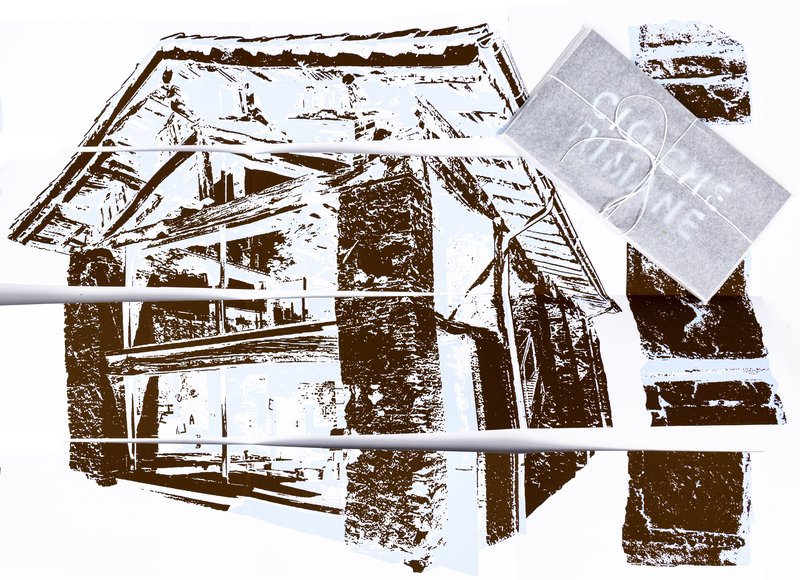
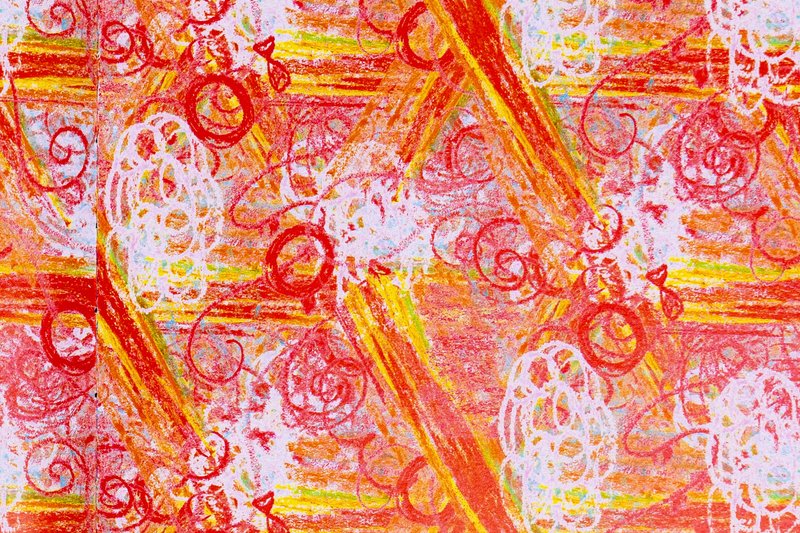
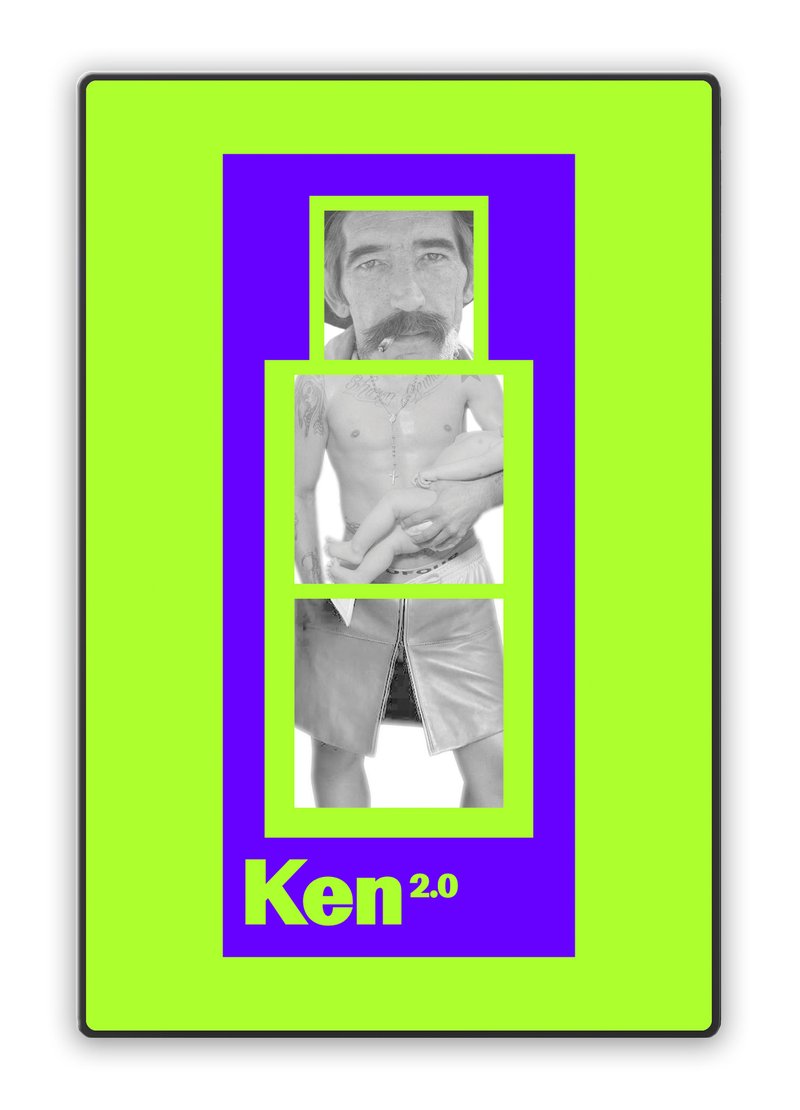
Sonya Dyakova wanted to do something about conveying music through typography. She have watched recently a Paul Thomas Anderson film ‘There Will Be Blood’, and found it very moving and inspiring. The film features an original orchestral score by Radiohead guitarist Jonny Greenwood, and she felt the music had integral and powerful role in the film. On day one the students and I watched the film together. Afterwards, I have asked them to create a poster for it. The poster had to embody the essence of the story and ‘weave in’ the feeling that the sound made. Design is about telling a story, and I wanted to the audience to be able to get the story, or an essential aspect of the story, from looking at the poster. One of the tasks of the designer is to extract essence and communicate it in the most clear voice through tools that we know — typography, colour, image making, printing techniques. All elements of the poster had to have a reason and purpose. She have asked the students to create a list of words, while the film was fresh in their mind, which were reflecting the story. From these words she wanted  them to start making visual elements that would make up the poster. She asked the students to use printing press, using wood and metal to create printing plates. Which, in turn, instructed the look of the poster to some degree. The number of layers was limited by the number of students and time they had — any project has constraints, and so did this one. The result was a healthy variety of approaches: some posters were abstract, some more figurative. She tried to push the students not to be afraid of the obvious. Alan Fletcher’s words are always in her mind: “What distinguishes designer sheep from designer goats is the ability to stroke a cliché until it purrs like a metaphor”.

Workshop (2013) with Sonya Dyakova

Sonya Dyakova wanted to do something about conveying music through typography. She have watched recently a Paul Thomas Anderson film ‘There Will Be Blood’, and found it very moving and inspiring. The film features an original orchestral score by Radiohead guitarist Jonny Greenwood, and she felt the music had integral and powerful role in the film. On day one the students and I watched the film together. Afterwards, I have asked them to create a poster for it. The poster had to embody the essence of the story and ‘weave in’ the feeling that the sound made. Design is about telling a story, and I wanted to the audience to be able to get the story, or an essential aspect of the story, from looking at the poster. One of the tasks of the designer is to extract essence and communicate it in the most clear voice through tools that we know — typography, colour, image making, printing techniques. All elements of the poster had to have a reason and purpose. She have asked the students to create a list of words, while the film was fresh in their mind, which were reflecting the story. From these words she wanted them to start making visual elements that would make up the poster. She asked the students to use printing press, using wood and metal to create printing plates. Which, in turn, instructed the look of the poster to some degree. The number of layers was limited by the number of students and time they had — any project has constraints, and so did this one. The result was a healthy variety of approaches: some posters were abstract, some more figurative. She tried to push the students not to be afraid of the obvious. Alan Fletcher’s words are always in her mind: “What distinguishes designer sheep from designer goats is the ability to stroke a cliché until it purrs like a metaphor”.

Mateo Broillet, Alexandra Chernopazova, Sabrina Fischer

1/2

ECAL-Affiche-12x17cm-240dpi-AdobeRGB1998.jpg
Naomi Gallay, Clemens Alexander Piontek, Chi-Binh Trieu

Projets similaires

ECAL Light House

BA GRAPHIC DESIGN

BA MEDIA & INTERACTION DESIGN

BA PHOTOGRAPHY

ECAL Light House

with Jean-Vincent Simonet, Léonard Guyot, Florian Pittet (Sigmasix), Vincent Jacquier, Julien Gurtner

During a week of collaborative work, first-year students in the Visual Communication department at ECAL were given the ambitious task of creating a complete audiovisual experience, designing a light and sound architecture based solely on five original musical compositions. Using a central totem-like screen installation and projections on the surrounding walls, enhanced with lasers, they created a visual environment, broadcast in real time, which was presented as a performance to the public at the end of the week. The aim was to construct a universe capable of fully utilizing the space and the various stage elements, inviting the audience to move around and experience the live performance in its entirety. Five cross-functional creative groups, each with a different sound base, were supervised by Jean-Vincent Simonet and Léonard Guyot to produce images and test them throughout the week on the device, which was developed, set up and operated by a sixth group under the supervision of Florian Pittet, Matthieu Minguet and Achille Masson.

Type Design  BA2 – S1 2025

BA GRAPHIC DESIGN

Type Design BA2 – S1 2025

with Aurèle Sack

Second-year students were required to manually develop the lowercase letters of two typefaces.

Visual Identity – BA2 S1 2025

BA GRAPHIC DESIGN

Visual Identity – BA2 S1 2025

with Adeline Mollard

As part of the visual identity course led by Adeline Mollard, students developed a visual identity starting from a randomly selected business card. By appropriating one of its graphic elements and its title, each project offers a unique interpretation. The identity is then expanded across a range of formats, from business cards to F4 posters, including posters, flyers, business cards, and an animated poster.

Editorial Design – BA2 S1 2025

BA GRAPHIC DESIGN

Editorial Design – BA2 S1 2025

with Diego Bontognali

As part of this editorial design course, students developed a research-based project focused on the selection and design of texts around a shared theme. Based on a curated set of sources, each project presents two editions with identical content, produced in both a large and a small format.

Contextual Design – BA2 S1 2025

BA GRAPHIC DESIGN

Contextual Design – BA2 S1 2025

with Nicole Udry

Genius Loci, or the spirit of the place, refers to the unique identity or essence of a location. In architecture, this principle suggests that the specific characteristics of a place should be reflected and extended in a design. In the case of the second-year graphic design students, they have applied this principle to communication projects focused on promoting or extending the identity of a particular place through design. Their work likely explores how to visually capture and communicate the essence of a space, using graphic design elements that resonate with the architectural features or history of the place.

Related courses