Information Design – 2023
Chloe_Roadmovie_mockup.png
Chloe Vandewalle
Monica_Roadmovie_mockup.png
Monica Müller
Flaurent_Roadmovie_mockup.png
Flaurent Kadrija
Luca_Riva_Roadmovie_mockup.png
Luca Riva
Luca_Reichenbach_Roadmovie_mockup.png
Luca Reichenbach
Olympe_Roadmovie_mockup.png
Olympe Boutaghane

Projects related to Data visualization

The Mind Reader Interface

MA DIGITAL EXPERIENCE DESIGN

The Mind Reader Interface

with Gaël Hugo, Paul Lëon

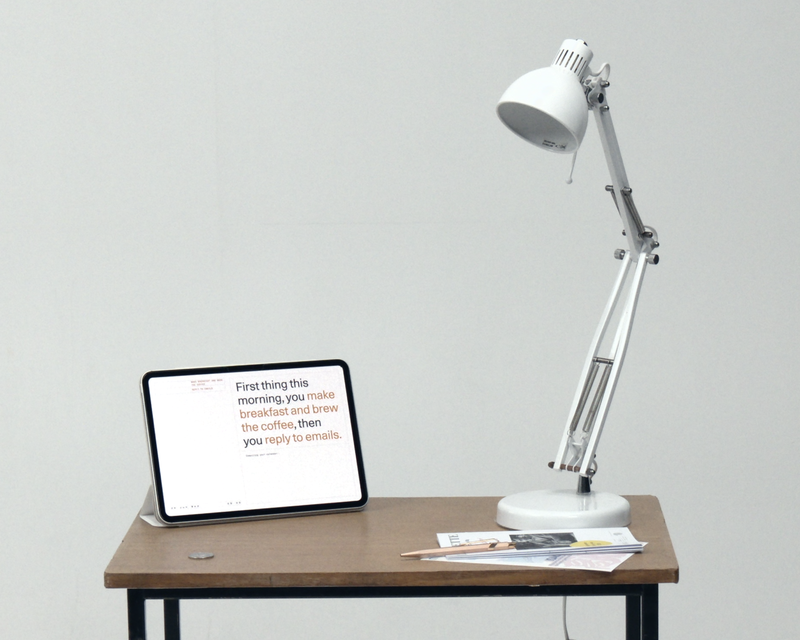
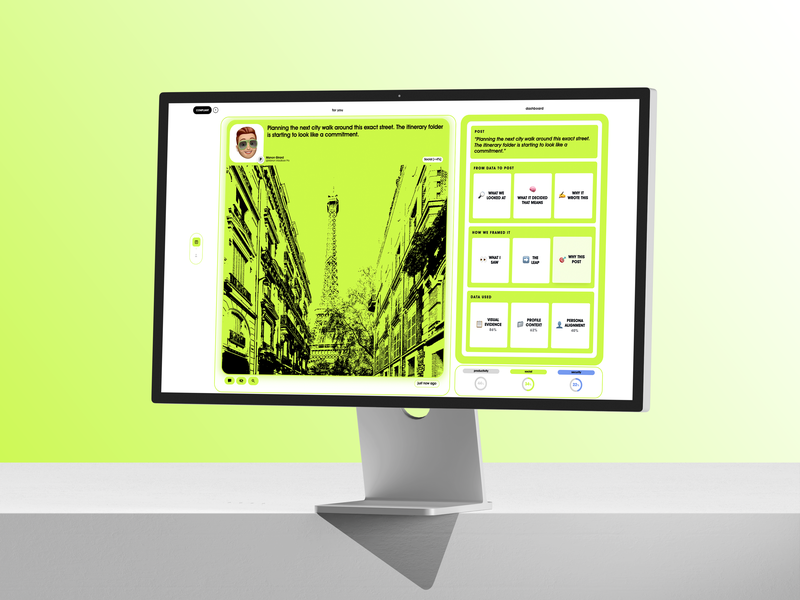
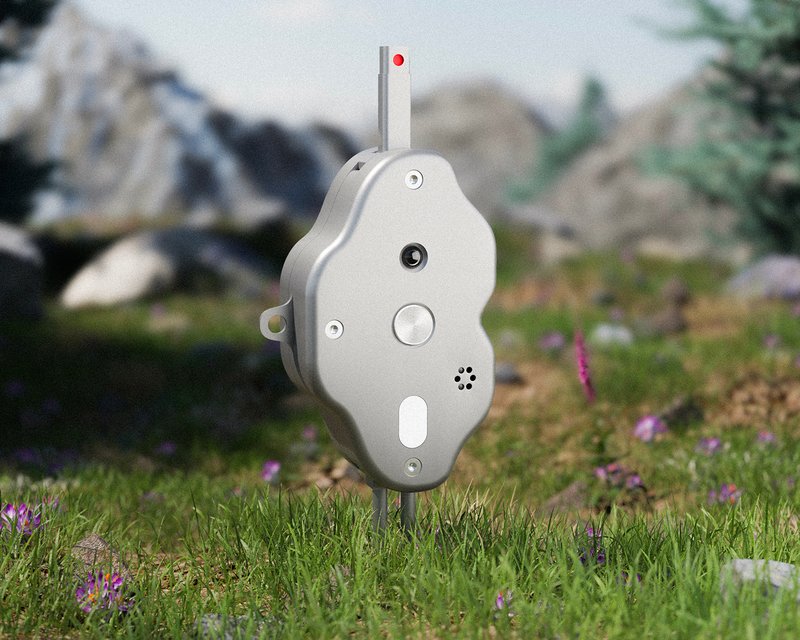
The Mind Reader Interface shifts computing from the reactive to the proactive: from a system that obeys commands to one that anticipates them. Where smart environments cast their users as pilots issuing constant instructions, this project removes the friction of instruction altogether. Intention is no longer declared through a screen or a button. It is inferred. Reading context, habit and the signals of presence, the interface acts before it is asked. It sheds the form of the device to become a Ghost in the Room that senses rather than obeys. The user no longer pilots the space; they inhabit it. The system does not read thoughts, only traces, and stages the distance between anticipation and understanding: what we gain, and what we quietly surrender, when a space begins to act on our behalf.

Emilie Müller – Librarynth

BA GRAPHIC DESIGN

Emilie Müller – Librarynth

by Emilie Müller

It is good to believe that the library is resilient. Not as a relic of the past, but as a presence that reinvents itself, oscillating between the tangible and the intangible. It's not a question of denying the digital, nor of clinging to our yellowed pages. But to understand that if we accept the library as a moving space, an organism that mutates with the times, then its future may not be so bleak. My diploma is a non-linear immersive library, conceived as a virtual house. Each piece evokes one of six themes from the Jan Michalski Foundation's Varia collection. In the form of a web interface, the project celebrates the serendipity inherent in physical libraries, while questioning how digital technology can translate the book experience.

Marc Facchinetti – The Swiss Climate Report

BA GRAPHIC DESIGN

Marc Facchinetti – The Swiss Climate Report

by Marc Facchinetti

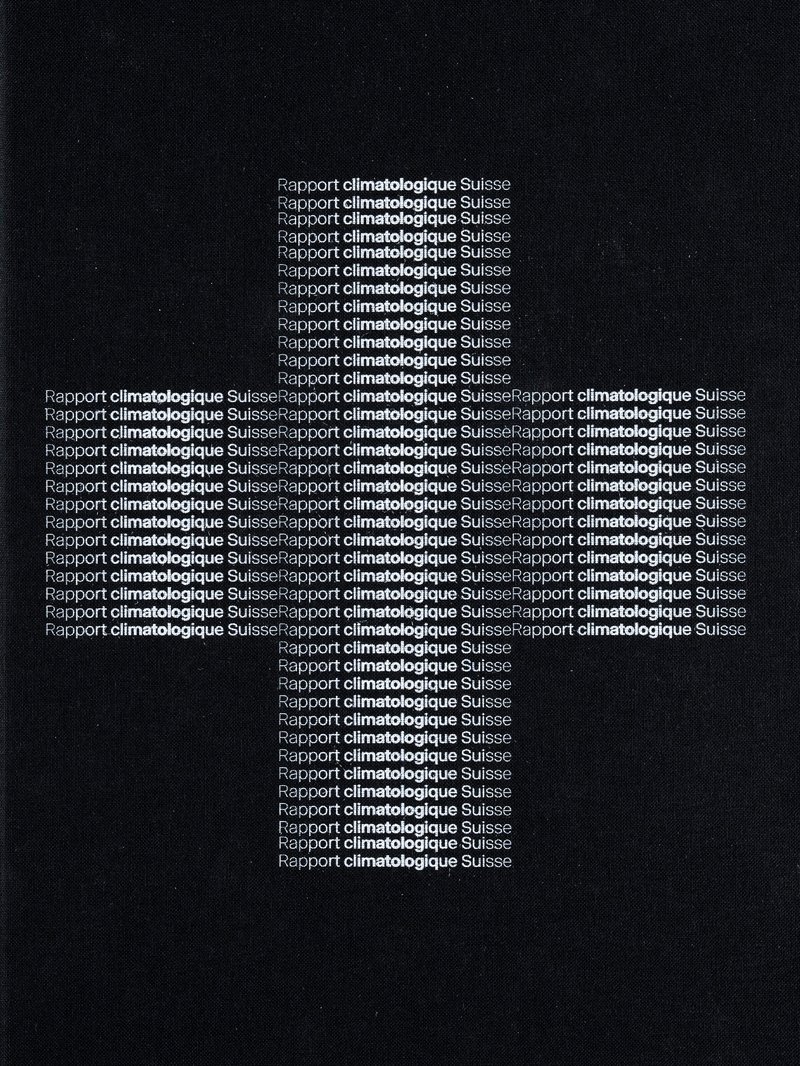
The Swiss Climate Report is an editorial design project that explores climate change through data. Based on recent meteorological records, put into perspective with historical averages sometimes dating back more than 150 years, the book is supported by plugins custom-developed for InDesign. These tools translate scientific data such as temperatures, UV radiation and Dobson units into typographic variations and ASCII forms. This experimental approach offers an alternative reading of climate information. The project offers a raw and precise computer graphics perspective.

Elena Biasi – Magnetic Fragments

BA MEDIA & INTERACTION DESIGN

Elena Biasi – Magnetic Fragments

with Pauline Saglio, Christophe Guignard, Laura Nieder, Alain Bellet, Gaël Hugo, Lara Défayes

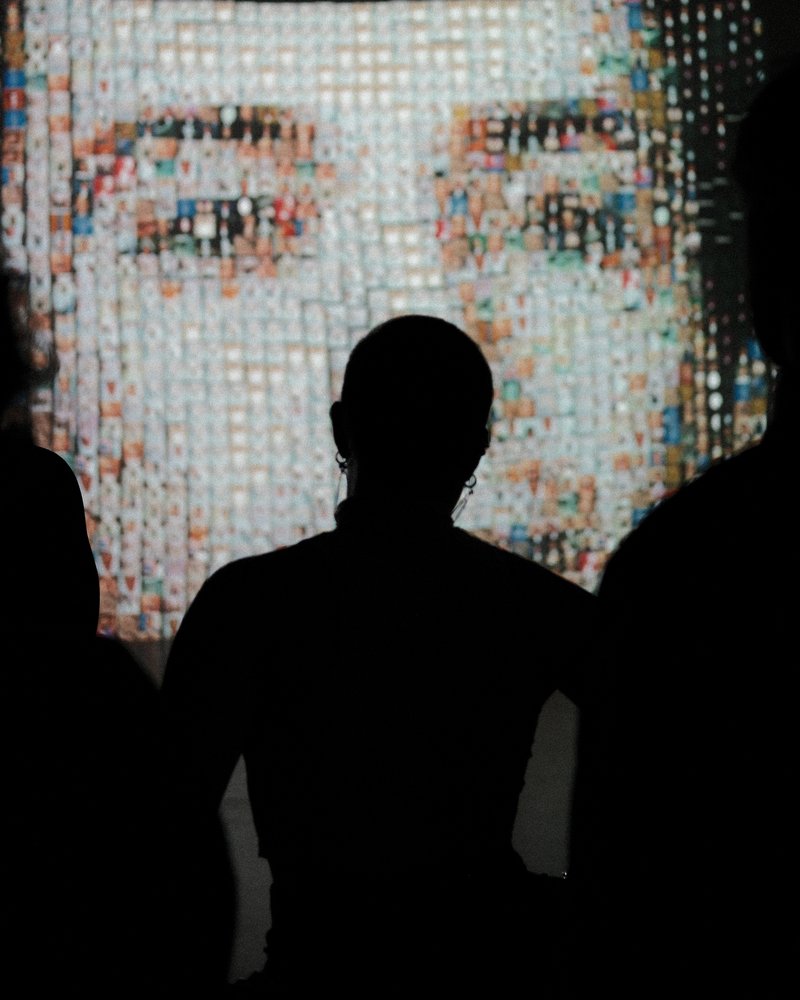
Before the rise of digital technology and social networks, everyday moments were captured on analog media and watched with family in one uninterrupted flow. These long VHS tapes, composed of successive sequences, gradually disappeared, victims of their obsolescence. Magnetic Fragments offers a way to rediscover these forgotten memories through a three-dimensional web interface, where each bubble represents a memory to explore and comment on. Designed for a private circle, the collaborative platform allows free navigation, revisiting each memory fragments in a dynamic way and breaking with the monotonous structure of past viewings. Magnetic Fragments thus becomes a space for intergenerational transmission, where the past is shared in the present.

RE-STRUCTURE

MA DIGITAL EXPERIENCE DESIGN

RE-STRUCTURE

with RNDR STUDIO

During this one-week workshop, Master Digital Experience Design students used machine learning tools to decompose music videos into their constituent parts: segmented scenes, detected gestures, extracted colors, analyzed beats, separated audio stems, transforming linear audiovisual artifacts into structured datasets. These components were then reimagined as interactive, non-linear systems: explorable maps, generative timelines, rhythm-driven interfaces, and self-recomposing structures built with the OPENRNDR framework.

Related courses