Haptobiosis

Nyria Graber – Haptobiosis

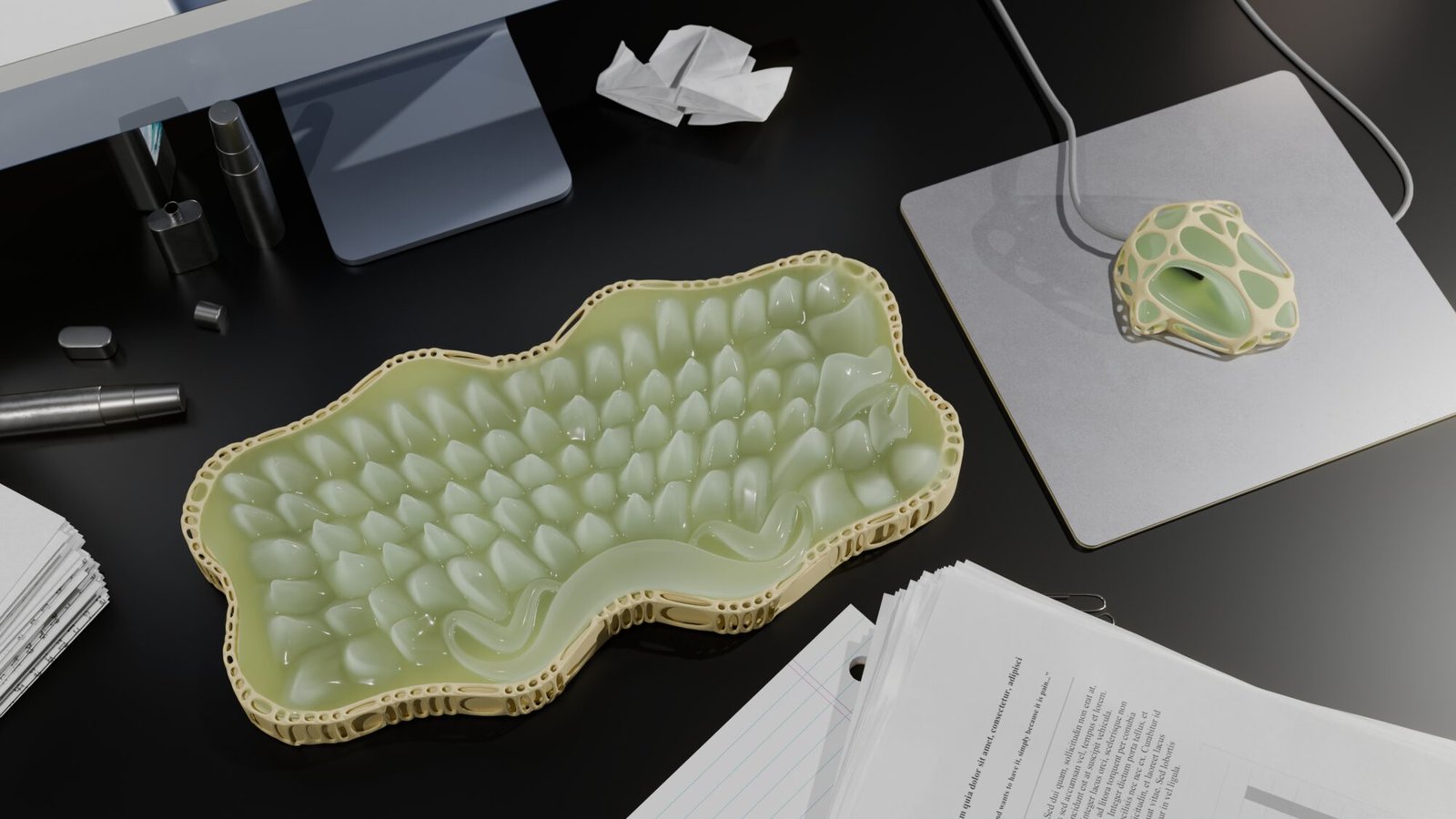
Haptobiosis reveals the microbiome of our desk, the living, invisible world that our gestures shape. The installation is built around three hybrid objects: a keyboard, a mouse and its mat, reimagined somewhere between the technological and the organic. In a society that sterilises its spaces and fights off microorganisms, how can we reconnect with this imperceptible living world? By interacting with these objects, we uncover bacteria, their shapes, their presence, the silent life unfolding beneath our fingers, across our surfaces, evolving alongside us. Every gesture lets this microbiome grow behind the screen, the most sterile place of all, where no organism should exist. Touch becomes the medium of interaction between our gestures and this ecosystem.

Diploma project (2026)

Students
Nyria Graber
Know-how
Tangible Interaction, Electronics
Haptobiosis_ECAL_NyriaGraberRodriguez_compressed.jpeg
Haptobiosis_ECAL_Nyria_Graber_Rodriguez_compressed.jpeg

Projects related to Tangible Interaction

Talk to me – 2026

BA MEDIA & INTERACTION DESIGN

Talk to me – 2026

with Alain Bellet

By combining code, electronics, and physical prototyping, first-year students design interactive objects that react, respond, and invite interaction, gathered under the title Talk To Me. Using dialogue as playground and inspired by conversational interfaces, the projects transform physical objects into new forms of interaction.

Viktor Gagné – Serialized Saplings

BA MEDIA & INTERACTION DESIGN

Viktor Gagné – Serialized Saplings

by Viktor Gagné

The weight of materials produced by humans is now believed to exceed that of all terrestrial biomass. How will these artifacts integrate into the rest of the environment in a million years? Serialized Saplings is an interactive installation that speculates on a potential form of vegetation to come, heavily altered by the excesses of human production, here crystallized through the symbol of the electrical outlet. By manipulating the connections of several power strips, the participant is invited to program the "genetic code" of hybrid plant species that do not yet exist and whose appearance resembles our industrial standards. This generated vegetation is then classified in the form of a digital herbarium that can be consulted and studied.

Thomas Gaudin – UnBubble

BA MEDIA & INTERACTION DESIGN

Thomas Gaudin – UnBubble

with Pauline Saglio, Christophe Guignard, Alain Bellet, Gaël Hugo, Lara Défayes, Laura Nieder

Unbubble is an interactive installation in which a robot explores a user’s smartphone to analyze their Instagram usage. This intrusive act highlights a paradox: if it’s rare to hand one’s phone to a machine, we nonetheless do so every day by letting algorithms collect our data. Our online habits shape a tailor-made reality that filters, sorts, suggests, and sometimes limits our horizons. Unbubble questions how our digital traces construct a fragmented image of ourselves — one that is then used to guide our choices, desires, and attention. The installation invites us to become aware of these mechanisms and opens up a space to imagine other narratives, other ways of navigating, and other worlds to explore beyond the paths laid out by algorithms.

Talk to me – 2025

BA MEDIA & INTERACTION DESIGN

Talk to me – 2025

with Alain Bellet

Talk To Me is a series of interactive objects designed by first-year students in the Bachelor Media & Interaction Design program. These creations use dialogue as a playground, drawing inspiration from conversational interfaces to create new forms of interaction.

Livia Schmid – Trail Sync

BA MEDIA & INTERACTION DESIGN

Livia Schmid – Trail Sync

with Pauline Saglio, Christophe Guignard, Alain Bellet, Laura Nieder, Gaël Hugo, Lara Défayes

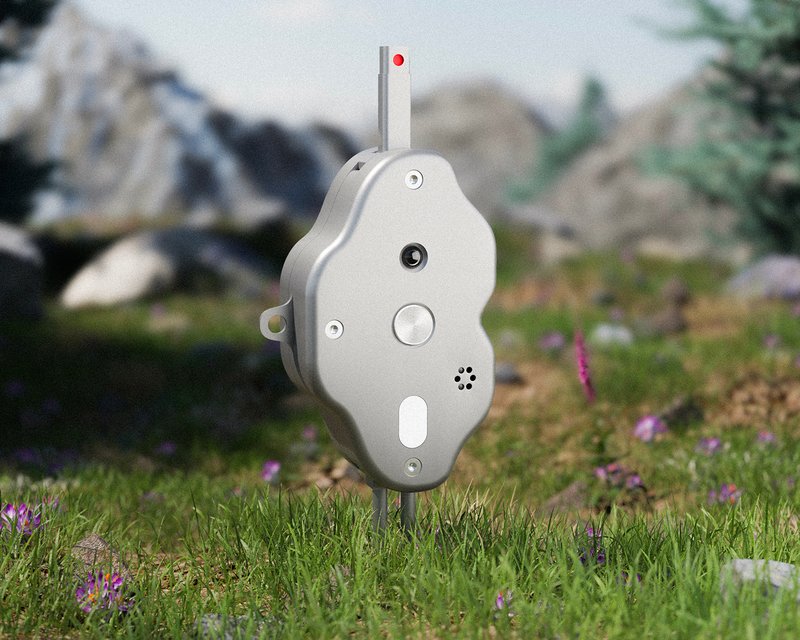
In remote alpine regions, access to reliable information – such as trail conditions or weather alerts – becomes difficult in the absence of network coverage. Trail Sync addresses this challenge through a participatory and decentralized approach: local information boxes, integrated into hiking infrastructure, are passively updated by hikers using an offline mobile application. Each person passing near a box synchronizes contextual data, leaving a digital trace that benefits those who follow. Reinforcing existing signage without increasing technological dependency, the system is rooted in the mountain values of collective responsibility and solidarity.

Related courses

Unlisted page: accessible only by direct link, hidden from the site and search results.