Sensory Augmentation & Brain Plasticity

Sensory Augmentation & Brain Plasticity

This one-week workshop with Philip Schuette allowed first-year Media & Interaction Design students to imagine projects around our five senses. How could certain objects or technologies increase or improve the way we perceive our environment? Five projects came out of this week, all based on a different sense.

More informations here

Workshop (2017) with Philip Schuette

Know-how
Tangible Interaction, Poster, Fiction, Electronics
workshop_MID_03-min.jpg

Projects related to Poster

Steve Bouillant – Re:soil

BA MEDIA & INTERACTION DESIGN

Steve Bouillant – Re:soil

by Steve Bouillant

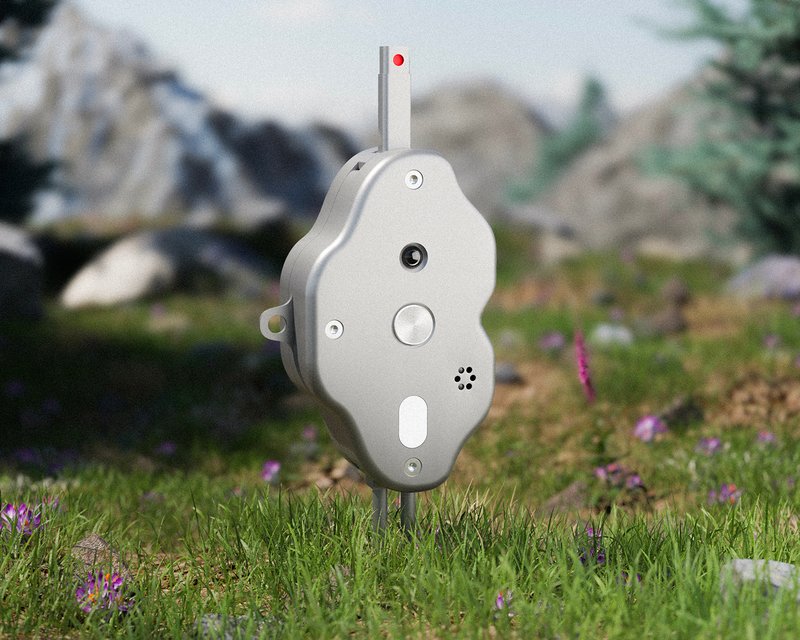
The smartphone has turned a trip to the mountains into an exercise in documentation. We take photos, tag our location, and post them: the natural world becomes content before it becomes a moment of reconnection. Re:soil offers a compact outdoor device whose sensors continuously measure humidity, light, and the transitions between environments. Its probe, planted in the ground, measures the earth's heat and compares it to that of the user's hand. Its microphone captures the soundscape of the location. Re:soil conveys these connections through vibration and light, without a screen, without performance, and without a phone. Upon the user's return, a linked app generates an ephemeral journal blending sensory interpretations, the geology of the site, and likely flora and fauna.
Andreas Abbaszadeh – KIN

BA MEDIA & INTERACTION DESIGN

Andreas Abbaszadeh – KIN

by Andreas Abbaszadeh

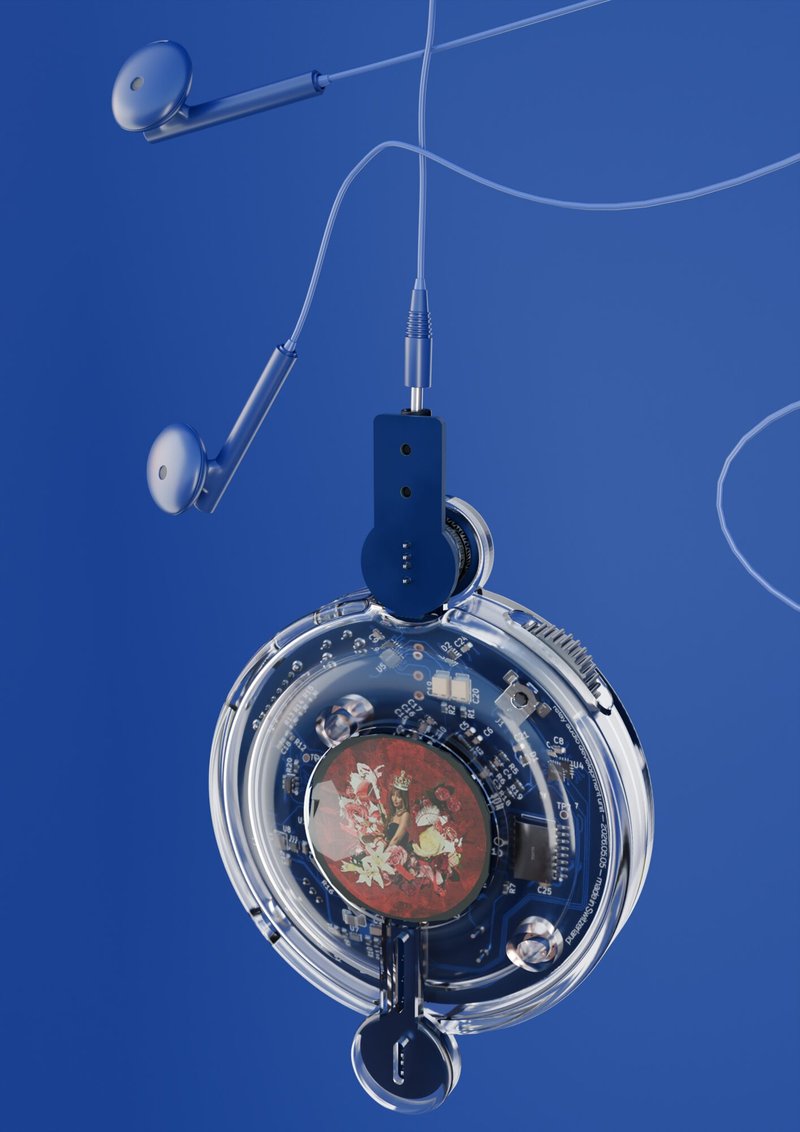
Streaming made music infinite and weightless: access to everything, ownership of nothing. This dynamic frayed the bond between artists and the people who listen to them. KIN rematerializes listening. It's a portable player that holds only a handful of tracks, like a mixtape. Its magnetic connectors let two devices touch to exchange their music, hand to hand: sharing becomes a gesture between two people again. Built around scarcity and ritual; custom electronics, a translucent body, physical controls, a screen that reflects light rather than emitting it, KIN slows the circulation of music to give back its value and its human weight.

Nyria Graber – Haptobiosis

BA MEDIA & INTERACTION DESIGN

Nyria Graber – Haptobiosis

by Nyria Graber

Haptobiosis reveals the microbiome of our desk, the living, invisible world that our gestures shape. The installation is built around three hybrid objects: a keyboard, a mouse and its mat, reimagined somewhere between the technological and the organic. In a society that sterilises its spaces and fights off microorganisms, how can we reconnect with this imperceptible living world? By interacting with these objects, we uncover bacteria, their shapes, their presence, the silent life unfolding beneath our fingers, across our surfaces, evolving alongside us. Every gesture lets this microbiome grow behind the screen, the most sterile place of all, where no organism should exist. Touch becomes the medium of interaction between our gestures and this ecosystem.

Laurine Gigandet – CLAWS

BA MEDIA & INTERACTION DESIGN

Laurine Gigandet – CLAWS

by Laurine Gigandet

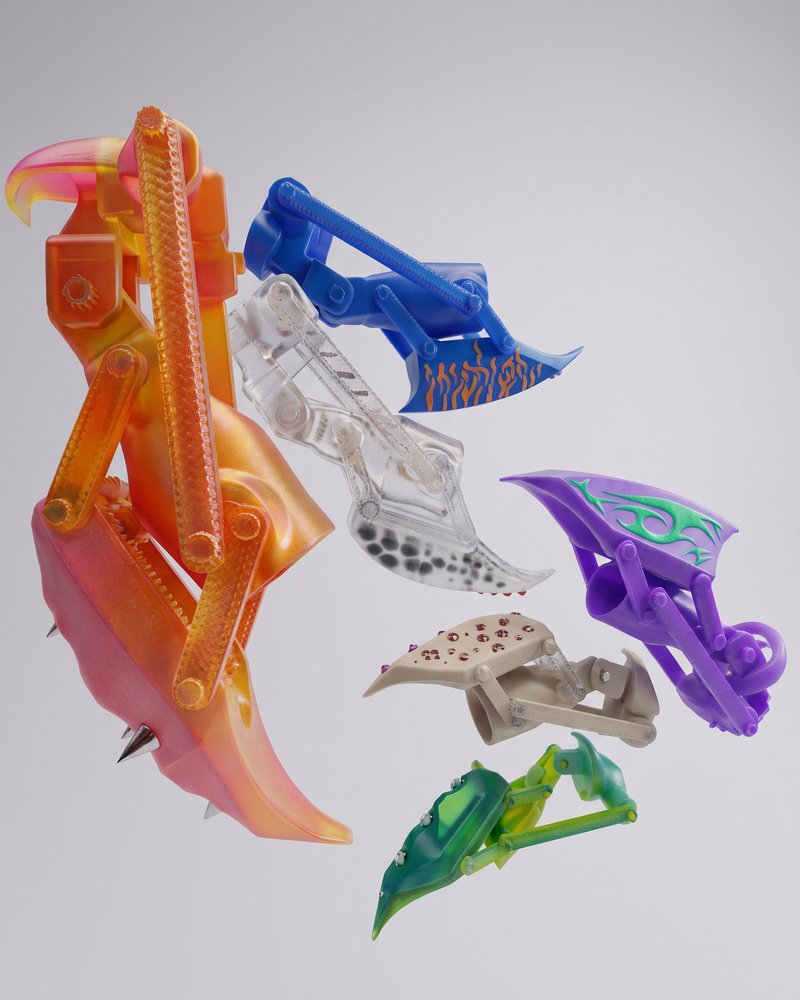
CLAWS is a collection of interactive accessories designed for a connected community. Worn on the fingertips, these devices enable users to assert their presence and engage with their surroundings on their own terms. Blurring the line between prosthetics and augmented nail art, the project explores how bodily ornamentation can transform the body into an interface with the physical, digital, and social worlds. Each CLAW is customizable : textures, colors, and patterns become symbols of identity and belonging. Inspired by Afrofuturist visions, the project centers on the concept of "digital marronage" through fugitive, self-organizing technologies. CLAWS acts as a political and cultural extension that resists the standardization of mainstream contemporary technology.

Communication Machines - Workshop by Niklas Roy

BA MEDIA & INTERACTION DESIGN

Communication Machines - Workshop by Niklas Roy

with Niklas Roy

During a one week, we investigated the role of devices and protocols in our communication behaviors in order to come up with new communication devices, beyond the smartphone. We started out with some low-tech experiments, where we tried to transmit messages in morse code by pulling on a rope. A subsequent brainstorming session structured our thoughts and knowledge about communication methods, contents, and devices in general. www.niklasroy.com

Related courses