Realtime Narratives – 2024

Realtime Narratives – 2024

During the Realtime Narratives course, second-year students had to create a real-time narrative experience using Unreal Engine software.
The aim of the project was to raise students awareness of the use of 3D realtime engines and the various links with other software specific to each stage of development.

Studio project (2024) with Valerio Meschi

Students
Valère Zen-Ruffinen, Thomas Gaudin, Emilie Maier, Baptiste Godart

1/2

1/2

Firefly

This project explores an alternate reality where human dominance and omnipresence over the natural world have given way to a new balance—a harmonious coexistence between technology and nature. As the player journeys through this mysterious landscape, they absorb the atmosphere and search for answers. Where have the humans gone? Where do all these fireflies come from?  

This journey invites reflection on the increasingly blurred boundary between nature and technology. Does this distinction still make sense in a world where humans have delegated so many of their abilities, tasks, and even dreams to machines? Through the lens of this world, the project questions our tendency to offload responsibilities onto technology—both as a tool for emancipation and as a potential trap leading to our own obsolescence. By portraying a world where humanity seems to have reached the peak of its aspirations for technological delegation, it urges us to consider whether the path we are currently on will lead to our fulfillment or if we are heading toward a reality where our very essence might be called into question.


Par Baptiste Godart


Updated

This interactive experience questions our relationship with technological obsolescence. Through the lens of emerging technologies and their relentless evolution, we constantly seek ways to maximize hardware and software capabilities, driving our devices to undergo an increasing number of updates. With each update, individuals face the necessity of these upgrades, the reality of planned obsolescence, and the fear of becoming technologically outdated. However, this process doesn’t always go smoothly and can, ironically, also lead to the device’s obsolescence. This project explores the stress and pressure experienced by those compelled to perform these updates, highlighting the tension between the desire to stay at the cutting edge of technology and the fear of being left behind.


Par Valère Zen-Ruffinen

Updated - Valère Zen Ruffinen_01.png
Updated - Valère Zen Ruffinen_02.png

1/3

1/3

Dimmuborgir

Dimmuborgir explores the convergence of various elements that collectively shape a legend. Set in a Nordic-inspired environment to evoke an eternal and mysterious atmosphere, the game presents three puzzles, each inspired by traditional video game mechanics, offering a distinct form of reflection. Solving these puzzles sequentially leads the player to create the myth. The first puzzle symbolizes deep contemplation, driven both by clarity of mind and the altered perspectives induced by psychoactive substances, opening the door to radically different thinking. The second puzzle delves into logic and investigation, requiring precise organization of discovered information into the correct locations and sequence. This fosters a more structured and logical thought process. The final puzzle concludes the quest by using the metaphor of the cave, representing the focused trajectory of thought once set in motion. It signifies the completion of the search, where every discovered element is restored to its rightful place, breathing life into the legend.


Par Thomas Gaudin


Unlocked

"Unlocked" is a video game-inspired experience that critiques societal norms within the education system. The main character is a girl who hasn’t yet found her place in the world. She has pink skin and horns, symbolizing her alienation from her environment, and constantly wears a melancholic expression. As players explore the game, they encounter the gendered characteristics of schools, represented by color-coded lockers and a classroom scene symbolizing public scrutiny. The library highlights the pervasive culture of bullying, forcing players to confront societal pressures.  

The narrative deepens in a garden adorned with grotesque sculptures embodying beauty ideals. Players must destroy these symbols, exposing the school’s attempts to conceal the influence such standards have on students. This game serves as a commentary on societal expectations, gender norms, and the subtle coercion present within educational institutions.


Par Emilie Maier

1/2

Unlocked - Emilie Maier_03.jpg

Projets similaires

Andreas Abbaszadeh – KIN

BA MEDIA & INTERACTION DESIGN

Andreas Abbaszadeh – KIN

by Andreas Abbaszadeh

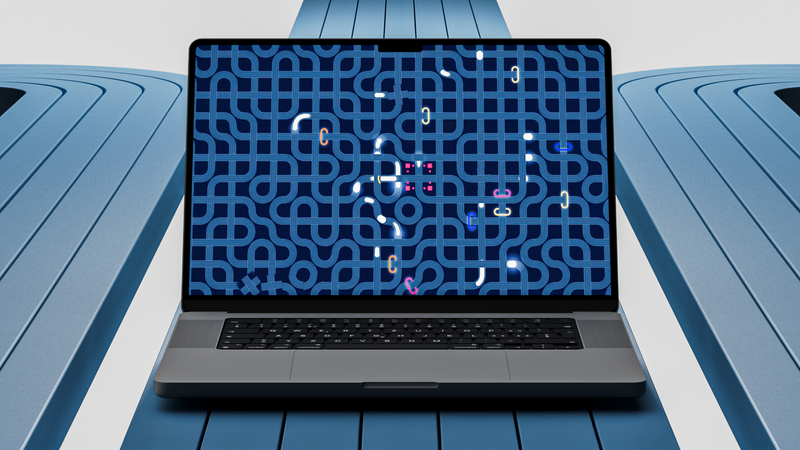
Streaming made music infinite and weightless: access to everything, ownership of nothing. This dynamic frayed the bond between artists and the people who listen to them. KIN rematerializes listening. It's a portable player that holds only a handful of tracks, like a mixtape. Its magnetic connectors let two devices touch to exchange their music, hand to hand: sharing becomes a gesture between two people again. Built around scarcity and ritual; custom electronics, a translucent body, physical controls, a screen that reflects light rather than emitting it, KIN slows the circulation of music to give back its value and its human weight.

Steve Bouillant – Re:soil

BA MEDIA & INTERACTION DESIGN

Steve Bouillant – Re:soil

by Steve Bouillant

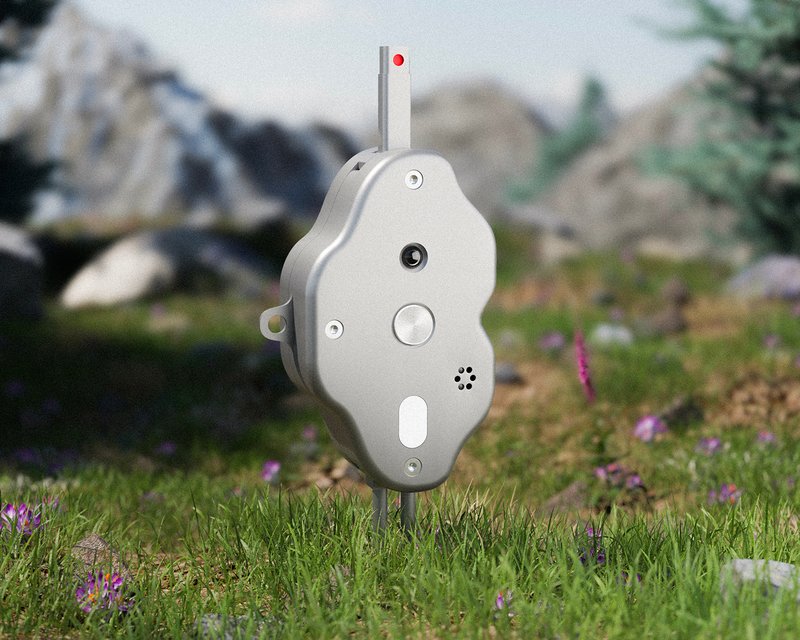
The smartphone has turned a trip to the mountains into an exercise in documentation. We take photos, tag our location, and post them: the natural world becomes content before it becomes a moment of reconnection. Re:soil offers a compact outdoor device whose sensors continuously measure humidity, light, and the transitions between environments. Its probe, planted in the ground, measures the earth's heat and compares it to that of the user's hand. Its microphone captures the soundscape of the location. Re:soil conveys these connections through vibration and light, without a screen, without performance, and without a phone. Upon the user's return, a linked app generates an ephemeral journal blending sensory interpretations, the geology of the site, and likely flora and fauna.

Laurine Gigandet – CLAWS

BA MEDIA & INTERACTION DESIGN

Laurine Gigandet – CLAWS

by Laurine Gigandet

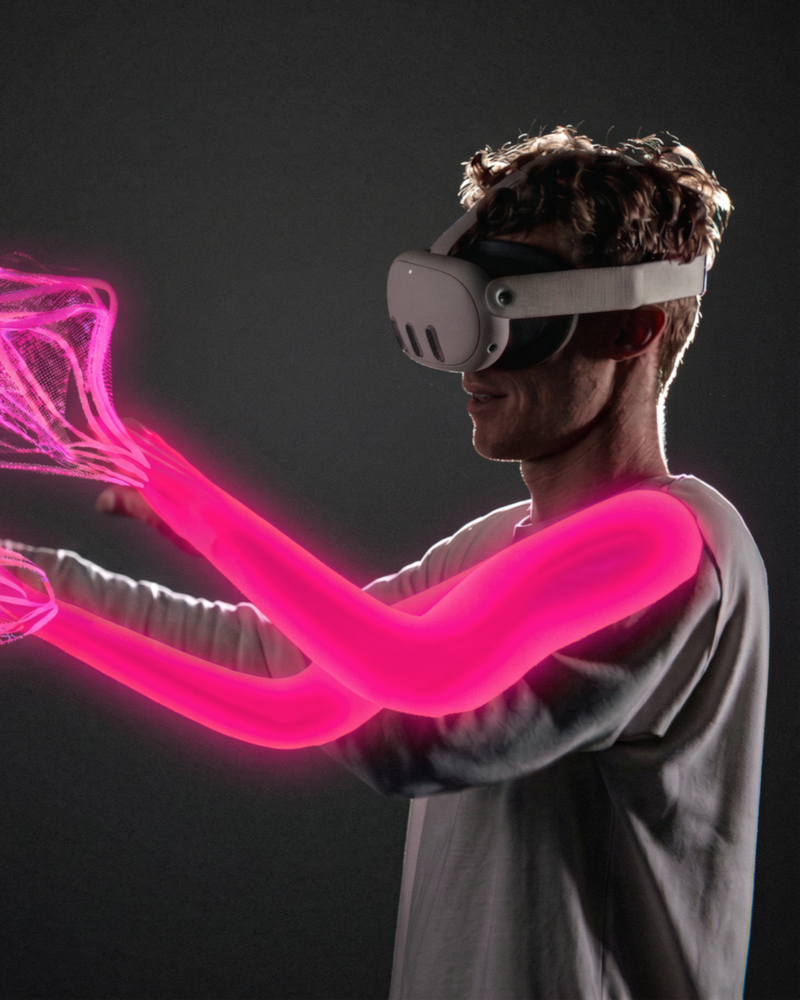
CLAWS is a collection of interactive accessories designed for a connected community. Worn on the fingertips, these devices enable users to assert their presence and engage with their surroundings on their own terms. Blurring the line between prosthetics and augmented nail art, the project explores how bodily ornamentation can transform the body into an interface with the physical, digital, and social worlds. Each CLAW is customizable : textures, colors, and patterns become symbols of identity and belonging. Inspired by Afrofuturist visions, the project centers on the concept of "digital marronage" through fugitive, self-organizing technologies. CLAWS acts as a political and cultural extension that resists the standardization of mainstream contemporary technology.

Nyria Graber – Haptobiosis

BA MEDIA & INTERACTION DESIGN

Nyria Graber – Haptobiosis

by Nyria Graber

Haptobiosis reveals the microbiome of our desk, the living, invisible world that our gestures shape. The installation is built around three hybrid objects: a keyboard, a mouse and its mat, reimagined somewhere between the technological and the organic. In a society that sterilises its spaces and fights off microorganisms, how can we reconnect with this imperceptible living world? By interacting with these objects, we uncover bacteria, their shapes, their presence, the silent life unfolding beneath our fingers, across our surfaces, evolving alongside us. Every gesture lets this microbiome grow behind the screen, the most sterile place of all, where no organism should exist. Touch becomes the medium of interaction between our gestures and this ecosystem.

Teo Grajqevci – reform

BA MEDIA & INTERACTION DESIGN

Teo Grajqevci – reform

by Teo Grajqevci

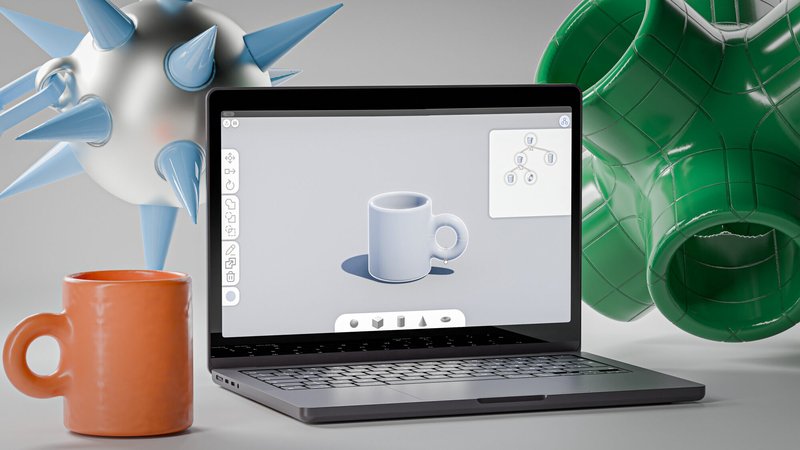
reform responds to a context in which designers are gradually losing control over their tools: creative software is becoming more automated, closed and dependent on cloud-based services. Today, generative AI can produce 3D models with ease, but often at the cost of control, understanding and ownership of the creative process. reform offers another approach: making 3D modelling easier to access, in a field that is usually complex and difficult to learn. The project takes the form of free and open-source software, built around a simplified interface, intuitive interactions and guides that support the learning of these tools. Through demonstrations and didactic exercises, reform restores the designers' motivation and means to model 3D shapes themselves.

Related courses