Résultats pour “director died 2015 2023 divorced twice directed 2000s film” (1265)

Exhibition «Ring Bell Twice» by John M Armleder,06–28.03.2014,Gallery l elac, Renens Du 7 mars au 4 avril 2014 à la Galerie l elac, l ECAL/Ecole cantonale d art de Lausanne est très heureuse de présenter «Ring Bell Twice», une exposition de John M Armleder. Le mardi 11 mars à 18h dans le Studio Cinéma de l ECAL, le plasticien genevois fera également des performances inédites avec le musicien et artiste suisse Christian Marclay. Sous l impulsion de Stéphane Kropf (responsable du Bachelor Arts Visuels), John M Armleder a produit de nouvelles peintures directement dans la Galerie l elac (après une exposition organisée dans cet espace en tant qu artiste en 2003 et une autre en tant que curateur en 2007). Cette installation célèbre la transition entre le professorat de John M Armleder à l ECAL (initié par Pierre Keller en 1995) et de futures collaborations entre l ECAL et l artiste genevois. D ailleurs, en tant qu enseignant et plasticien, John M Armleder a influencé de nombreux jeunes talents issus de l ECAL, dont Valentin Carron, Philippe Decrauzat, Cyprien Gaillard ou encore David Hominal. Outre une grande pièce murale constituée de plusieurs Puddle Paintings et de rideaux disco, l exposition comporte une série de diptyques qui confronte les différentes approches de John M Armleder à la peinture sur toile, qu elle soit géométrique, en gouttes ou coulée. Au sol, des tas de matériaux de construction et d artefacts culturels tentent de créer un liant négligé à l exposition, dans un joyeux questionnement sur l utile et le futile, la précision et l organique, la fonctionnalité et le déchet. John M Armleder «Fondateur en 1969 à Genève, avec d autres artistes proches de Fluxus, du groupe Ecart et de la galerie du même nom, John M Armleder (né à Genève en 1948) a développé une œuvre incroyablement subtile et complexe. Depuis les performances et installations dans les années 1970 jusqu aux collages, compositions abstraites, emprunts explicites à l histoire de l art et réutilisations de mobilier (Furniture Sculpture), qui lui vaudront la consécration dans les années 1980 et le feront figurer en première ligne dans la reconnaissance internationale du courant néo-géo, John M Armleder n a eu cesse de se réinventer et d enrichir constamment une carrière protéiforme, hybride et singulière.» Source: www.lespressesdureel.com La Galerie l elac remercie la Galerie Andrea Caratsch pour sa collaboration. «Ring Bell Twice» de John M Armleder Exposition ouverte du 7 mars au 4 avril 2013 du mercredi au vendredi de 13h à 17h Galerie l elac 5 av. du Temple 1020 Renens +41 (0)21 316 99 33 ecal@ecal.ch www.ecal.ch

Best short film for a graduate Master ECAL/HEAD at Locarno A l occasion du 66e Festival du film de Locarno 2013, Michele Pennetta (né en 1984 à Varèse en Italie, domicilié à Lausanne), diplômé du Master Cinéma ECAL/HEAD en 2010, a gagné le Pardino d Oro du meilleur court métrage suisse avec le documentaire « A iucata» ‘A iucata Un moyen métrage documentaire de Michele Pennetta, écrit avec Christian Tarabini et produit par Close Up Films. 38 minuti / 16:9 / 5.1 / v.o. siciliano Synopsis Au milieu des quartiers populaires de Catane, en Sicile, loin du contrôle des autorités, se cachent de nombreuses écuries de fortune. Une de celles-ci appartient à Concetto, dit le pharmacien. Personnage respecté voire même craint, il s est construit une renommée dans le monde des courses clandestines de chevaux. Chaque jour, avant le lever du soleil, Vittorio, son fils, se rend à l écurie afin de préparer leur cheval, Vito Portanova, pour l entraînement. Dans quelques jours aura lieu la course clandestine sur une rue déserte au pied de l Etna...

ECAL at the Locarno International Film Festival 2013,07–17.08.2013,Locarno A l occasion du 66e Festival international du film de Locarno (du 7 au 17 août 2013), l ECAL/Ecole cantonale d art de Lausanne sera fortement représentée. Après avoir remporté quatre fois en cinq le prix du Meilleur court métrage suisse, l ECAL comptera sur un film de diplôme et trois films d anciens étudiants pour briller dans cette compétition. Quant à Blaise Harrison, diplômé en 2003, il défendra son nouveau film, «L Harmonie», dans la sélection «Cinéastes du Présent». La Piazza Grande aura le privilège d accueillir deux longs métrages événements avec «Les Grandes Ondes (à l ouest)» de Lionel Baier, responsable du Département Cinéma à l ECAL, et «L expérience Blocher» de Jean-Stéphane Bron, diplômé en 1996 et intervenant régulier à l ECAL. Le lundi 12 août dès 16h au Pavillon Swiss Films (La Sala), l ECAL profitera également pour présenter son nouveau DVD avec une sélection des meilleurs films 2012-2013 du Département Cinéma. Pardi di Domani «Bonne espérance» de Kaspar Schiltknecht (diplômé 2013), coproduit par Box productions et l ECAL «Lui, Hitler et moi» de Nathan Hofstetter (diplômé 2010), produit par Zéro Film en collaboration avec l ECAL «Sortie de route» de Tristan Aymon et David Maye (diplômés 2010), coproduit par Terrain Vague et PCT cinéma-télévision «A iucata» de Michele Pennetta (diplômé Master ECAL/HEAD 2010), produit par Close Up Films Cinéastes du Présent «L Harmonie» de Blaise Harrison (diplômé 2003), coproduit par Les Films du poisson et Bande à part films Piazza Grande «Les Grandes Ondes (à l ouest)» de Lionel Baier (responsable du Département Cinéma), coproduit par Rita productions, Les films Pelléas et Bande à part films «L expérience Blocher» de Jean-Stéphane Bron (diplômé 1996 et intervenant régulier), coproduit par Bande à part films et Les films Pelléas Le programme pour voir les films: www.pardolive.ch/en/catalogue/programme Par ailleurs, le film «L Ambassadeur et moi» de Jan Czarlewski, Pardino d Oro 2011 du Meilleur court métrage suisse à Locarno, continue sa tournée des plus grands festivals d Europe à travers le «Short Matters! tour 2013» organisé par l EFA (European film Academy). Les prochains festivals sont: Jerusalem Film Festival (Israel) / Curtas Vila do Conde - International Film Festival (Portugal) / Academia de Cine, Madrid / Dokufest – International Documentary and Short Film Festival (Kosovo) / Avvantura Festival Filmforumzadar (Croatia) / Odense International Film Festival (Denmark) / BuSho Budapest Short Film Festival (Hungary) / Martha s Vineyard Int l Film Festival (USA) / Tenerife International Short Film Festival (Spain) / ARTos Foundation, Nicosia & Limassol (Cyprus) / Int l Cinematographers Film Festival Manaki Brothers (FYR Macedonia) / Batumi International Arthouse FF (Georgia) / Drama Int l Short Film Festival (Greece) / Helsinki Int l Film Festival (Finland) / Rich Mix (UK) / Panorama of European Cinema, Athens (Greece) / Riga International Short Film Festival 2ANNAS festival (Latvia) / Uppsala International Short Film Festival (Sweden) / Scanorama - European Film Forum (Lithuania) / filmfest Braunschweig (Germany) / Museu del Cinema, Girona (Spain) / Alcine Festival de Cine, Alcalá de Henares (Spain) / Aarhus Film Festival (Denmark) / exground filmfest, Wiesbaden (Germany) Vous pouvez visiter le site de la tournée avec les lieux et les dates www.europeanfilmacademy.org/Short-Matters-Tour.152.0.html ECAL/Ecole cantonale d art de Lausanne 5, avenue du Temple CH-1020 Renens ecal@ecal.ch

Design graphique Photographie Interaction Design Séquence 2D / 3D Creative Coding I - Generative Graphics 3D Graphics I - Sequence Dynamic Display I - Visual Systems Histoire de l'art (opt.) Histoire de la photographie (opt.) Histoire du cinéma (opt.) Histoire du jeu vidéo Humanités digitales Creative Coding Beyond the screen Interactio…
Symposium – Don t Die Now! : Cinema & artificial intelligences,05–06.05.2026,IKEA Auditorium, ECAL This two-day symposium is part of a research project by the Cinema Department at ECAL focusing on the impact of artificial intelligence on cinema. Artificial intelligence technologies are now playing an increasingly prominent role in discourse, as well as in creation practices, production and distribution of works, and in film education. This symposium therefore aims to shed light on the potential and challenges of these tools in order to understand how to use them — or decide not to — in full awareness, and to explore critical perspectives or possible alternative models. Discussions will also address the ethical and environmental issues raised by their development. This inaugural meeting will bring together film professionals and researchers to collectively reflect on the transformations brought about by these new tools. Directors, producers, screenwriters, historians and philosophers will share their experiences of how AI — whether analytical or generative — is transforming and sometimes disrupting the film production chain, and how they are adapting to it. These two days of presentations and discussions were conceived as the starting point for a research project led by the Cinema Department at ECAL. Three practical trials will follow from autumn 2026 onwards, with the aim of drawing lessons and making recommendations regarding the use of these tools. The trials and their results will be presented at a second symposium in spring 2027. Lecturers Roberto Beragnoli, Director, Florence Edouard Boccon Gibod, Producer at The Media Company, Paris Gilles Gaillard, Director of Photography and former director of MIKROS. Partner at the NIN9E Studio investment fund, Paris Andrea Gatopoulos, Director, Rome Philippe Lasry, Screenwriter and Head of the Screenwriting Department at FEMIS, Paris Alice Leroy, Film historian and critic at Cahiers du Cinéma, Paris André Ourednik, Researcher and science fiction author, Lausanne Further lecturers will be announced shortly.FULL PROGRAMTo comeBOOKINGTo comeDATES05–06.05.2026VENUEAuditoire IKEA, ECAL Avenue du Temple 5 1020 RenensHEAD OF RESEARCH PROJECTBenoît Rossel
Masterclass ECAL – Joe Dante,14.04.2026, 18:00,IKEA Auditorium, ECAL In collaboration with the Cinémathèque suisse, the ECAL Cinema Department organises a masterclass by director Joe Dante, a leading figure in 1980 s fantasy cinema. Joe Dante, born in 1946, is a major American filmmaker trained at Roger Corman s New World Pictures. He made a name for himself with Piranha (1978), a film that blends satire, fantasy, and a tribute to B-movies. He achieved international success with Gremlins (1984), produced by Steven Spielberg, which has become a classic of fantasy cinema. His extensive filmography includes The Howling (1981), Explorers (1985), Innerspace (1987), and Looney Tunes: Back in Action (2003), revealing a childlike imagination that remains critical of American society. With his blend of cinematic references and affection for outsiders, Joe Dante is a director capable of entertaining while questioning the world. From March 21 to April 29, the Cinémathèque suisse is presenting a retrospective dedicated to Joe Dante at the Capitole cinema in Lausanne. The director will be in attendance on April 15 for a special evening featuring a screening of Gremlins. Discussion moderated by Lionel Baier.DATES & SCHEDULE14.04.2026 6pm Free entryVENUEIKEA Auditorium ECAL Avenue du Temps 5 1020 Renens, Suisse

Suspended Motion By conceptualizing and producing visual content as part of an editorial series, students will explore the concept of applied photography in a practical, creative, and professional manner, working closely with Art Director Nicolas Poillot.
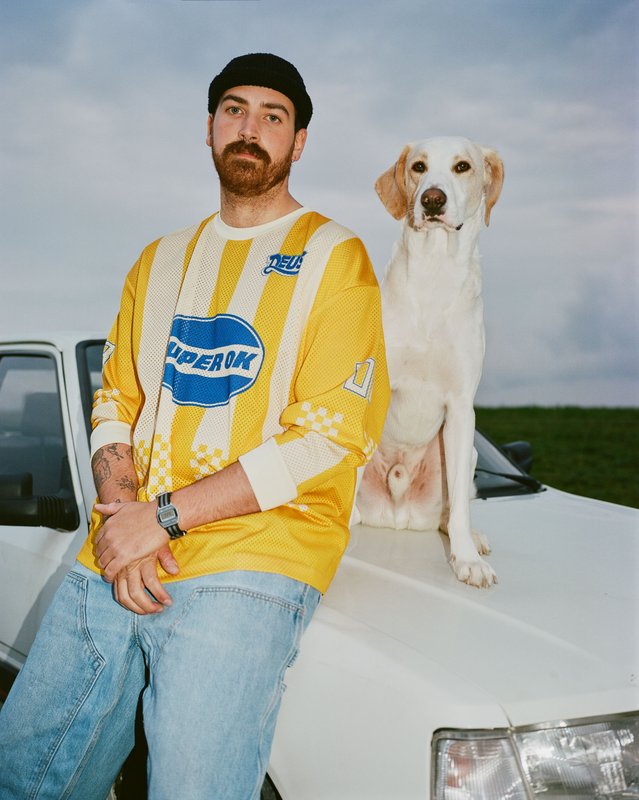
ANALOG MEDIUM FORMAT WORKSHOP DRIVE For this week s theme, “Drive,” first-year photography students were asked to create a portrait shot on medium-format film. Inspired by the sensation of a first driving experience, travel, empowerment, or discovery, the week aimed to explore the relationship between one or more people and a vehicle.
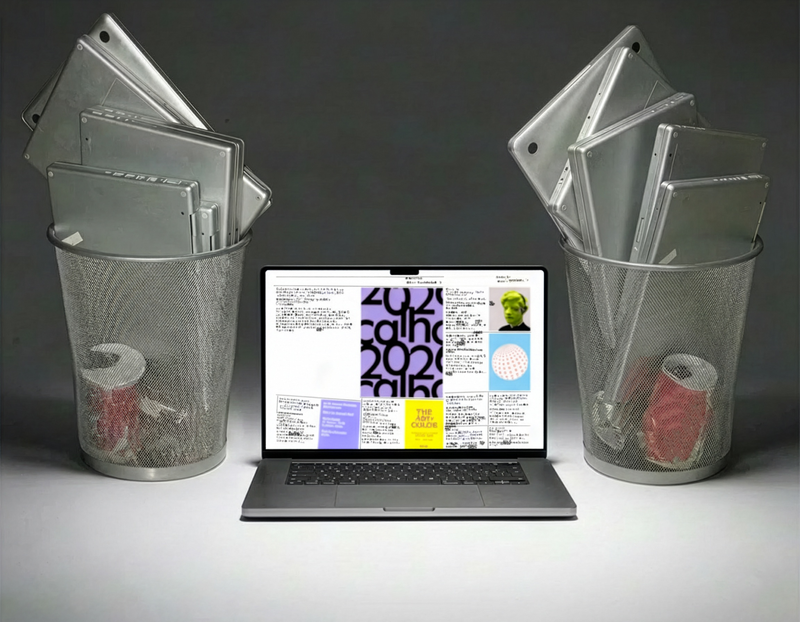
Enshittification - 2026 Many platforms degrade over time, shifting from useful tools into manipulative systems. In this workshop, we explore enshittification as a creative method by modifying existing websites or developing small web experiments that exaggerate friction, automation, overload, and disorientation in order to reveal the underlying logics. SLACK OFF TOOLS Digital tools to help you slack off at work including instagram to wikipedia, casino to Zoom and Worldle to Excel. By PainFull Plans Re-imagining degrading user experiences to maximise profits. By & Unsubscribe Unsubscribe pages designed for user retention. By REFUND SIMULATOR A gaslighting customer service chatbot that uses all your browser informations to make you quit. By Insta + Tools for automating social behaviors in instagram direct messages. By &

SWISS ART AWARDS 2026: ECAL NOMINEES Congratulations to the ECAL members featured in the Swiss Art Awards 2026 exhibition, from June 15 to 21. The Swiss Art Awards have been held annually since 1899 and reward Swiss artists and architects, as well as art and architecture mediators. The Kiefer Hablitzel│Göhner Art Prize applies to artists with a Bachelor s degree who are resident in Switzerland or artists under the age of 30 who are enrolled at a Swiss university. The Swiss Art Awards exhibition, which takes place alongside the Art Basel art fair, presents works by candidates selected for the second phase of these competitions and offers an overview of Swiss artistic creation. Several ECAL graduates have been nominated in the "Art" category of the Swiss Art Awards: Alfredo Aceto, Fine Arts Bachelor s graduate and teacher for the Propaedeutic Year Ilaria Vinci, Fine Arts Master s graduate Virginia Ariu, Fine Arts Master s graduate Jacques Duboux, Fine Arts Bachelor s and Photography Bachelor s graduate A current student and graduates of ECAL are also finalists for the 2026 Kiefer Hablitzel│Göhner Art Prize: Iulia Bucuresteanu, Fine Arts Master s student Lisa Mazenauer, Photography Bachelor s graduate Nina Pacherová, Photography Master s graduate Sara De Brito Faustino, Photography Bachelor s graduate Aleksandra Nazarova, Industrial Design Bachelor s graduate DATES & OPENING TIMES16–21.06.2026 Opening reception 15.06.2026 Tuesday to Saturday 10am-20pm Sunday 10am-18pm Free entryADDRESSHall 1.1, Messe Basel Messeplatz 10 4005 BaselWEBSITESswissartawards.ch kieferhablitzel.chIMAGE CREDITSSwiss Art Awards Art Direction : Studio Clemens Piontek & Clio Hadjigeorgiou
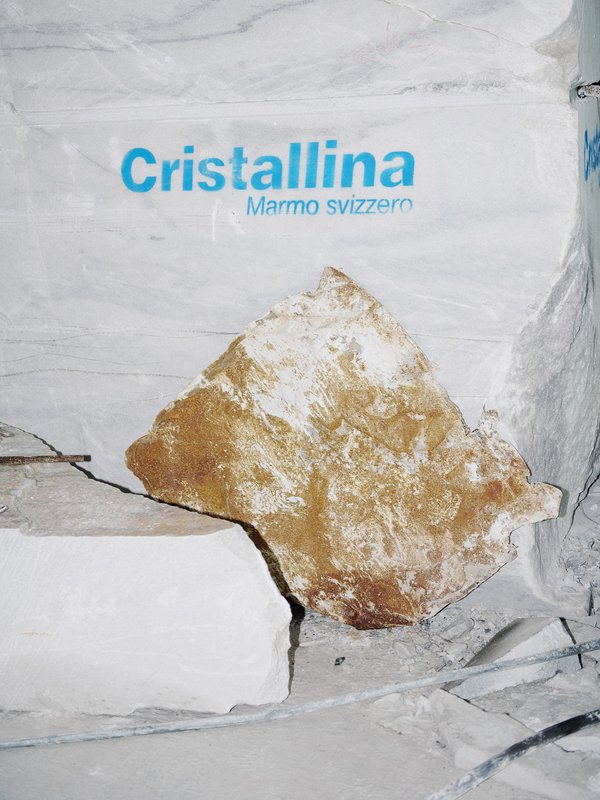
Cristallina x ECAL,06–09.03.2026,Matter and Shape, Paris ECAL presents a selection of projects developed in collaboration with Cristallina Design, focusing on a rare material: the only marble quarried in Switzerland. Initiated in 2023, the relationship with Cristallina Design offered students of the Master of Advanced Studies in Design for Luxury and Craftsmanship the opportunity to discover Switzerland s only marble quarry, located at an altitude of over 1,200 metres in the Ticino mountains. This partnership has led to the creation of outdoor accessories and furniture, directly inspired by Swiss traditions and the unique properties of the material, formed millions of years ago from ancient marine corals. Each block, bearing a unique geological memory, gives rise to unique pieces, part of a sustainable vision of luxury where the material becomes memory and design becomes experience.DATES6–9 March 2026WEBSITEmatterandshape.comVENUEJardin des Tuileries 75001 Paris
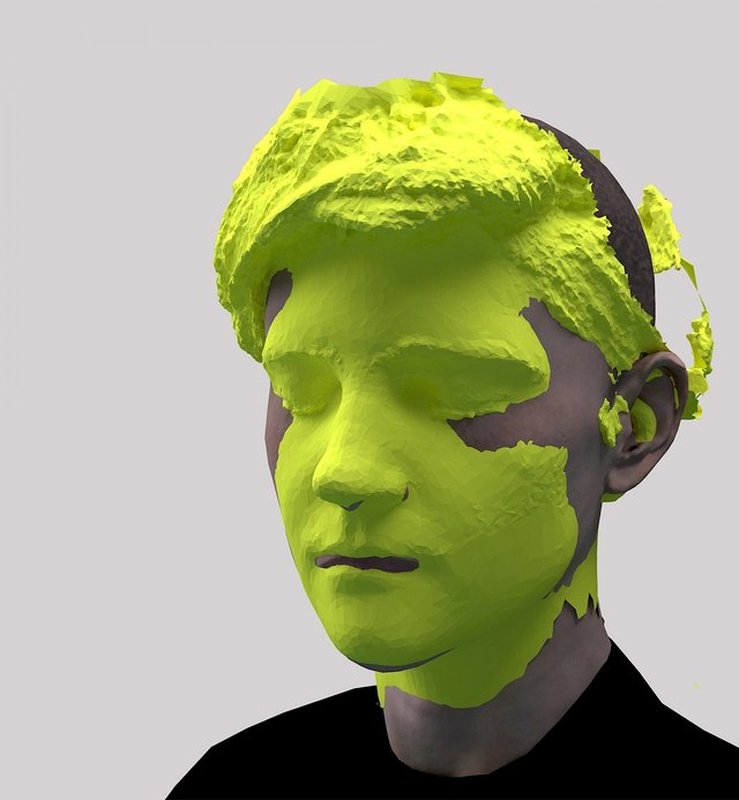
Swiss Grand Award for Design 2026 for Simone C. Niquille Congratulations to Simone C. Niquille, ECAL resident at La Becque in 2020, for winning the Swiss Design Grand Prize 2026. Congratulations to Simone C. Niquille, ECAL resident at La Becque in 2020, for winning the Swiss Design Grand Prize 2026. The first winner of the prize in the field of "Media & Interaction Design", Simone C. Niquille s transdisciplinary work lies at the intersection of design, research and education. Simone C. Niquille s practice, Technoflesh, investigates the representation of identity and the digitisation of biomass in the networked space of appearance. Through her films, installations and research-based projects, the designer takes a critical look at digital technologies and their cultural impacts. Involved in knowledge transmission, Simone C. Niquille has taught at ECAL in the Master Photography, on the Automated Photography research project, as well as in the Bachelor Media & Interaction Design. @technoflesh @swissdesignawards schweizerkulturpreise.ch
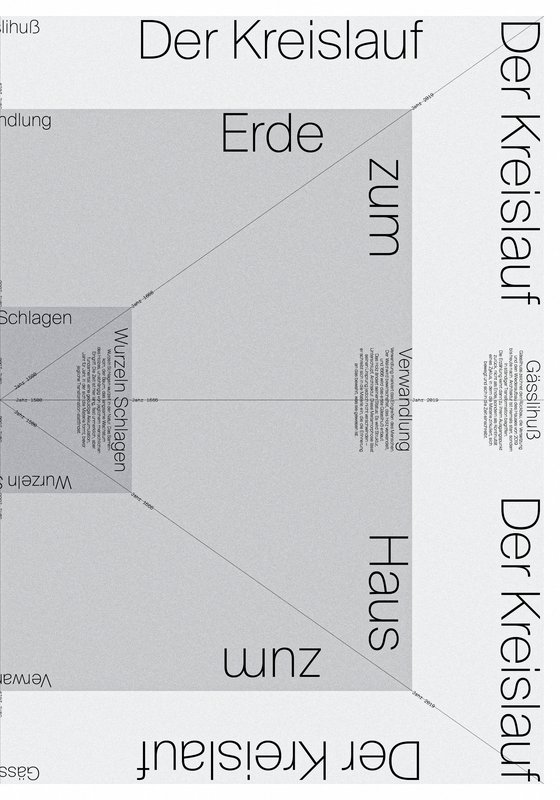
Contextual Design – BA2 S1 2025 Genius Loci, or the spirit of the place, refers to the unique identity or essence of a location. In architecture, this principle suggests that the specific characteristics of a place should be reflected and extended in a design. In the case of the second-year graphic design students, they have applied this principle to communication projects focused on promoting or extending the identity of a particular place through design. Their work likely explores how to visually capture and communicate the essence of a space, using graphic design elements that resonate with the architectural features or history of the place. Lè Medz-vin Couâi This graphic project draws on the communal hall of Bussy-sur-Moudon to highlight the role of community spaces in rural areas. Based on its uses, memories, and the photographic and written archives related to the building, it develops graphic systems that propose a reading of the social functioning of Bussy and, more broadly, of rural communities.Often barely visible from an external perspective, these places are nevertheless essential to collective life. They host both ordinary moments and significant events, and contribute to the social cohesion of the territory. Par De la graine à l architecture The cycle of wood through the history of the Gässli House This edition narrates the cycle of wood in three phases. Wurzeln Schlagen (taking root) evokes the seed and the slow growth of the tree. Verwandlung (metamorphosis) marks human intervention and the construction of the first house in 1666, when wood becomes a structural element while still carrying the memory of its origin. Gässlihuß (Maison Gässli) traces its deconstruction and reconstruction from 2019 to the present, highlighting the movement of the place and the circulation of memory.Positioned between an edition and a series of posters, the object is based on a graphic system inspired by tree rings. A grid proportional to a timeline from 1500 to tomorrow structures the whole, with texts radiating from the center in a gradual movement of zooming in and out through the different phases. The images translate the state of the material: 165 outlined circles represent growth; a transition to gradients and then to solid circles marks the phase of metamorphosis; and archival images, screened into circular patterns, evoke movement and memory. Time thus becomes a tangible material, visually expressing the continuity of a cycle in which matter circulates and reinscribes itself over time. Par Le Pavillion de musique Sihlhölzli This sequence proposes to read the Sihlhölzli pavilion not as a fixed architectural object, but as a sensitive structure, through the metaphor "Muschel ist Muskel" (the shell as muscle).The building has undergone several states of use and atmosphere, which the video approaches as a cycle composed of four phases: music, sonic saturation, abandonment, and reactivation through the body.The choice of a looped format refers to breathing, to music, and to a non-linear sense of time, where past uses continue to influence the perception of the place. In this video, architecture is therefore understood as a body that reacts to the flows surrounding it, proposing a sensitive reading of space. By Eve GremaudHOUSE WITH A TREE This edition graphically translates the principle of renovation through layering: the existing structure is never erased, but becomes the foundation for transformations. It takes the form of a serialized journal composed of four folded sheets, creating a 16-page journal or, when unfolded, four posters. The project relies on three layers of printing. The base layer is a Swiss architecture journal from 1930, contemporary with the construction of the house, whose original layout is preserved to anchor the past. A transparent gold screen print is then superimposed without covering the underlying layer, evoking a gentle renovation. Finally, an inkjet print presents the house today and the interventions carried out. Each half-page addresses a specific modification (roof, water, windows, etc.). For each theme, the 1930 journal is recomposed from period images and advertisements, creating a dialogue between past and present. A second navigation layer, dated 2013, materializes the overlap of temporalities. On the verso, a minimalist drawing represents each intervention. The screen print produces a subtle embossing, introducing a tactile dimension perceptible while reading. The accumulation of these prints on a single sheet thus becomes the heart of the project, directly echoing the architectural approach: building with what exists rather than replacing it. Par Jazz Campus de Bâle After analyzing and visiting the building, I chose to develop an animation based on a central idea: in this place, architecture and jazz are inseparable. The project is intended for students, teachers, and enthusiasts of architecture and music, and aims both to inform and to spark curiosity by inviting viewers to discover the building through sound as much as through image.The tone, both informative and poetic, makes the space resonate like a living narrative. The animation draws on the acoustic modules, architectural forms, vaults, the diversity of rooms, and the inner courtyard, which are animated like a dance in response to the music.Structured in four stages, situation, learning, cooperation, and diffusion, it reveals a campus that lives, learns, and creates through jazz. Designed for learning and experimentation, this architecture forms an intimate universe nourished by music and opened to the city through the jazz club. Par Sette Interventi a Monte Like the architectural office, I wanted to carry out an intervention in the village and contribute to its revitalization. Before my visit, I therefore developed a marble game inspired by a local story that children used to play marbles on the village square, using four holes in the ground. I spent one day in Monte, during which I had seven encounters with people who agreed to play the game. From these interactions, ink traces made by the marbles emerged, capturing the movements and exchanges between the players. At the same time, I collected archival materials, which I curated and selected in response to the conversations I had with the inhabitants. The project thus takes the form of an associative ping-pong between myself and the people I met. On the one hand, my aim was to animate and enliven both the people and the village through my own graphic intervention. On the other hand, because the people and our conversations guided my subsequent selection of content, I allowed myself to be led by this direct contact in the construction of the book. In the same way, the architectural interventions also emerged from the conversations and encounters with the inhabitants. Par A House with a tree This editorial project graphically translates the architectural approach developed by Sauter von Moos in A House with a Tree (Basel, 2013). Based on the notions of module, fragmentation, and the reciprocal activation between the existing structure and the extension, it takes the form of a journal composed of abstract typographic structures derived from the words HOUSE and TREE, transformed into modular architectural forms. Folded and placed in relation to one another, these compositions generate dynamic sequences in which each spread activates the next, echoing the dialogue between past and present established by the architects. A mini-edition inserted within the journal gathers fragments of the original text, reorganized into a narrative core. Acting as a key to reading the project, it provides access to the gestures, intentions, and ethics behind it, while connecting the abstract graphic compositions to their architectural origin. Together, the project forms an editorial device in which text and image, autonomy and interdependence, respond to and activate one another. Par

Prix Dior 2025 The Art of Color,26.02–27.03.2026,Gallery l elac, ECAL ECAL welcomes the 8th edition of the Dior Photography and Visual Arts Award for Young Talents exhibition. Created in 2018 in partnership with LUMA Arles and ENSP Arles, the Dior Photography and Visual Arts Award for Young Talents aims to reveal young photographers and/or videographers while fostering an essential dialogue with leading international photography and art schools. This exhibition presents the works of emerging international artists, brought together around the theme “Face-to-face”, exploring the relationships between form, color, and identity through photography and video. Following its presentation in Arles, this 8th edition highlights a new generation of talented creators, whose works demonstrate remarkable artistic mastery, combining formal freedom with creative maturity. Among the laureates, two ECAL graduates from the Bachelor Photography stand out for their deeply personal and imaginative universes. In A Home With No Roof, explores her past and the intimate space of her childhood through miniature models of her home, confronting memories and traumas with a creative distance that allows objects, bodies, and space to engage in dialogue. Each image becomes a hybrid staging, between refuge and threat, enabling a silent confrontation with personal history and a path toward self-reconciliation. For her part, presents Alien Love Call, a series of six images inspired by 1950s cinema, 1970s design, and science fiction. Her retro-futuristic narrative depicts a love story between two extraterrestrials, blending nostalgia for an idealized future with a fantastical universe. The images, shot in medium-format film, create a visual refuge where romance and imagination flourish within a setting that is at once familiar and unreal.DATES AND SCHEDULES27.02-27.03.2026 Wednesday to Friday, 1pm - 5pm Free entryVENUEGalerie l elac ECAL / Ecole cantonale d art de Lausanne Av. du Temple 5, 1020 RenensOPENING & TALKThursday, February 26th 6pm Talk, IKEA auditorium Julien Frydmann, Founder OFFSCREEN Festival Nathalie Herschdorfer, Director Photo Elysée Vassilis Oikonomopoulos, Artistic Director, LUMA Arles Joel Quayson, Winner Prix Dior 2025 Aline Savioz, ECAL Bachelor Photography Student 7pm Opening, Galerie l elacARTISTSQianyi Bao, Sara De Brito Faustino, Momo Nakaqawa, Wenlong Qi, Joel Quayson, Raine Roberts, Aline Savioz, Eliot Stein, Chia Yun Wu, Danilo Zocatelli Cesco

ECAL Cinema Masterclasses,25.02–28.04.2026 Public meetings with Wes Anderson & Richard Ayoade, Joe Dante, Verena Paravel, Kelly Reichardt, Marie-Elsa Sgualdo, Fabrice Aragno and Meriem Bennani. ECAL Cinema Department welcomes several leading figures from the international film industry, in collaboration with Rencontres du 7e Art Lausanne, Cinemathèque Suisse and Visions du Réel. Verena Paravel Filmmaker and visual anthropologist, and collaborator at the Sensory Ethnography Lab (Harvard), Verena Paravel develops an immersive cinema at the intersection of documentary and experimentation. Her films (Leviathan, Caniba, De Humani Corporis Fabrica) have been showcased at major international festivals. February 25, 2026 – 4pm ECAL, IKEA Auditorium Free admission Marie-Elsa Sgualdo Swiss director and screenwriter, revealed at Locarno and Cannes, Marie-Elsa Sgualdo will present her career path, from her short films to her first feature À bras-le-corps (Venice 2025), nominated seven times for the 2026 Swiss Film Awards. March 3, 2026 – 3pm ECAL, Nussbaumer Auditorium Free admission Wes Anderson & Richard Ayoade Wes Anderson, a leading figure of contemporary cinema (The Grand Budapest Hotel, Asteroid City), will be in conversation with actor and screenwriter Richard Ayoade. An exceptional event, followed by a screening of The Phoenician Scheme. March 10, 2026 – 8pm Capitole, Cinémathèque suisse, Lausanne En collaboration avec les Rencontres du 7e Art Lausanne – Sold out Joe Dante Cult director of Gremlins, Joe Dante shaped 1980s fantasy cinema with a style blending satire, humor, and cinephile spirit. An exceptional conversation presented as part of the retrospective dedicated to him by the Cinémathèque suisse. April 14, 2026 – 6pm ECAL, IKEA Auditorium Free admission Kelly Reichardt A major figure in American independent cinema, Kelly Reichardt creates subtle and politically resonant works (Wendy and Lucy, First Cow, Showing Up). She is the guest of honor at Visions du Réel 2026. Also to discover at Visions du Réel: Prochain arrêt: Fontenay Film de Chadyne Genoud, ECAL Bachelor Cinéma April 21, 2026 – 2pm Visions du Réel, Nyon En collaboration avec Visions du Réel, Nyon Fabrice Aragno Swiss filmmaker and visual artist, and a key collaborator of Jean-Luc Godard (Film Socialisme, Goodbye to Language, The Image Book), Fabrice Aragno explores the plastic possibilities of the image through experimentation and technological innovation. March 23, 2026 – 3pm ECAL, Nussbaumer Auditorium MERIEM BENNANI Moroccan visual and video artist, Meriem Bennani s debut feature film Bouchra, co-directed by Orian Barki, explores the complexity of mother-daughter relationships and the impact of the protagonist s queer sexuality upon them. 28 April, 2026 – 5pm ECAL, Leenaards Auditorium
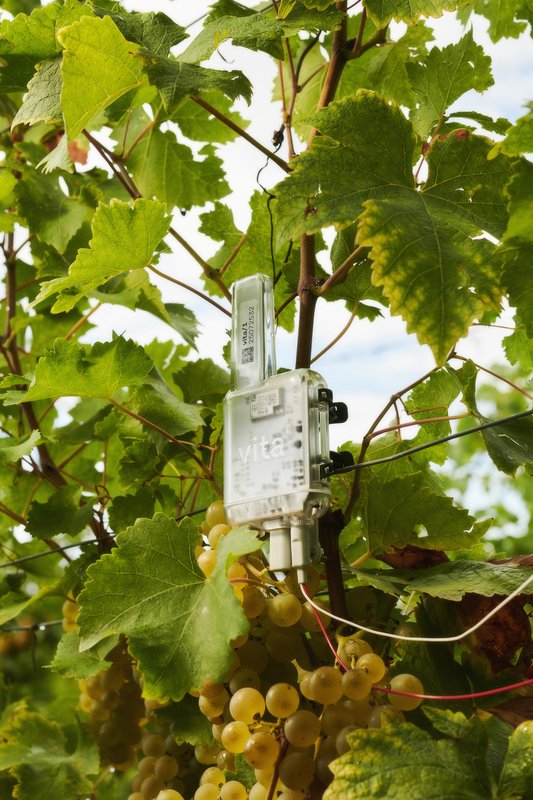
Arboricrop — Next generation agriculture using real-time information from tree crops Arboricrop is a research project conducted by a multidisciplinary consortium bringing together Vivent Biosignals, Changins – University of Viticulture and Oenology, and ECAL/Ecole cantonale d art de Lausanne (HES-SO), with the support of Innosuisse. Its objective is to develop a miniaturized plant electrophysiology sensor designed for use in real agricultural conditions: the VITA Mini Sensor. VITA measures plant physiological signals and identifies stress situations before visible symptoms appear. The aim of the project is to provide farmers with early, plant-specific information (water, nutritional, biotic, or abiotic stress) in order to support decision-making and limit systematic or preventive interventions based on general assumptions. The system is part of an approach that seeks more targeted use of agricultural resources, in a context of increasing climate variability. Design was integrated from the earliest phases of the project, in direct connection with the scientific, agronomic, and technical developments. This early integration made it possible to align technical choices (electronic architecture, antenna, power supply, cabling) with real-world field-use constraints, as well as maintenance and durability requirements. The sensor is built around a transparent polycarbonate housing, allowing direct visibility of its internal components. This approach aims to facilitate inspection, understanding of operation, and maintenance. The enclosure is waterproof while remaining fully disassemblable. The product architecture is based on complete modularity: the electronic board (PCB), battery, cables, and sensors are all separable and replaceable. The object s design takes into account real conditions of use (handling with gloves, quick installation, exposure to weather). The design work also addresses information structuring: electrophysiological signals are translated, via Vivent s algorithms, into synthetic, actionable indicators, with progressive access to more detailed data when needed. VITA is now produced in series and deployed in a range of agricultural contexts, including open-field crops, arboriculture, viticulture, and controlled-environment growing systems, across Europe, North America, and South America.Principal investigatorStéphane Halmaï-VoisardResearch teamPietro Alberti Maxwell Ashford Alain Bellet Stéphane Halmaï-Voisard Laurent SoldiniPeriod01.11.2023–30.04.2026Funded byInnosuisse – Agence suisse pour l encouragement de l innovation, Confédération suissePartnersChangins – Haute école de viticulture et œnologie Vivent BiosignalsLecturers and researchersVivent Biosignals: Dr Nigel Wallbridge – Founder, Executive Chairman Carrol Plummer – Founder, CEO Dr Andrzej Kurenda – Chief Scientific Officer Dr Andreas Kolbeck – Plant Scientist Laura Baude – Plant Scientist Nick Barker – CTO Changins: Prof Markus Rienth – Professor of Viticulture Dr Amanda Malvessi Cattani – Research AssociateContributorsYounès Klouche Frederik Mahler-Andersen
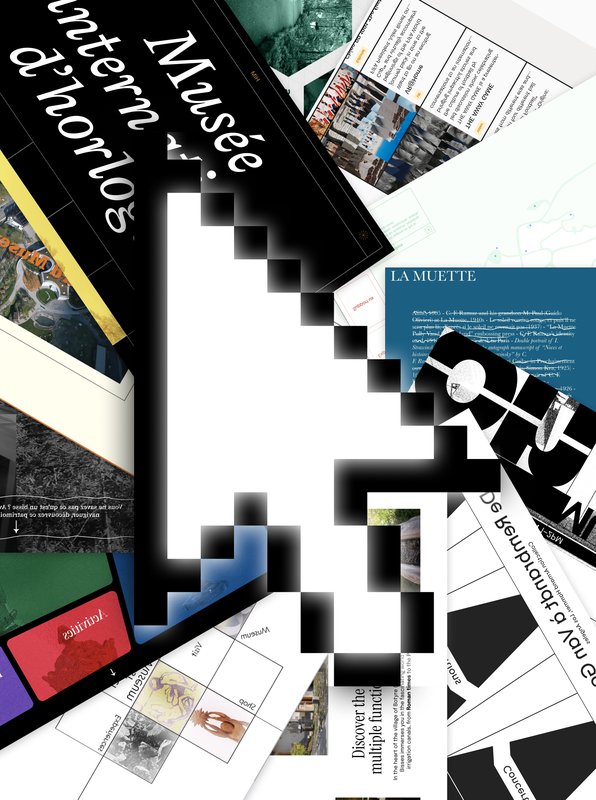
Pixel Perfect – 2025 Pixel Perfect is the semester project of the Interface Design orientation module, semester I. It invites students to put into practice the methods and principles introduced in the Macro UI and Screen Grammar courses, exploring how graphic systems structure the digital user experience. Based on the analysis of an existing website, the project encourages a critical and creative reinterpretation of its visual identity and hierarchy. The challenge is to design a contemporary, coherent and expressive interface capable of renewing the original design system while respecting its uses, content and functional constraints, as well as its key principles: consistency, modularity, and the scalability of graphic and interactive components. Bündner KunstMuseum The project presents a website for an art museum located in Chur, in the canton of Grisons. The platform showcases both the permanent and temporary collections, as well as the museum s book catalogue. It also includes information about events and practical details for planning a visit. The visual concept is directly inspired by the museum s architecture: a cube. I developed a minimalist, typography-driven design language based on geometric axes, reflecting the architecture of the building. By Emilie MüllerFondation Pierre Gianadda This website focuses on the navigation experience. Elements of the fondation s building are used throughout for this matter, with the main entrances symbolising the different parts of the website. Thematic colours are used to help keep track of where one is in the website, and are used as highlights for the interactive elements. Overall, the redesign aims to offer a simple experience, so that visitors can focus on the exceptional content of the fondation s diverse proposals. By Thomas NeyroudBallenBERG Ballenberg s website aims to help visitors explore the museum s offerings and structure their visit. However, the museum being large with various exhibits and events, the website became extremely complex. With the re-design, north star for was to craft the experience to facilitate visitors to easily plan their visit to then intuitively move into the purchase phase. Structurally, the re-design has two ways of representing content. A map view and another that aligns with a traditional website. Content on the map is categorised by clubbing multiple attractions into the themes of Ballenberg. Both sections are connected so that visitors can delve into the experiences section at any moment if required. Importantly, the website allows visitors to create a personalized plan of their visit to the open air museum. This helps them easy visualize their visit and systematically plan it as to liking. By Rishab SachidanandLa Muette This project presents a redesign of La Muette, the website of the museum dedicated to the Swiss writer C. F. Ramuz. The objective was to establish a more coherent balance between the two main sections of the platform, namely the museum space and the archival resources. The redesign aims to improve overall navigation fluidity and to rethink how users explore the archives. By Cindy MurierFIFA MUSEUM This project presents a redesigned concept for the FIFA Museum website. The original website offers a wide range of programs, events, and online content, but lacks a distinct football character, presents visit-related information in a fragmented way, and makes valuable digital content difficult to discover. The key visual is inspired by scanimation, expressing the museum s vision of “United by the Movement,” while the grid system is inspired by pitch lines. A more visible navigation structure aims to improve discoverability, and adaptive visuals with contextual annotations help surface programs and stories more personally. This makes the museum s heritage engaging and accessible for both visit planning and online exploration. By Shinyoung ParkVitromuseum The museum focuses on stained glass and glass art, I wanted the interface to reflect that theme in a simple way. I brought this idea into the website through geometric shapes inspired by stained-glass panels, vivid section colours based on real glass pigments, and subtle glass-like textures used in hover states. Each colour represents a different part of the website, helping users understand where they are, just like individual pieces of stained glass form one unified artwork. I also applied consistent angles and corner radius to keep the shapes cohesive and used tighter margins so the pieces feel connected, echoing how stained-glass elements sit closely together. These decisions make the visual identity stronger while still keeping the navigation clear and easy to use. By Seoyun ChoiVallon MUSEUM Inspired by the museum s L-shape and the idea of archaeological excavation, the design of this website invites users to explore by revealing and hiding layers of content. The L becomes a tool for navigation and a frame that guides the eye and uncovers hidden fragments step by step and shows hoe museum s identity is rooted in its form and historical foundation. Like digging through history, the experience is built on curiosity and gradual discovery, turning the website into a place where what s buried slowly comes to light. This project is a metaphor for digital excavation ad invites users to uncover hidden stories layer by layer. By Delphine Brantschen
Founded in 2007 through a joint initiative of the Canton of Vaud, private partners, and Pierre Keller, then Director of ECAL, the ECAL+ Foundation was established to support the school’s growth and international ambitions. It played a key role in financing and realizing ECAL’s move into its current building in Renens—an emblematic site that brings together all departments and encourages interdisc…
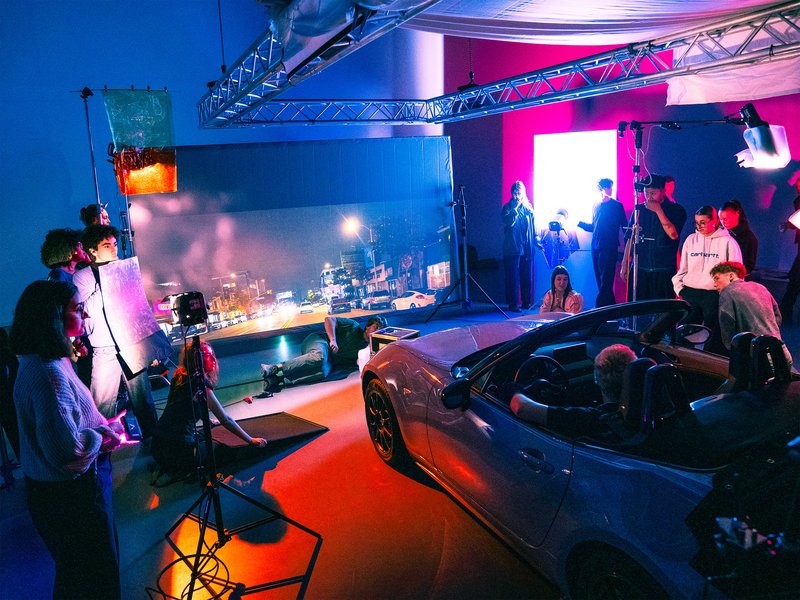
Workshop Shitty Rigs Workshop led by Michael William Farino, Jonathan Ricardo Argudo and Herbert Mayer and given to students in the Bachelor s degree programmes in Cinema and Industrial Design. Improvising. Adapting. Overcoming. For a week, students were introduced to alternative methods for creating shots and special effects during filming. Members of the New York collective Shitty Rigs shared their tips for creating the most original and daring sequences with limited resources. The art of resourcefulness in all situations.
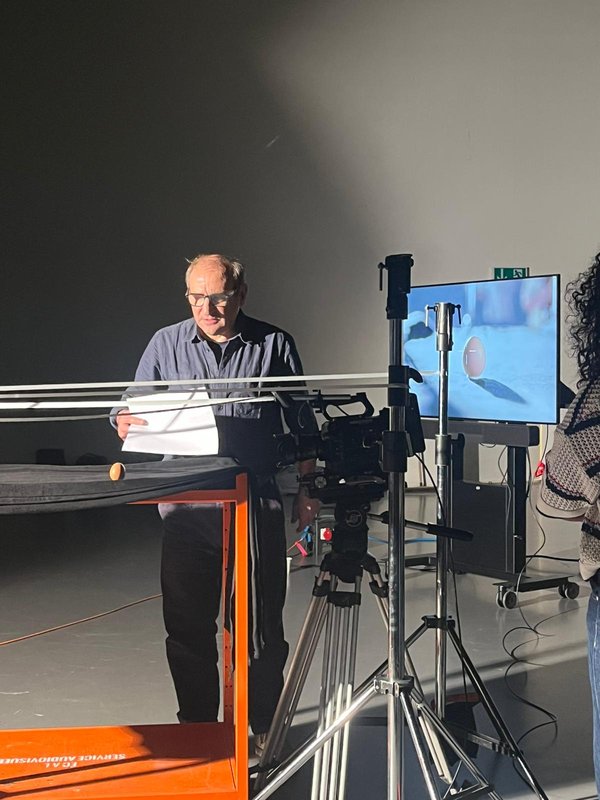
Workshop with Benoît Dervaux Second-year Bachelor s students attended a workshop with Belgian cinematographer Benoît Dervaux, known for his work on the Dardenne brothers films. He was responsible for the cinematography on the Swiss films Laissez-moi by Maxime Rappaz (2023) and À bras-le-corps by Marie-Elsa Sgualdo (2025). "When Rachel Noël asked me to come to ECAL to give a workshop on image centred on light, I thought about it for a while and then immediately thought of this quote that I really like and that has stayed with me for a long time, by Serge Daney: In artistic terms, an absolutely intuitive, almost animalistic understanding of what can be done is much more important than knowing what one wants to do. Throughout my career, I have often observed how light in cinema remains a mystery that is difficult to unravel for many people, including numerous professionals in the sector, producers, directors, etc. However, for the director of photography, who is responsible for the image of a film, light, however fantastical and artistic it may be, inevitably requires at some point to be forged from tangible and material elements. Starting from the axiom that a film shot must above all be structured and constructed according to the camera position, during this workshop we observed the interplay of light and shadow. Through a series of simple, practical exercises, I attempted to introduce the students to cinema lighting so that it would no longer be an abstract concept for them. By giving them these few keys, I hope that they will now be able to observe photography in a more analytical way and gain a deeper understanding of films." Benoit Dervaux

Reality Check – 2025 Reality Check is a hands-on course that applies the theoretical foundations of the Human Lens module through real-world qualitative research and transforming insights into concrete design proposals. Students reimagined the human experience of digital services. Engaging with real people through interviews, diary studies and other research methods, they defined and prototyped new directions for existing services that bring meaningful experience to the fore. Are.na: Collaboration A critical exploration of how Are.na shapes creative collaboration and unveils new possibilities for embodied communication within digital environments. Par Emilie MüllerSHELVES Rethinking the user experience of the file explorer on Windows in the context of tertiary education to meet the specific needs of students : less freedom and less browsing. Par Gwenaëlle GustinA New Moodle My idea is a Knowledge Map that transforms Moodle into a spatial learning system, making course structure, priorities, and dependencies visible so students and teachers can navigate learning with clarity, autonomy, and reduced cognitive load. Par Marc Facchinettia new linkedin The concept is about building a common language where creative work and corporate strategy not only meet but thrive together. And also to redefine how creative work is presented, valued, and understood in the professional world. Par Delphine BrantschenThe Writer s Desk in Notion The Writer s Desk in Notion reframes digital note-taking as a malleable clarification tool, starting from a document on a canvas and gradually shaping the workspace through personal writing practices. Par Shinyoung ParkDuolingo By integrating physical-world interactions with personalized digital learning, Duolingo transforms from a one-size-fits-all app into a human-centered platform for real-world language fluency. Par Amna Ahmad
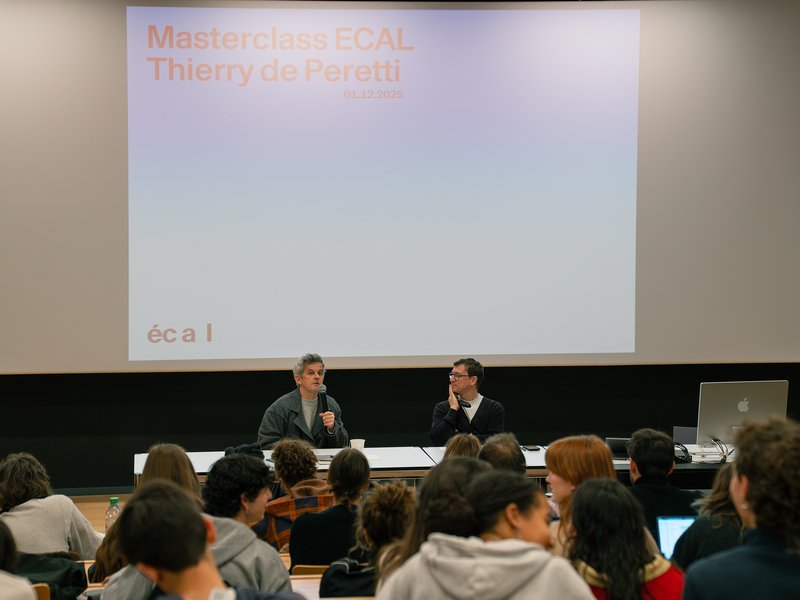
MASTERCLASS THIERRY DE PERETTI Meeting with Thierry de Peretti, French actor, director and stage director Born in Ajaccio in 1970, Thierry de Peretti trained at the Cours Florent drama school. He began his career in theatre, directing plays by authors such as Koltès and Fassbinder. He received the Prix Révélation from the Syndicat National de la Critique in 2001. After several notable roles in cinema (Ceux qui m aiment prendront le train by P. Chéreau, Yves Saint Laurent by B. Bonello), he moved into directing with Les Apaches (Directors Fortnight 2013), followed by Une Vie violente (Critics Week 2017), Enquête sur un scandale d État (San Sebastian Film Festival 2021) and À son image (Directors Fortnight 2024). His work, often set in Corsica, explores the social, political and intimate tensions of the island through a realistic and poetic lens, confirming his status as a committed filmmaker. His approach to casting, distribution and acting is immersive and collective. The filmmaker combines professionals and non-professionals to create a group dynamic capable of carrying the narrative. In search of authenticity, the performers draw on their personal connection to the story and the filmed location. Discussion moderated by Paolo Moretti, Head of the Cinema Department
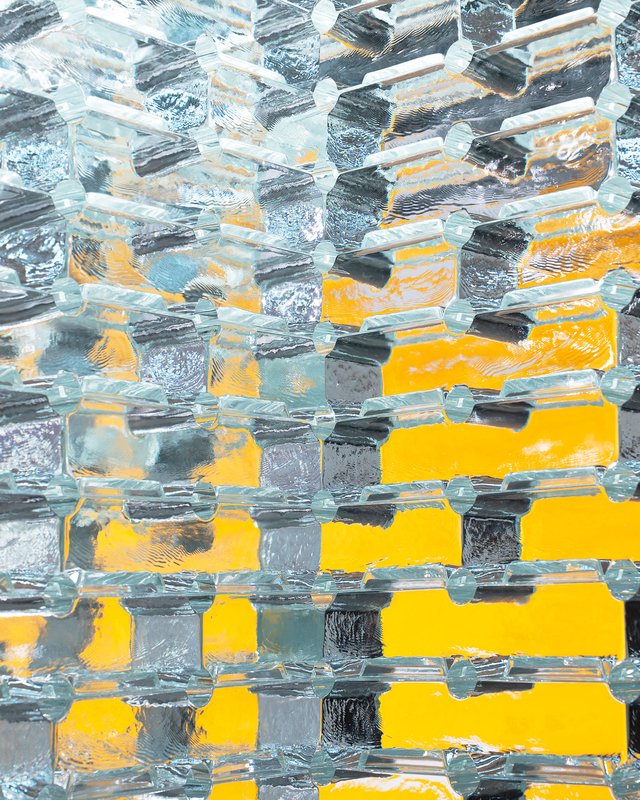
Glass Reflections at Design Miami 2025 Bringing together craft, experimentation, and contemporary design, ECAL designers and alumni contribute to NOUVEL s Glass Reflections showcased at Design Miami 2025. The Glass Reflections exhibition, presented by NOUVEL, was selected as a special project by Glenn Adamson, Director of Curation at Design Miami, and showcased during the 20th edition of Design Miami, under the theme Make. Believe. Combining craftsmanship, experimentation, and contemporary design, this exhibition is a cross-cultural exploration of glass practices between Mexico and Switzerland. It features the following Swiss designers and graduates from ECAL: Grid – Nicolas Le Moigne A modular glass-brick system that enables a wide ange of architectural configurations. Beyond spatial solutions, it serves as a building element for creating furniture and accessories. Licorice – Dimitri Nassisi Inspired by the sweet candy of our youth. These vases draw a parallel between industrial caramel production and manual glass-shaping techniques. Isla – Julie Richoz It is a metaphor, as its name in Spanish indicates. The dot in the center represents an island with an irregular shape resulting from the artisanal process of encapsulating a pre-cut round piece. nouvel.glass

Masterclass ECAL – Thierry De Peretti,01.12.2025,Leenaards Auditorium, ECAL The ECAL Cinema Department welcomes filmmaker Thierry de Peretti for a masterclass, offering a unique insight into his approach to cinema and storytelling. Originally from Ajaccio, Thierry de Peretti is an actor, stage director, and filmmaker. Trained at the Cours Florent, he began his career in theater, directing authors such as Koltès and Fassbinder, and received the Prix Révélation du Syndicat National de la Critique in 2001. In cinema, he is known for notable roles in Those Who Love Me Can Take the Train by Patrice Chéreau and Yves Saint Laurent by Bertrand Bonello, before turning to directing. His career as a filmmaker includes several acclaimed works: Les Apaches (Directors Fortnight 2013), Une vie violente (Critics Week 2017), Enquête sur un scandale d État (San Sebastian Film Festival 2021), and À son image (Directors Fortnight 2024). Often set in Corsica, his films depict the island s social, political, and intimate tensions with a mix of realism and poetic sensibility, confirming his position as an engaged and committed filmmaker. Thierry de Peretti has a distinctive approach to casting and acting, combining professional and non-professional actors to create a collective energy that serves the story. His direction emphasizes authenticity: performers draw on their personal connection to the story and the filmed location, enriching the narrative with a genuine emotional truth. The discussion will be moderated by , Head of ECAL Cinema Department.DATES & SCHEDULE01.12.2025 1:30 pm Free entryVENUELeenaards Auditorium, ECAL
ECAL Open Day 2025,29.11.2025,ECAL, Renens ECAL opens its doors and invites you to discover its activities in the fields of Fine Arts, Cinema, Industrial Design, Graphic Design, Digital Design, and Photography. ECAL opens its doors for you to discover its activities in the fields of Fine Arts, Film, Industrial Product Design, Graphic & Type Design, Media & Interaction Design and Photography. Lectures given by department heads will present our courses. Graduates will be on hand to talk about their experiences in the professional world, shedding light on career opportunities. The variety of our disciplines will be highlighted by the Diplomas 2025 exhibition, featuring editions, photographs, typography, art and interactive installations, films and objects. Activities will invite you to explore the building and its infrastructure: gallery, workshops, printing and technology centers, photo and film studios. The results of the latest works in progress will give you a glimpse of the diversity of projects created by students. Academic Service will also be on hand to answer any questions you may have about admission requirements, prerequisites and application deadlines.DATES & SCHEDULESSaturday 29 November 2025 9am – 5pm Free entry from 8.30amADDRESSECAL/Ecole cantonale d art de Lausanne Av. du Temple 5 1020 RenensCONFERENCES PROGRAM09:00am - 10:00am Foundation Year – IKEA Auditorium 10:15am - 11:00am Bachelor Graphic Design – IKEA Auditorium Bachelor Cinema – Leenaards Auditorium 11:15am - 12:00pm Bachelor Photography – IKEA Auditorium Master Cinema – Leenaards Auditorium 12:15pm - 1:00pm Bachelor Media & Interaction Design – IKEA Auditorium Master Photography – Leenaards Auditorium 1:15pm - 2:15pm Foundation Year – IKEA Auditorium Master Fine Arts – Leenaards Auditorium MAS Design for Luxury & Craftsmanship – Nussbaumer Auditorium 2:30pm - 3:15pm Bachelor Industrial Design – IKEA Auditorium Bachelor Visual Arts – Leenaards Auditorium Master Digital Experience Design – Nussbaumer Auditorium 3:30pm - 4:15pm Master Product Design – IKEA Auditorium Master Type Design – Leenaards Auditorium CAS Creative Leadership – Nussbaumer Auditorium NB: If you would like to start a course in the arts, we recommend that you attend the Propaedeutic Year lecture, as well as the Bachelor lectures in the fields that interest you.WORKSHOP & EXHIBITION PROGRAMECAL Open Day 2025 Programme (PDF)

ECAL x Moncler Drawing on Moncler s Alpine heritage, its timeless style, and its technical mastery, the ECAL Bachelor Photography students developed their own interpretation of the brand s visual language, blending documentary photography with staged scenes, and merging reality with fiction, under the artistic direction of French photographer Philippe Jarrigeon. As part of Paris Photo 2025, the students work was showcased at the Moncler boutique on the Champs-Élysées.

ECAL x Polaroid Foundation This workshop brought together ECAL graduate artist Douglas Mandry, the Polaroid Foundation, and around thirty Bachelor Photography students. They had the exceptional opportunity to work with a camera that produces Polaroid films in a 40 × 60 cm format and weighs nearly 200 kg. This experience was made possible thanks to its operators, John Reuter and Harriet Browse, who introduced the students to the use of this unique device and the Polaroid Foundation team. Douglas Mandry provided the project s artistic direction and supported the students in their experiments carried out directly with and on the films. The final result was presented as a collective exhibition on ECAL s premises, revealing a particularly rich diversity of approaches and visions.
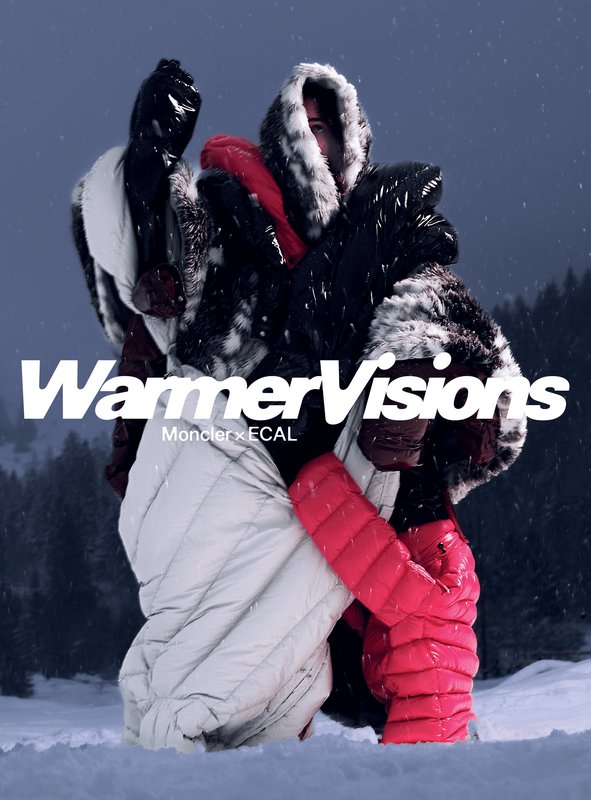
ECAL at Paris Photo: WARMER VISIONS,14–24.11.2025 Visit WARMER VISIONS at Paris Photo 2025, an exhibition inspired by Moncler s alpine heritage interpreted by ECAL Bachelor Photography students. Drawing inspiration from Moncler s alpine heritage, enduring style, and technical mastery, ECAL Bachelor Photography students crafted their own interpretation of the brand s visual language, blending documentary photography and staging, reality and fiction, under the artistic direction of French photographer . As part of Paris Photo 2025, the students work is presented at Moncler s Champs-Élysées store. The exhibition is open to the public from 14 to 24 November during store hours.ADDRESSMoncler Paris Champs-Elysées 119, Avenue des Champs-Elysées 75008 ParisDATESNovember 14 to 24, 2025 during the store s opening hours Monday to Saturday 10:30 am–7:45 pm Sunday 11 am–6:45 pm Free entryHEAD OF PROGRAMMESTUDENTS · · · · · · · · · · · · · · · · · · · · ARTISTIC DEPUTYImage (c) Aline Savioz

RE.CHUV+ECAL,11.11.2025–15.01.2026,ESPACE CHUV Lausanne VU.CH, art in hospitals, is hosting an exhibition based on the RE.CHUV+ECAL project, led by ECAL for CHUV, which proposes a concrete approach to circular design. RE.CHUV+ECAL presents a sustainable design approach based on the reuse of construction materials to create hospital furniture. RE.CHUV+ECAL proposes a concrete approach to circular design, revaluing construction offcuts and waste as resources rich in history, form, and potential use. Under the direction of Lausanne-based designer Anthony Guex, students from ECAL s Bachelor Industrial Design program inventoried and reassessed materials recovered from the renovation of CHUV s outpatient radiology department, then designed furniture and accessories adapted to the specific constraints of the hospital environment. The aesthetic of the pieces engages in a dialogue with traces of the construction site — patinas, marks, and material contrasts — while the design solutions emphasize modularity and simple assemblies. A joint selection by Aubert Architectes, CHUV, and ECAL led to their small-series production in ECAL s workshops. Since the inauguration in November 2025, these objects have reflected a successful collaboration and a form of design that is creative, functional, and responsible.ADDRESSESPACE CHUV – Hall principal Rue du Bugnon 46 LausanneDATESNovember 11 to January 15, 2026 Free entryHEAD OF PROGRAMMESTUDENTS · · · · · · · · · · · · · · · · · · · · · · · · · PARTNERVU.CH
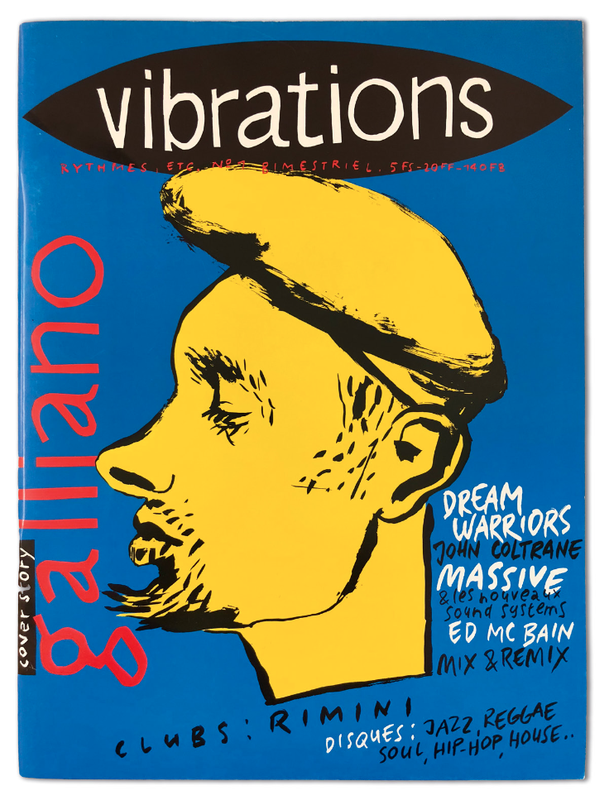
Vibrations Forward Based on archives and experiences associated with Vibrations (1991–2013), this research analyses how the magazine s textual, graphic and photographic content provides insight into the challenges of communicating about popular music today. An idiosyncratic and transversal magazine Vibrations was a Franco-Swiss magazine devoted to popular music, created in Lausanne in July 1991 by Pierre-Jean Crittin and Elisabeth Stoudmann. Until it ceased publication in 2013, it remained a beautiful object, innovative both in terms of its artistic direction (hand-painted titles, full-page photographs, and illustrations) and its editorial content. Unique in the French-speaking world at the time, the magazine was not limited to a specific style or genre. From the influences of jazz on hip-hop to the transitions from blues and gospel to RnB and the echoes of African traditions in EDM, the editorial line offered retrospectives and reports that provided a framework for understanding the world through its musical cultures. Cultural (in)visibility and emerging scenes In the 1990s, it was very rare to see black or non-white bodies in the French-language media, and Vibrations is a unique example of bringing minorities to the spotlight. Full-page portraits and reports from American and French suburbs, the Louisiana bayou and the Sahel gave a voice to artists and communities that were invisible. By focusing on black music, world music and emerging scenes, Vibrations documented the emergence of many trends that dominate the music industry today. This was particularly true of hip-hop, which at the time was largely ignored by the French-language press and music industry. Analysing the magazine s pages offers a rare opportunity to decode the changes in systems of representation linked to racial and sexual identities at the turn of the millennium. A media ecosystem to explore Access to the archives — which have been scanned as part of this project — provides an opportunity to examine the evolution of the music publishing industry with the advent of the internet. This research-creation aims to show how Vibrations constitutes a “media ecosystem” connecting Western Switzerland to other music scenes, and how musical tastes are constructed through mediation and collective practices. It revolves around three themes: a) provide a historical and sociological analysis of the evolution of musical tastes and graphic styles in French-speaking Switzerland between 1990 and 2010; b) highlight the contributions of Vibrations magazine to French-language (music) media, particularly with regard to the representation of racial and sexual identities; c) identify the influence of technological changes on the music press with the rise of digital media and the decline of print media.Principal investigatorJoël VacheronResearch teamAngelo Benedetto Olympe Boutaghane Elisabeth Stoudmann Françis BaudevinPeriod01.09.2025-30.08.2026Funded byHES-SO, Réseau de Compétences Design et Arts Visuels RCDAVPartnerCIRCUIT Centre d art contemporain

ECAL at GIFF Festival 2025,31.10–09.11.2025,Geneva From 31 October to 9 November, ECAL will be present at the GIFF Festival 2025. The largest space in Switzerland dedicated to immersive arts, GIFF is Geneva s oldest film festival and one of Europe s leading events. A crossroads of genres and disciplines, it is a place of experimentation and exchange. Each year, for ten days, it presents films, series, interactive installations, and virtual reality works to around 50,000 visitors. For its 31st edition, the Bachelor Media & Interaction Design will be present with: Winning project GIFF 2025 SPIRA MEMORIAE by In a world where ecosystems are dying out and certain smells are evaporating, what is happening to the places and stories that gave them form? Spira Memoriae is an immersive olfactory experience in virtual reality that invites users to journey through a fragmented sensory world. Original fragrances, created in collaboration with perfumer Tennessee Macdougall, extend the reflection through the language of odours. Beacons of an abstract landscape, they reveal rare materials, sometimes extinct, but still present in our collective memory. Spira Memoriae explores the tensions between disappearance and persistence, industry and territory, reality and reconstruction. Smell becomes a vehicle for storytelling, transmission and shared fiction.VENUEGeneva, SwitzerlandDATESFrom 31 Octobre to 9 November, 2025HEAD OF PROGRAMMEWEBSITEgiff.chÉTUDIANT·E·S
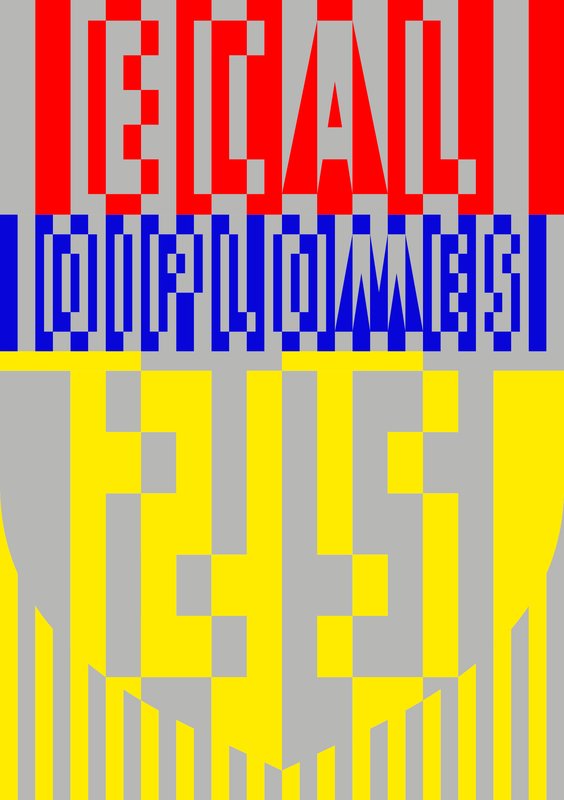
EXHIBITION ECAL DIPLOMAS 2025,30.10–05.12.2025,ECAL, Renens From 31 October to 5 December, ECAL presents the Diploma Projects 2025. Opening on Thursday 30 October at 6 pm. ECAL puts the spotlight on its 2025 graduates. The wide variety of diploma projects is presented in an exhibition and an evening screening showcasing all our disciplines. DIPLOMA 2025 PROJECT EXHIBITION OCTOBER 31 TO DECEMBER 5, 2025 at ECAL ECAL presents a selection of Bachelor and Master 2025 diploma projects. Through editions, photographs, typography, artistic and interactive installations, films and objects, this exhibition invites visitors to discover the talents of tomorrow. & AT ANY TIME ONLINE Discover all Diploma 2025 projects through descriptions, photos and videos on ecal.chDATES & SCHEDULE31.10–05.12.2025 Monday to Friday, 11 am to 6 pm Free entryVENUEECAL/Ecole cantonale d art de Lausanne Av. du Temple 5 1020 RenensOPENINGThursday 30 October at 6 pm
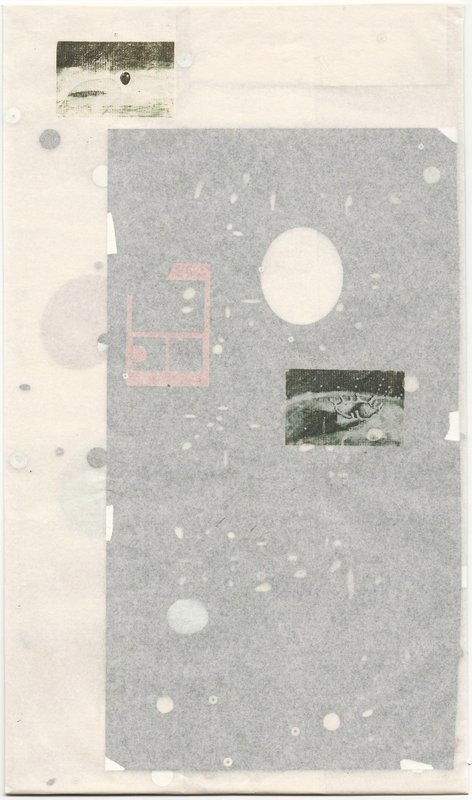
The Assembly of Writings A collective exploration of the new relations between contemporary writing and artistic practice. The Assembly of Writings is a research project conducted at ECAL / University of Art and Design Lausanne, between September 2024 and October 2025. Conceived and directed by Federico Nicolao, assisted by Valentina Parati and Alice Peach, and supported by the HES-SO, the project gathered artists, writers, philosophers, and key figures from the contemporary arts scene to examine the transformations of writing and its dialogue with the arts. Through a year of encounters, workshops, and discussions, the participants explored how writing today extends beyond its literary field to intersect with visual and performative practices. The project culminated in a collective publication, bringing together more than thirty contributions in diverse formats—texts, images, conversations, fragments— each revealing a new way of perceiving and transmitting the experience of the possible synergies between arts and writings. The Assembly of Writings positions writing as both material and gesture, an experimental field where thought and creation merge. This collective inquiry reflects ECAL s commitment to fostering new forms of knowledge at the crossroads of art, literature, and philosophy.Principal investigatorFederico NicolaoResearch teamValentina Parati Alice PeachLecturers and researchersEmmanuel Alloa, Luc Andrié, Micol Assaël, Mathias Augustyniak, Gabriela Carneiro da Cunha, Mariacristina Cavagnoli, Zoé Cornelius, Roberto Cuoghi, Tacita Dean, Marcelline Delbecq, Camille de Toledo, Suzanne Doppelt, Haytham El Wardany, Lucas Erin, Elein Fleiss, Linda Fregni Nagler, Mathilde Girard, Donatien Grau, Alain Guiraudie, Yannick Haenel, Koo Jeong-A, Jochen Lempert, Angèle Metzger, Stéphanie Moisdon, Gaëlle Obiegly, Hans Ulrich Obrist, Chiara Parisi, Fabienne Raphoz, Francesca Torzo, Carmen et Franco Toselli, Shirin Yousefi, Hanns ZischlerAssistantsValentina Parati Alice PeachStudents and alumniLucas Aulaigner, Francesco de Bernardi, Jean Bourgois, Lorenzo De Bellis, Francesco De Bernardi, Livia De Gumoëns, Ange Frédéric Koffi, Taleb Lacheb, Asia Lapai, Paul R. Levante, Mélody Lu, Marta Morandini, Ludovico OrombelliFunded byHES-SO – Haute école spécialisée de Suisse occidentale (RCDAV)Period01.09.2024 – 31.10.2025
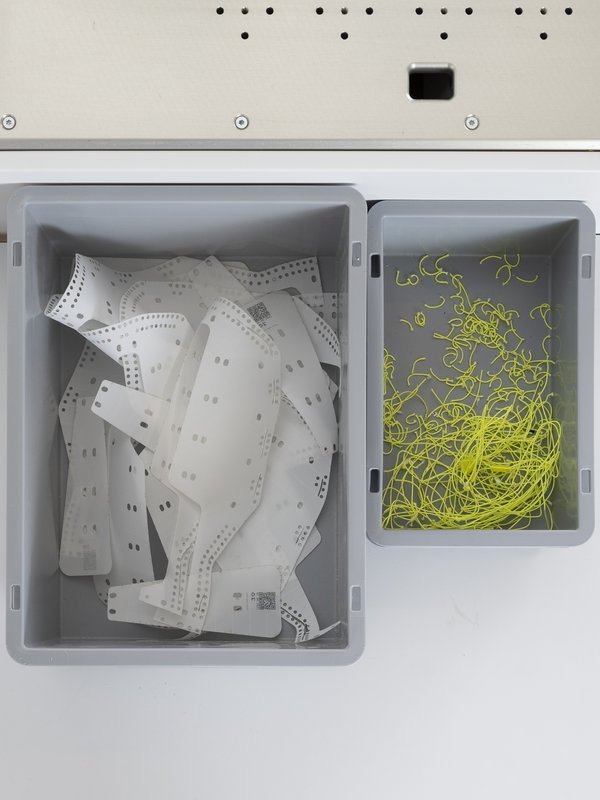
Design for Recycling through Automation and Robotics in Apparel Accessories and Footwear This project develops design for recycling textile-based goods, one of the most damaging waste streams, using contemporary toolsets to dismantle products into pure fractions. Recycling textile-based goods after use is extremely difficult with current methods. To improve recycling outcomes, it is essential to recover pure materials—known as fractions—from post-consumer waste. However, due to the fibrous nature of textiles, mixed materials, varied constructions, flexibility, and product diversity, achieving pure fractions is nearly impossible using existing processes. As a result, the textile industry generates vast amounts of waste and significantly harms the environment, especially through its heavy reliance on virgin resources. This project develops robotic and automated tools to dismantle post-consumer textile products into pure fractions, complete with the data and traceability needed for effective material recycling. To make this possible, design and manufacturing processes must consider the constraints of automated disassembly. The systems developed are intended for adoption by large-scale producers of textile-based goods, helping to significantly reduce environmental impact.Principal investigatorMaxwell AshfordPeriod01.09.2025 - 31.08.2026Funded byBRIDGE Proof of ConceptCybernetic Sustainability Panel Gens Public Programme: Cybernetic Sustainabilities – From Past Experiments To Contemporary Reinterpretations 11.10.2025, 15:00–17:00 Biennale di Venezia, Arsenale On Saturday 11 October 2025, fabric | ch, the Lausanne-based studio for architecture, interaction and research was the host of the panel “Cybernetic Sustainability”, as part of the public programme of the 19th International Architecture Exhibition in Venice, in the Speakers Corner of the Biennale, this year titled “Intelligens. Natural. Artificial. Collective.” The panel “Cybernetic Sustainability” explored the intersections between architecture, machine learning, art, climate data, and sustainability approaches, drawing on both historical and contemporary works. Emphasis was placed on cybernetics from an historical and analytical perspective, ephemeral algorithmic systems, and their potential interplay with vernacular approaches, framing discussions around collective intelligence and research-practice exchanges as key themes for panellists and moderation. “Cybernetic Sustainability” was hosted by Patrick Keller and Christophe Guignard, members of Fabric and professors at ECAL (HES-SO), featured Giulia Bini (head of Arts at CERN), Chrissie Muhr (Architect, Curator, Artistic Director of Experimental Foundation – Berlin), and Ashford Maxwell (Designer, Researcher at ECAL (HES-SO)). It was moderated by Gordan Savicic (Artist, Critical Engineer, Lecturer at HSLU Lucerne University of Applied Sciences and Arts).

Masterclass ECAL – Jazmín López,15.10.2025,Leenaards Auditorium, ECAL ECAL Cinema Department welcomes Argentine filmmaker and artist Jazmín López for a lecture as part of her ECAL residency at La Becque. Born in 1984 and living between New York and Buenos Aires, Jazmín López is a filmmaker and visual artist who resists labels. A multidisciplinary artist, her visual approach departs from classical narratives. By playing with cinematic devices, she moves beyond reality to explore sensation and emotion. Through a formal approach combining objects, places and temporality, she examines the history of political struggles. Recognized on the international stage, she has exhibited at institutions such as the Museum of Modern Art (MoMA), the KW Institute for Contemporary Art in Berlin, the Fondation Pernod Ricard, the San Jose Museum of Art and Art Basel. Presented at the Venice Film Festival and the International Film Festival Rotterdam, her first feature film Leones (2012) explores the transition to adulthood. The Origin of the World (2025), her latest short film, was also selected in Venice this year. Jazmín López is an ECAL resident at La Becque during the autumn semester of 2025. Discussion moderated by Jasmin Basic, Co-head of the ECAL–HEAD Master Cinema.DATES & SCHEDULE15.10.2025 5:30 pm Free entryVENUELeenaards Auditorium, ECAL
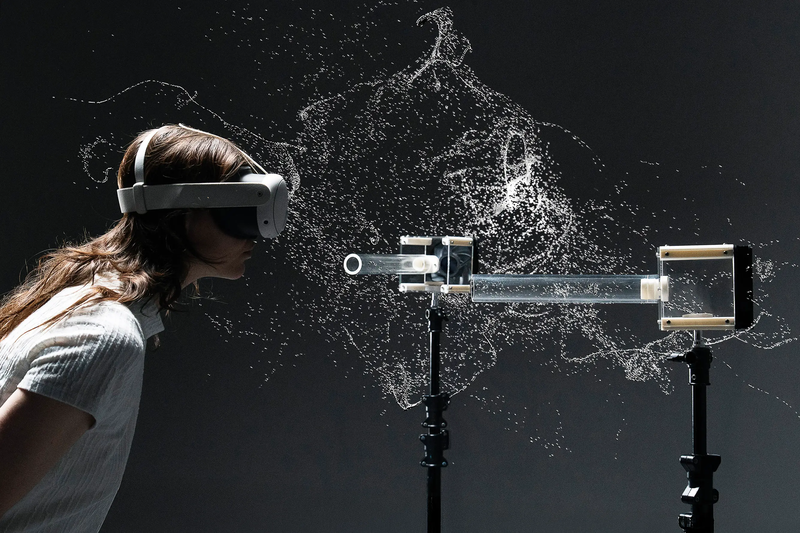
Alexine Sierro – Spira Memoriae In a world where ecosystems are dying out and certain smells are evaporating, what is happening to the places and stories that gave them form? Spira Memoriae is an immersive olfactory experience in virtual reality that invites users to journey through a fragmented sensory world. Original fragrances, created in collaboration with perfumer Tennessee Macdougall, extend the reflection through the language of odours. Beacons of an abstract landscape, they reveal rare materials, sometimes extinct, but still present in our collective memory. Spira Memoriae explores the tensions between disappearance and persistence, industry and territory, reality and reconstruction. Smell becomes a vehicle for storytelling, transmission and shared fiction.
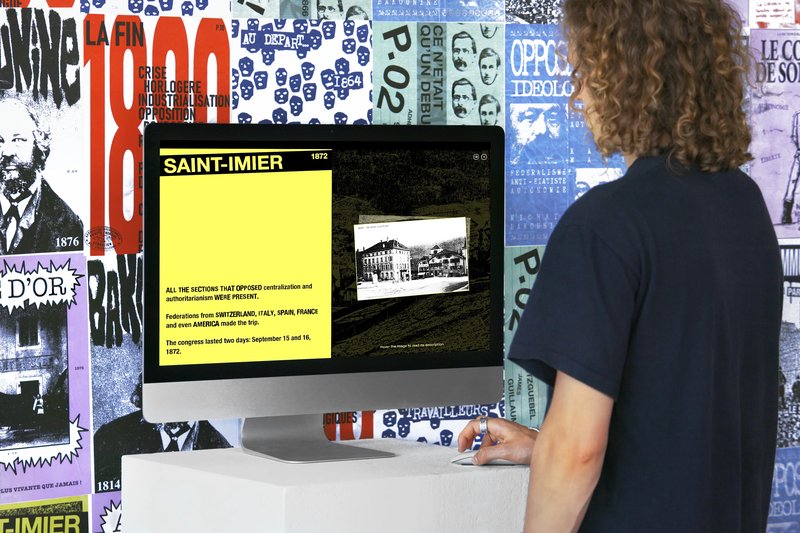
Baptiste Godart – L anarchisme n est pas une invention des Sex Pistols. The first international anarchist organization appeared in 1871—not in London, but in the Jura Mountains of Switzerland. Who would have thought? If you think anarchism is all about chaos, crust punks, or masked rioters, this web documentary will shatter those stereotypes. You ll discover how the Jura watchmakers organized to unite their peers across borders and confront the domination of the bourgeois, capitalist class. The Jura Federation is a key chapter in the history of anarchism. The art direction combines the fanzine aesthetic of the late 20th century with a modern interface design. Visual work is a major part of the documentary, with most of the imagery being original creations.
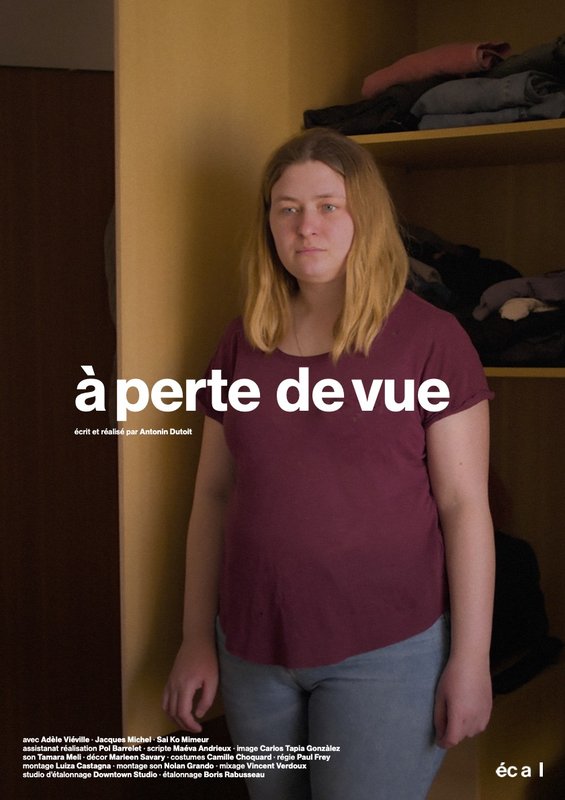
Antonin Dutoit – À perte de vue An old man dies slowly, cared for by a home aide. A young man watches them, in silence. Perched on the top floor of a small tower, a sick old man slowly passes away, cared for by a nursing auxiliary. A silent young man shares the apartment; he drifts through space, quietly witnessing the old man s last moments. This short film is the continuity of a research that started last year through a documentary project following the daily life of a retired couple living in seclusion at the top of a building for several months.
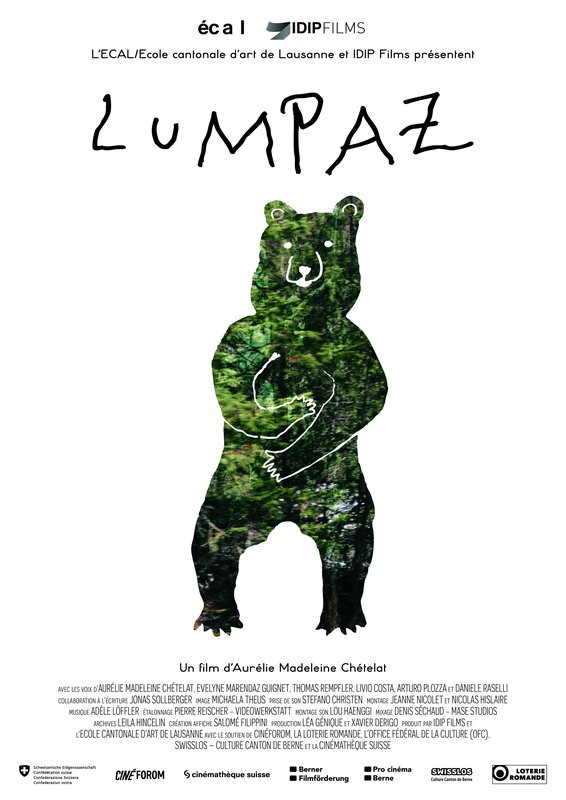
Aurélie Chételat – Lumpaz One, two, three… statue. Will the bear play with me? Where is he? What is he? Lumpaz is an exploration of our relationship with nature. This short film observes a slice of Swiss culture through an animal: the bear. The writing process developed in parallel with archival research, numerous encounters that allowed us to gather experiences and opinions, as well as time spent in the forest and at the bear pit in Bern... The film was then constructed as a collage, an attempt to approach the bear, to fulfil a childhood dream. How can we address issues of territory and cohabitation without passing judgement? Valuable exchanges with technical and artistic collaborators and co-producers allowed me to deepen these reflections on perspective and documentary ethics.
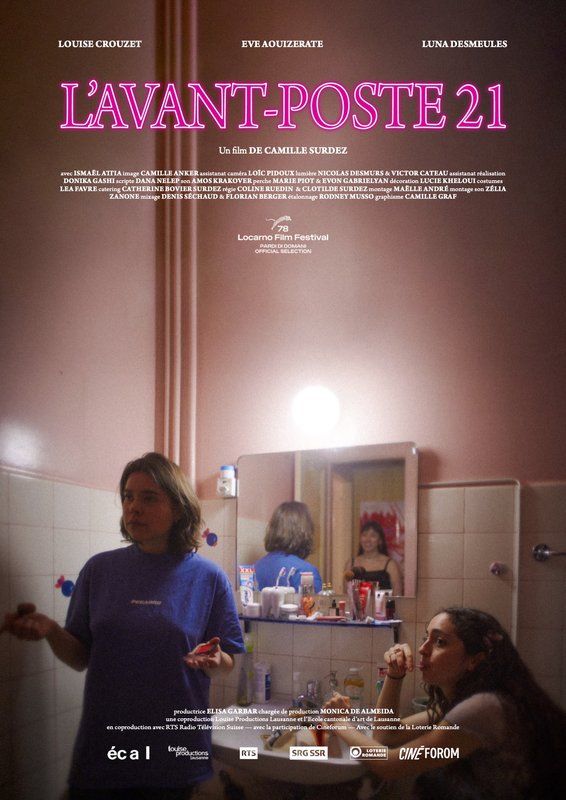
Camille Surdez – L Avant-Poste 21 Between doubts and awkwardness, three roommates go through a night marked by the abortion of one of them. One spring evening, three roommates endure a night marked by the abortion of one of them. Between support, awkwardness and silences, they seek together how to accompany their friend in this moment without landmarks. Set in a student apartment in Lausanne, this film explores the bonds of female friendship through improvisation, trust and the complicity of the actresses. Blending fiction and reality, L Avant-Poste 21 seeks to portray abortion not as a drama, but as an intimate event experienced collectively by these three friends.
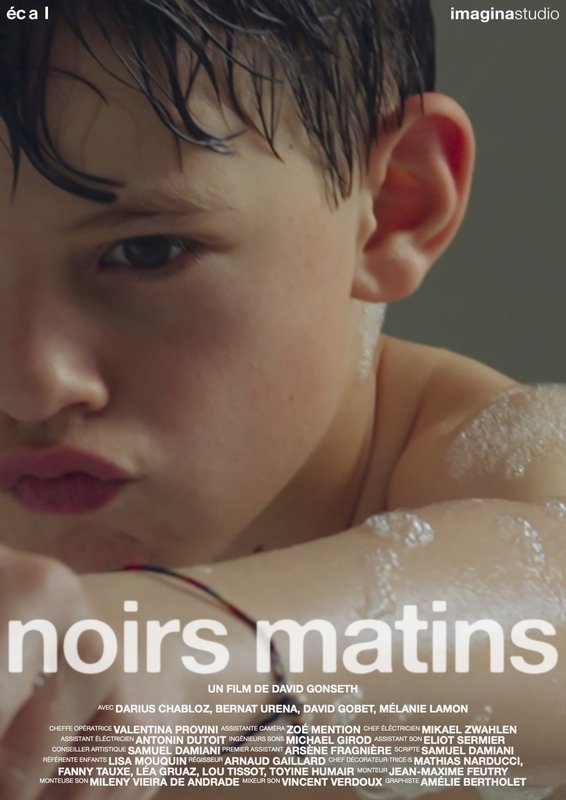
David Gonseth – Noirs matins The youngest in a family gradually senses a quiet unease lurking in their ordinary daily life. Two young brothers, Antoine and Romain, move into a new house with their parents. Very quickly, Antoine begins to notice that something is wrong in this seemingly ordinary family. This film explores domestic and incestuous violence through the lens of the everyday. Rather than depicting it as dramatic or isolated events, it is shown through the banal gestures of family life: breakfast, a football match, bath time. This approach reveals how such violence can merge with routine, becoming invisible, almost normal. It doesn t break into the characters lives — it is part of them. It s this normalization, this insidious presence, that makes the violence all the more disturbing.
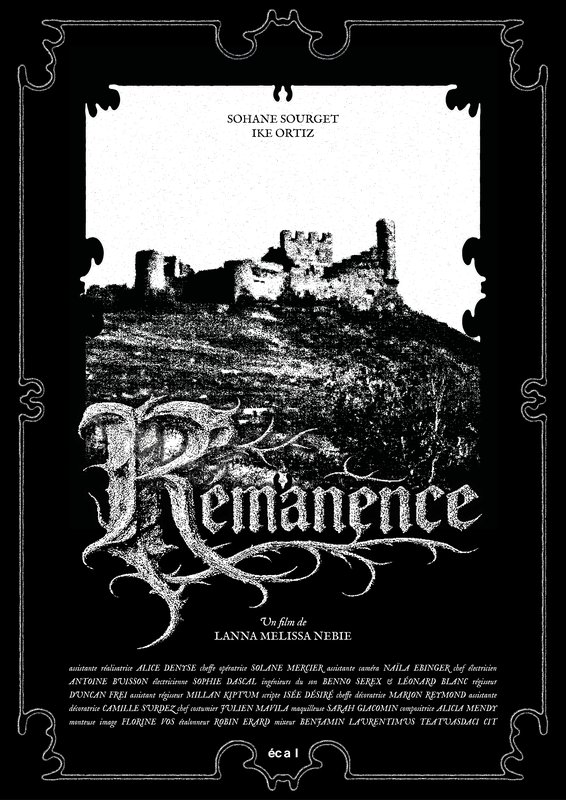
Lanna Melissa Nebie – Rémanence A young woman seeks to save her father s soul, guided by a blind man to a forbidden place. Rémanence is a film that explores the dark fantasy genre, not for its folklore, but for the drama it allows. It seeks to question whether this language, often considered as too codified or caricatural, could be turned into poetic material. Rémanence tells the story of a young woman trying to bring her deceased father back to life by following a blind, marginalized man: the Cursed. Through him, the story looks at invisible sensations, a perception of the world shaped by sound, vibration, and silence. The film unfolds in landscapes that become mental territories rather than geographical ones. Rémanence is as much an experiment in genre, as it is a way of shaping an intimate voice, in a place where one usually expects the spectacular or the heroic.
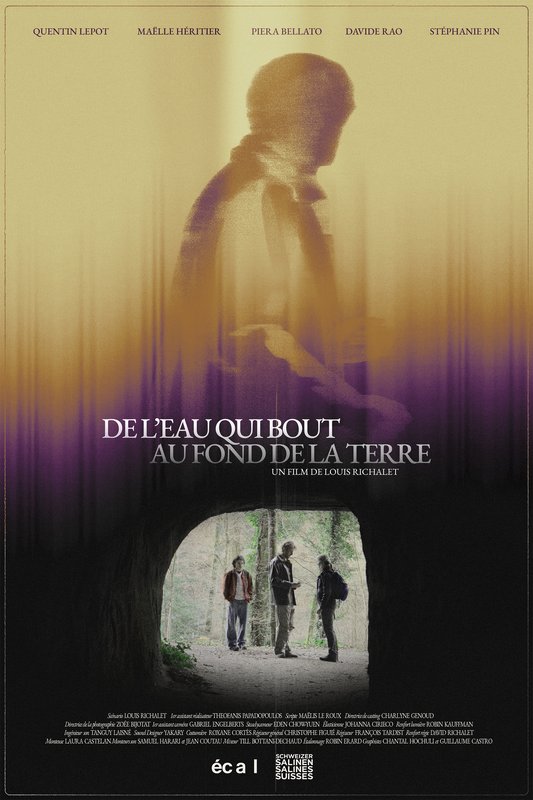
Louis Richalet – De l eau qui bout au fond de la terre Deep underground, Alexandre follows voices and sounds, which arise from and lead him to a lost woman. A young woman, Sophie, has disappeared into a cave. Out of despair, her family hires Alexandre : a clairaudient medium who perceives inaudible sounds, to find her. Voices guide him in his search through a maze of stones and, as he listens, echoes from the past invade his mind, throwing him into a trance between dream, memory and reality. This film is intended to be a sensory experience, a hallucination with Alexandre in this sonic turmoil. Sound as dread : faces on the rocks and rumours in the creaks. A ghost train of sound, where in the murmurs of the present hides forgotten echoes; fragments of plaintive songs, snatches of the ocean spitting out drowned melodies to which we never thought we d dance again.
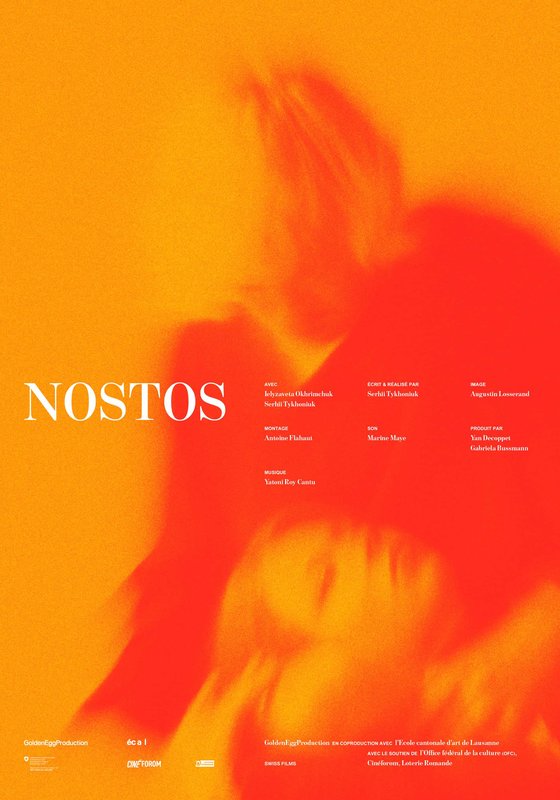
Serhii Tykhoniuk – Nostos In a hotel room, a Ukrainian filmmaker in exile has his isolation disrupted by the unexpected return of his former partner, who is about to leave for Ukraine to be with her ailing father. Nostos is a film born from forced displacement. Through an autofictional approach, it explores what remains when the idea of “home” collapses. Rooted in a lived experience of exile, the project reaches into broader questions: memory, absence, the fragile ties we try to hold across distance. The film uses archive images from Ukraine, silent gestures, and minimal space to evoke a state of suspension. The hotel room becomes a mental zone. This is not a war film, nor a personal diary — but an attempt to give form to disconnection, to waiting, and to a bond that persists despite everything.
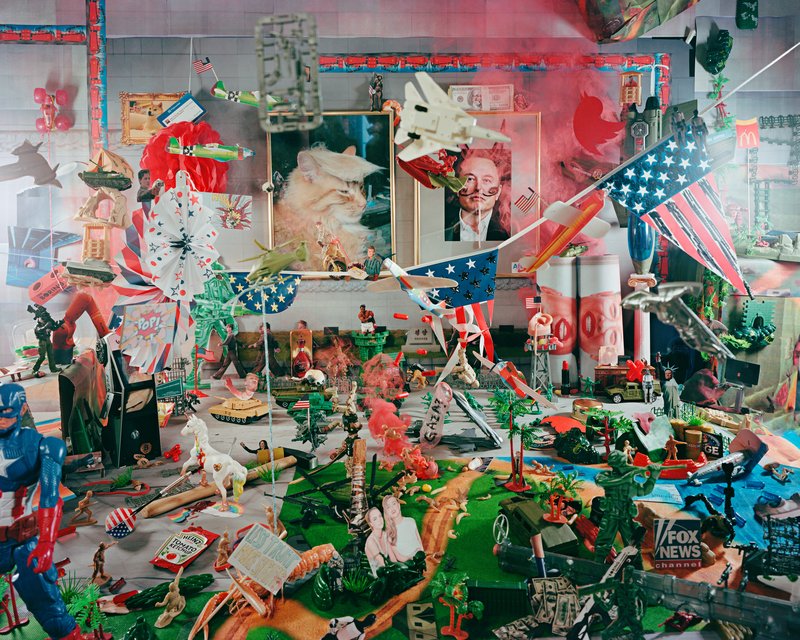
Cedric Zellweger – If life is a video game, the graphics are great, but the plot is confusing & the tutorial is way too long. The project centers around Elon Musk s life—his career, family, and global influence—viewed through a critical lens. Musk perceives the world as an immense playground, a glossy surface full of contradictions, where his ambiguous ties to Trump further complicate world events. Influenced by Bosch s Garden of Earthly Delights, the clear American dichotomy between good and evil dissolves; heaven and hell blur into an indistinguishable spectacle. In this context, Texas—where Musk and members of the photographer s family reside —embodies the expansive, protective, hyper-consumerist “American way of life”, fascinated by stars yet anchored beneath a paradoxically unreachable sky. The installation-based project employs various media: 4x5 film photography, a video game, photograms and different objects.
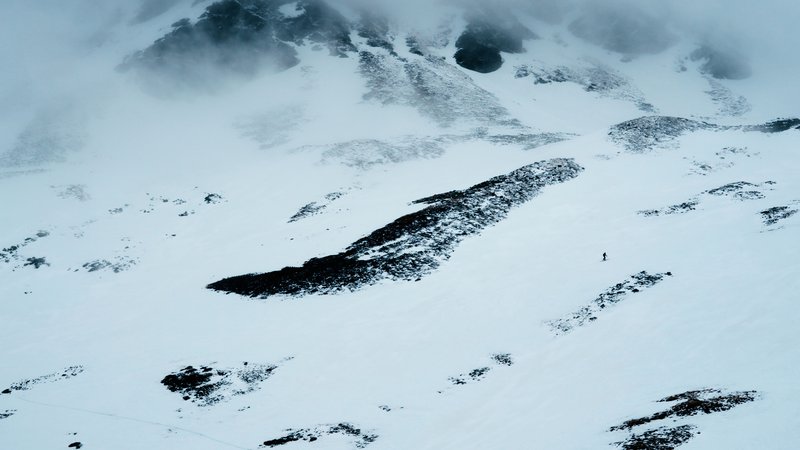
Eliot Pizzera – Tarèinâ Tarèinâ is a dystopian short film that explores the melting of snow and the impact of climate change on the Swiss Alpine landscapes. Global warming is pushing the snow line higher, leaving lower-altitude ski resorts deserted, littered with ruins and the skeletons of useless infrastructure. In this post-tourism setting, a lone skier glides like a ghost, trapped in an absurd ritual. Inspired by the landscapes of Valais and local myths, the film blends silence, organic sounds, and visual poetry. It incorporates the mythical figure of the Tshaggatta, masked guardians seen in Blatten before the climate disaster of 28 May 2025. Symbols of mystery and resilience, they raise questions about our relationship with the mountains and our desire to shape them in our own image.
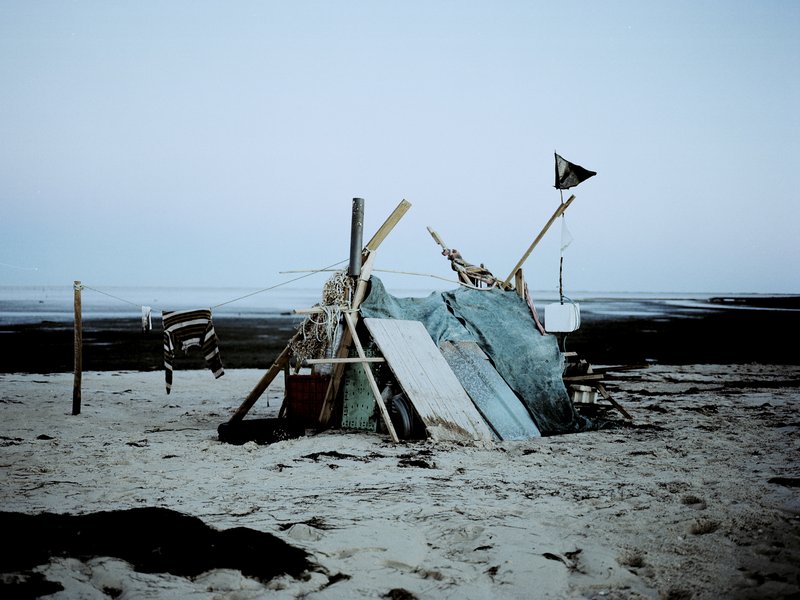
Emanuele Delpozzo – The Sea Speaks More Honestly To Those Willing To Drown The sea is an anonymous, ever-changing void where identity, place, and scale dissolve. It gives nothing—what you take from it reveals who you are. The project explores the psychology of journeying and survival, driven by a deep yearning for truth through direct experience. As we temporarily define space, we encounter uncertainty, disorientation, and the collapse of rational perception. In response to distress and displacement, it asks: how is the architecture of the body connected to the architecture around it ? We ve left behind destruction, now hidden in plain sight. A DIY boat—built from jerry cans and debris along the Portuguese coast—becomes a vessel to the horizon. The outcome is a photographic installation and video performance.
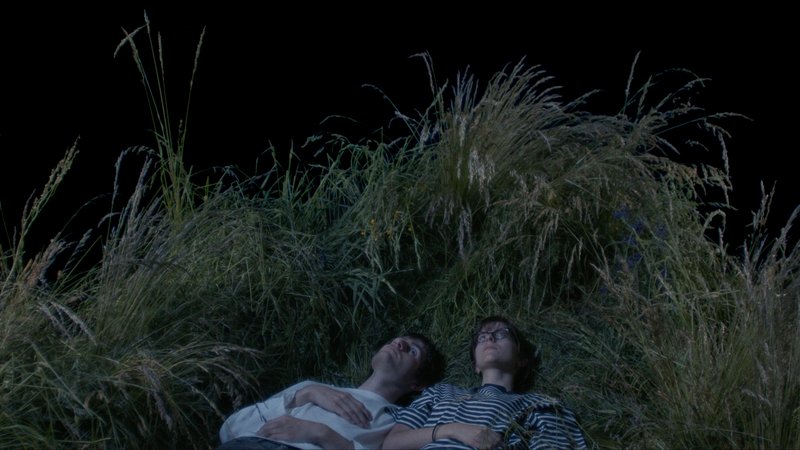
Jerome Luginbühl – Popcorn ‘In the beginning, nothing dissipates. Yara s story does not begin with light, but in darkness. Born almost blind, now an astrophysicist, my sister does not see the stars with her eyes, but through models, formulas, and light analyses. ‘I am no more than a speck of dust in a breath. This is where the film begins: in awe of the invisible. What does it mean to see — to truly see? Between belief and knowledge, numbers and longing, childhood and the cosmos, a space of abstraction, projection and reconstruction emerges. Yara becomes a metaphor for a different perception, a different truth, beyond eyesight.
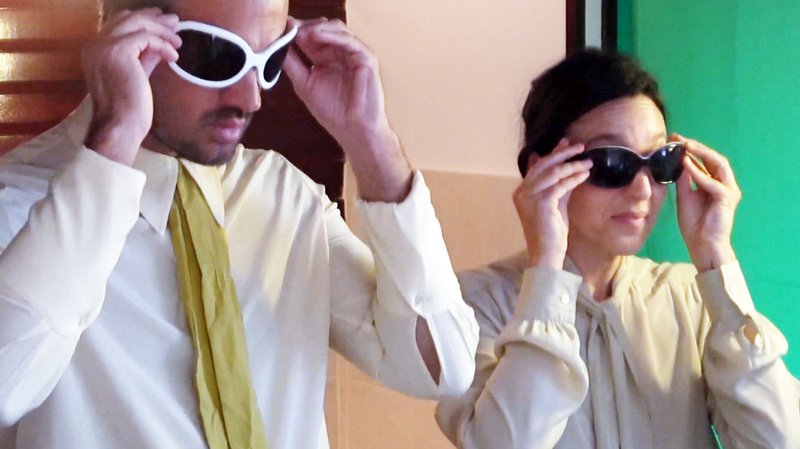
Paul Reachi – Take It All In! "Take It All In!" is a 2-channel video installation positioned between documentary and fantasy. It investigates how entertainment influences labor, psychology, and shared imagination. Blending real life stories, fictional scenarios and animal presence, it reflects on generational and cultural attitudes toward passion, work, and existential meaning. Filmed along the Mediterranean and the Lemanic coasts — where leisure and labor often intersect — the piece examines layered realities. The 2-channel format captures this simultaneity also offering material at once hi and lo-fi, mirroring a fragmented overlapping experiences of image, representation, purpose and identity.
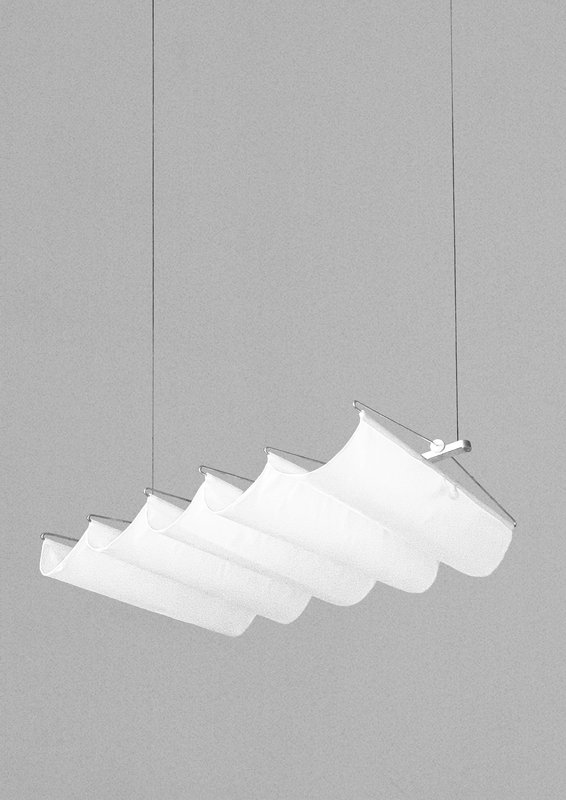
Julie Tena – Velum Velum is a pendant lamp designed to modulate light above a table, offering dual functions : soft, diffuse illumination or direct, precise lighting. Its sliding textile, gently undulating, creates volumes and shades that influence the room s atmosphere. Intended for spaces where boundaries between work, meals, and relaxation blur, Velum allows users to adapt light to their needs and moments, supporting the fluctuating rhythms of daily life.