Reality Check – 2025

Reality Check – 2025

Reality Check is a hands-on course that applies the theoretical foundations of the Human Lens module through real-world qualitative research and transforming insights into concrete design proposals. Students reimagined the human experience of digital services. Engaging with real people through interviews, diary studies and other research methods, they defined and prototyped new directions for existing services that bring meaningful experience to the fore.

Studio project (2025) with Emily Groves, Margherita Motta

Assistants
Martial Grin
Students
Delphine Brantschen, Seoyun Choi, Marc Facchinetti, Sina Fathollahi, Gwenaëlle Gustin, Emilie Müller, Thomas Neyroud, Shin Young Park, Rishab Sachidanand, Youri Zermatten, Amna Ahmad, Cindy Murier
Know-how
UX/UI

The Writer’s Desk in Notion

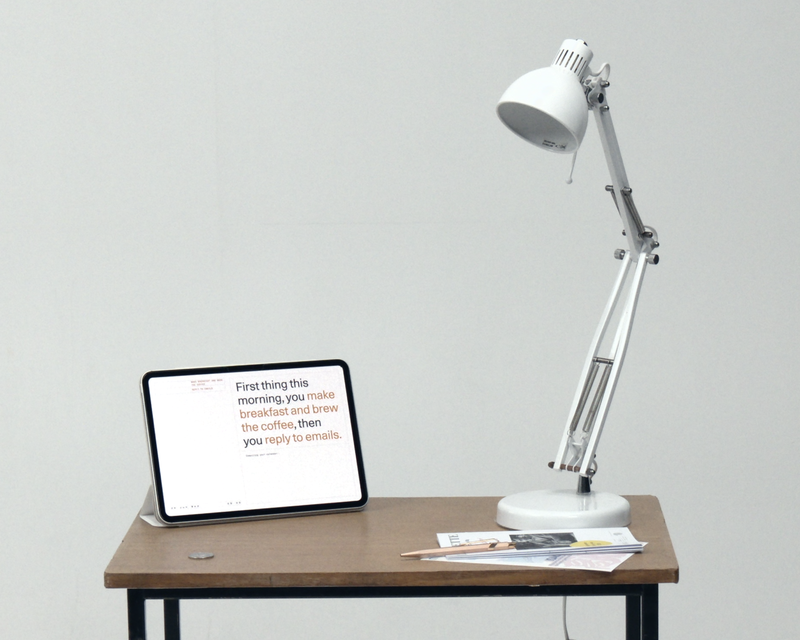
The Writer’s Desk in Notion reframes digital note-taking as a malleable clarification tool, starting from a document on a canvas and gradually shaping the workspace through personal writing practices.

Par Shinyoung Park


Duolingo

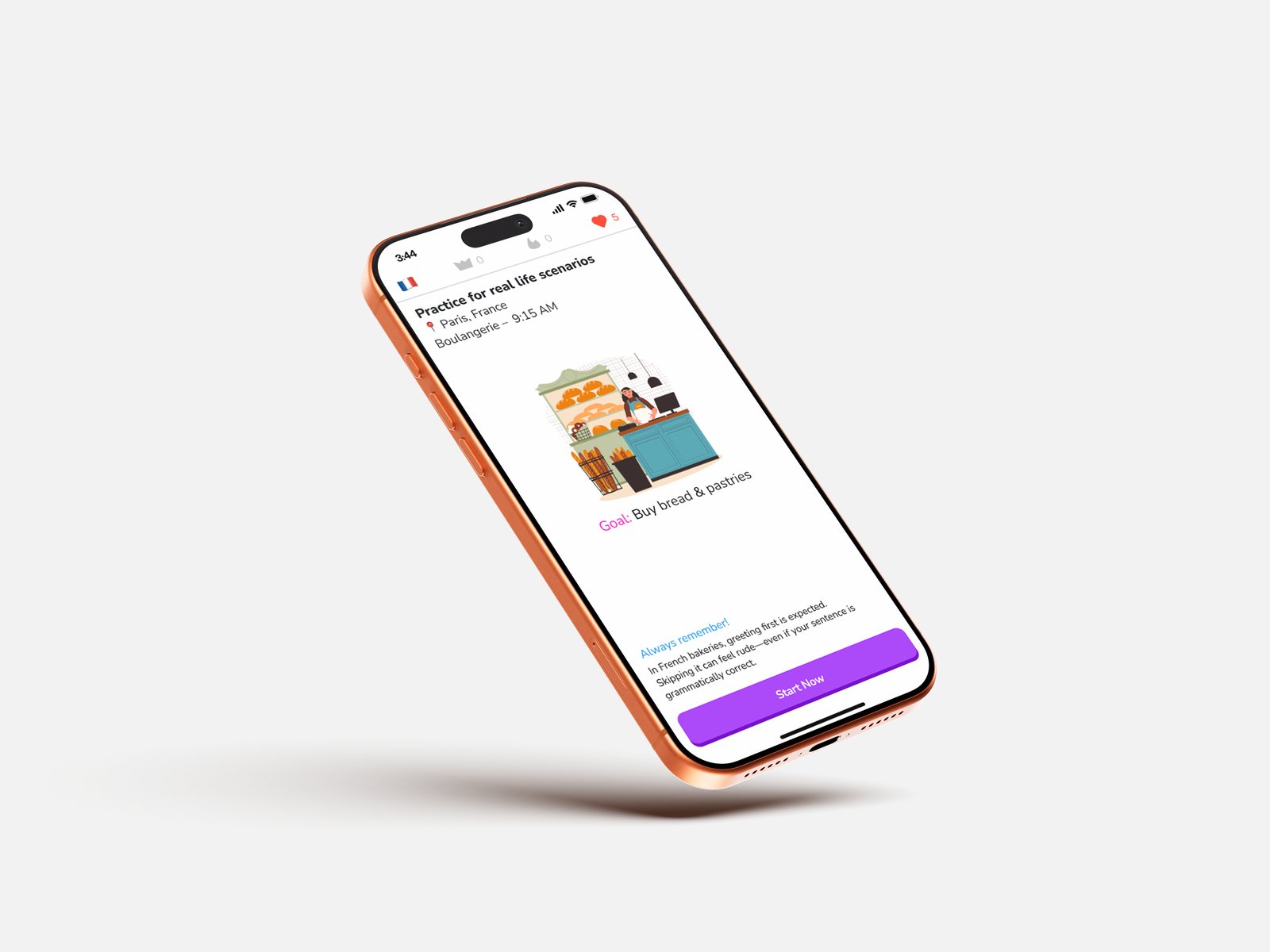
By integrating physical-world interactions with personalized digital learning, Duolingo transforms from a one-size-fits-all app into a human-centered platform for real-world language fluency.
 

Par Amna Ahmad


Are.na: Collaboration


A critical exploration of how Are.na shapes creative collaboration and unveils new possibilities for embodied communication within digital environments.

Par Emilie Müller


A New Moodle

My idea is a Knowledge Map that transforms Moodle into a spatial learning system, making course structure, priorities, and dependencies visible so students and teachers can navigate learning with clarity, autonomy, and reduced cognitive load.

Par Marc Facchinetti


a new linkedin

The concept is about building a common language where creative work and corporate strategy not only meet but thrive together. And also to redefine how creative work is presented, valued, and understood in the professional world.

Par Delphine Brantschen


SHELVES

Rethinking the user experience of the file explorer on Windows in the context of tertiary education to meet the specific needs of students : less freedom and less browsing.


Par Gwenaëlle Gustin

Projects related to UX/UI

Steve Bouillant – Re:soil

BA MEDIA & INTERACTION DESIGN

Steve Bouillant – Re:soil

by Steve Bouillant

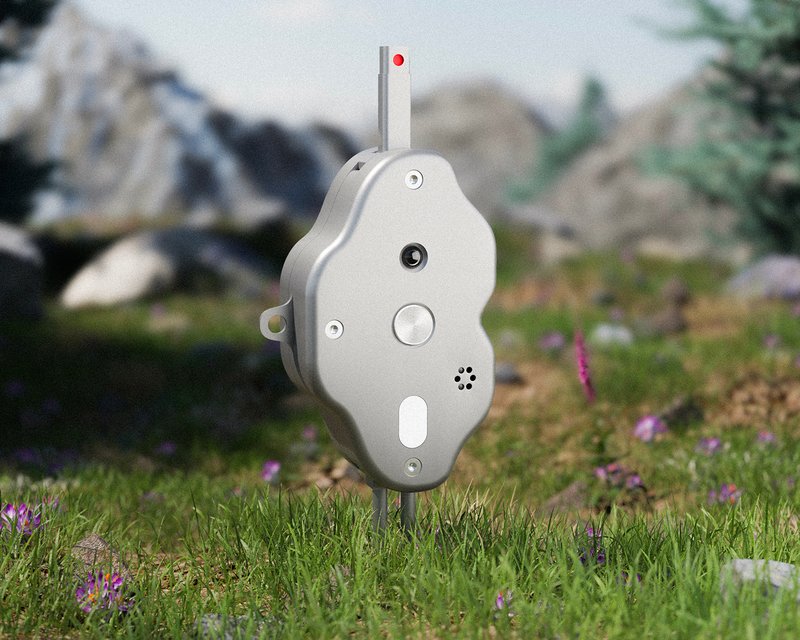
The smartphone has turned a trip to the mountains into an exercise in documentation. We take photos, tag our location, and post them: the natural world becomes content before it becomes a moment of reconnection. Re:soil offers a compact outdoor device whose sensors continuously measure humidity, light, and the transitions between environments. Its probe, planted in the ground, measures the earth's heat and compares it to that of the user's hand. Its microphone captures the soundscape of the location. Re:soil conveys these connections through vibration and light, without a screen, without performance, and without a phone. Upon the user's return, a linked app generates an ephemeral journal blending sensory interpretations, the geology of the site, and likely flora and fauna.
Teo Grajqevci – reform

BA MEDIA & INTERACTION DESIGN

Teo Grajqevci – reform

by Teo Grajqevci

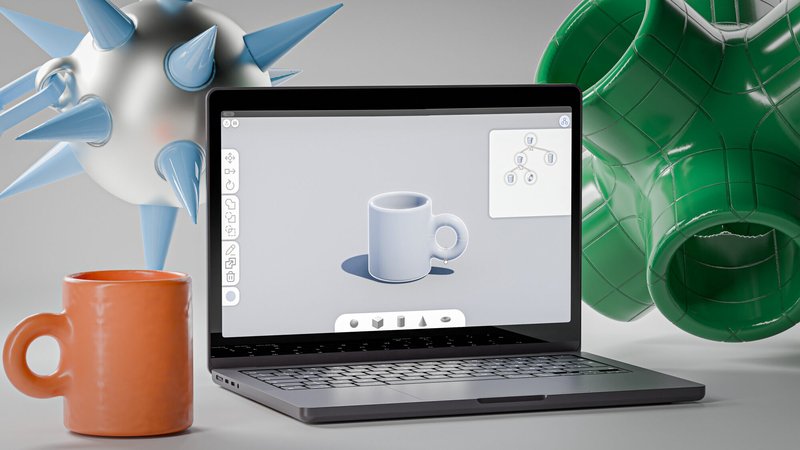
reform responds to a context in which designers are gradually losing control over their tools: creative software is becoming more automated, closed and dependent on cloud-based services. Today, generative AI can produce 3D models with ease, but often at the cost of control, understanding and ownership of the creative process. reform offers another approach: making 3D modelling easier to access, in a field that is usually complex and difficult to learn. The project takes the form of free and open-source software, built around a simplified interface, intuitive interactions and guides that support the learning of these tools. Through demonstrations and didactic exercises, reform restores the designers' motivation and means to model 3D shapes themselves.

Brikeld Hoxha – Compliant

BA MEDIA & INTERACTION DESIGN

Brikeld Hoxha – Compliant

by Brikeld Hoxha

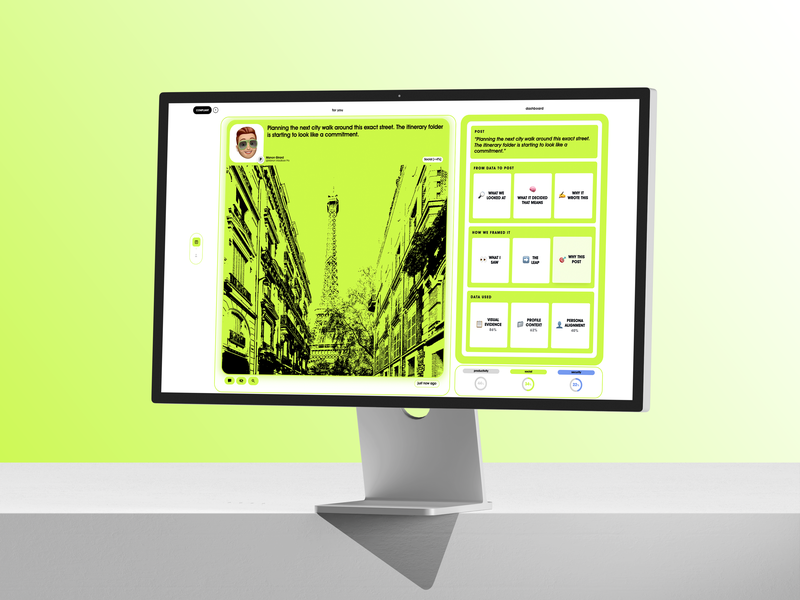
Welcome to Compliant, the first social network built entirely around you. Not around what you want to show, but around who you really are. During the setup phase, we show you exactly what we collect about you. Your profile is generated automatically. Your first posts, your behaviors, and your interactions feed your content. Then, hour after hour, Compliant updates itself for you. Without you having to do a thing. Your place in the community will be established. Compare yourself to your peers and climb the rankings. For the first time, others see you as you truly are. You no longer need to search for what to say, we already know the answers.

Gabriel Polgar – Tenir la rue, imprimer la rue

BA GRAPHIC DESIGN

Gabriel Polgar – Tenir la rue, imprimer la rue

by Gabriel Polgar

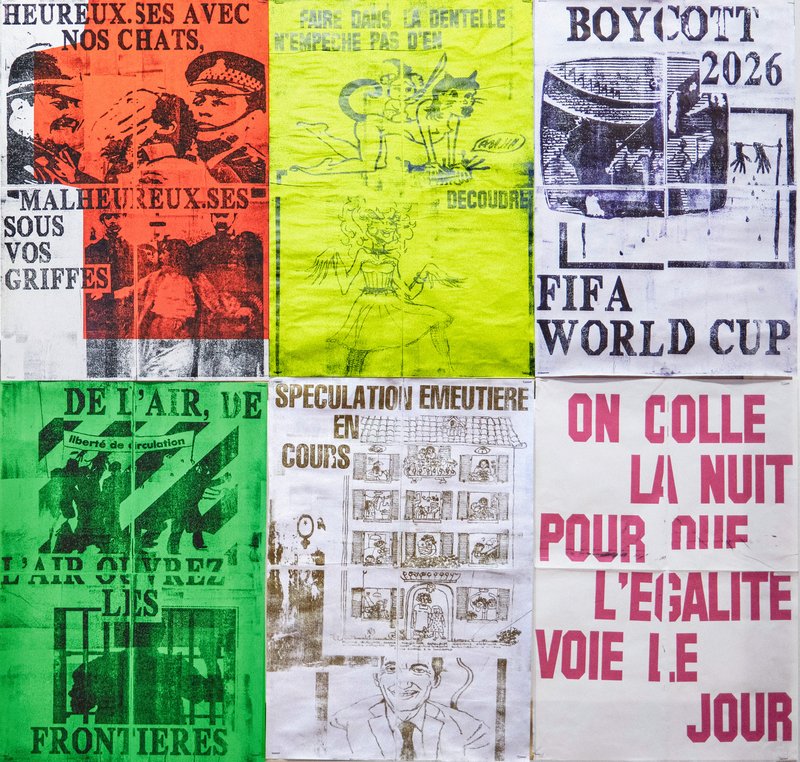
In a context marked by the erosion of social rights and the resurgence of far-right discourse, demonstrations are spaces where voices come together and grow stronger. From these gatherings emerges a rare collective energy: words are set free, solidarity is reinforced, and a shared momentum takes hold. Yet this force often fades and disappears far too quickly. Through a web-based design tool grounded in randomness, Tenir la rue, imprimer la rue aims to capture and extend these moments into everyday life. Using collectively gathered and contributed content, this project allows anyone to compose and print their own poster in the street.

Beyond Clicks

MA DIGITAL EXPERIENCE DESIGN

Beyond Clicks

with Gaël Hugo, Paul Lëon

The Mind Reader Interface shifts computing from the reactive to the proactive: from a system that obeys commands to one that anticipates them. Where smart environments cast their users as pilots issuing constant instructions, this project removes the friction of instruction altogether. Intention is no longer declared through a screen or a button. It is inferred. Reading context, habit and the signals of presence, the interface acts before it is asked. It sheds the form of the device to become a Ghost in the Room that senses rather than obeys. The user no longer pilots the space; they inhabit it. The system does not read thoughts, only traces, and stages the distance between anticipation and understanding: what we gain, and what we quietly surrender, when a space begins to act on our behalf.

Related courses