Photographic Essays – 2023

Photographic Essays – 2023

In the second year, the course Photographic Essays course enables students to exercise a documentary photographic practice –one based on a relationship with reality, with something anchored in the here and now.

This year, students worked on a theme related to ecology in the broadest sense: a very specific, concrete starting point (a permaculture garden, Extinction Rebellion activists, documentation of polluted sites, encounters with people working with more-than-human animals), a broader, multiple or personal approach.

Studio project (2023) with Matthieu Gafsou

Assistants
Angèle Marignac-Serra
Students
2 BAPH, Léa Bevilacqua, Johanna Bommer, Gilian Cardaci, Hector Codazzi, Carla Corminboeuf, Matilde Croxatto, Jennica Folkesson, Lorane Hochstätter, Sarah Marachly, Barnabé Masson, Yves Möhrle, Léo Paschoud, Cyriane Rawyler, Seraphine Sallin-Mason, Noé Vercaemst, Antoine Woeffray
Know-how
Documentary
Gilian Cardaci - ECAL
Gilian Cardaci - ECAL/Gilian Cardaci
Gilian Cardaci - ECAL

1/6

Projects related to Documentary

Fine Art Photography – 2025 #2

BA PHOTOGRAPHY

Fine Art Photography – 2025 #2

with Natacha Lesueur

Documenteur – The Power of the Fake Based on projects developed around a common theme, students create a personal and in-depth body of work exploring the notion of deception. They build a project that plays with the boundaries of photographic truth, using the medium as an artifice of lies.

Last Minute Risk

BA PHOTOGRAPHY

Last Minute Risk

with Natacha Lesueur

“What is clearly conceived can be clearly expressed, and the words to say it come easily.” Nicholas Boileau, *L’art poétique*. As students embark on their final year of study at ECAL, with their interests and methods taking shape, this final project offers an opportunity to challenge their own rules, established practices and influences, to refuse to settle for the status quo and to take risks.

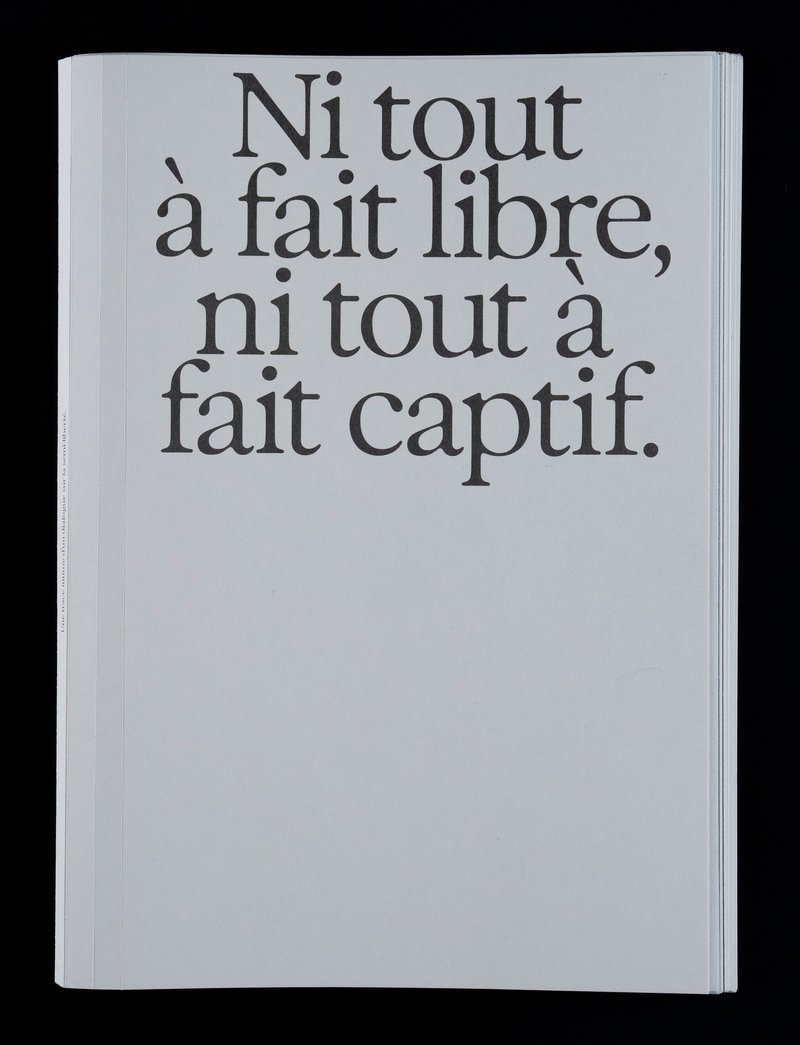
Léa Corin – Neither Fully Free, Nor Fully Captive

BA GRAPHIC DESIGN

Léa Corin – Neither Fully Free, Nor Fully Captive

by Léa Corin

Neither Fully Free, Nor Fully Captive explores the theme of day parole. Through a video installation and a book, this project archives and documents the activities of an association dedicated to reintegration. The projection, conceived as an emotional archive, combines experimental videos with sound testimonies from individuals on day parole supported by the association, revealing the complexity of this transition. The book, as a complement, adopts a documentary and sensitive approach, blending stories and visual creations. This project transcends graphic form to foster social dialogue and shed light on an essential yet often overlooked issue.

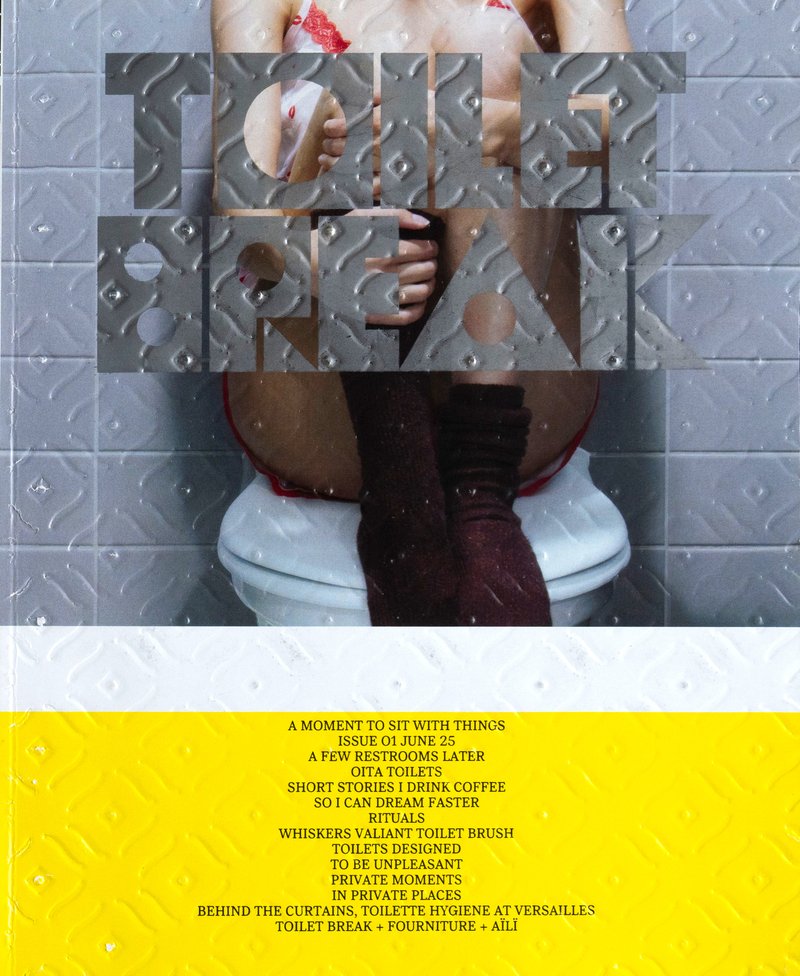
Lidia Molina González – Toilet Break Magazine

BA GRAPHIC DESIGN

Lidia Molina González – Toilet Break Magazine

by Lidia Molina González

It all started with taking a break. A pause. A moment alone in a shared space: quiet, ordinary, a little strange. Toilets might not be the first place you’d look for big ideas, but that’s why we chose them. Toilet Break uses this overlooked space to explore how we live together, take space, and connect. This first issue is about in-betweens: between public and private, inside and outside. It gathers voices from Switzerland, Belgium, Japan, across generations and practices. A place where ideas circulate freely, where serious things can be said with a wink. A collective and personal space to test new editorial forms, listen more carefully, and believe in detours as a way forward. To take, quite literally, a moment to reflect and sit with things.

Photographic Essays – 2025

BA PHOTOGRAPHY

Photographic Essays – 2025

with Matthieu Gafsou

This year's “Documentary Practices” course is devoted to a territory that is very close to us and, in a way for most of us, very far away: the countryside. For a city-dweller, the countryside is an out-of-town territory where you can go for a walk, where there are farmers, fields and forests. Recent votes in Switzerland testify to a considerable widening of the gap between town and country: the far right would be the place of rurality, while the left would be urban. This territory is not only topologically different from the city, but also seems to be inhabited by people whose lifestyles and thinking are at odds with the city. The reality, however, is obviously more complex and resists such simplification.
Related courses