Beyond The Screen – 2025

Beyond The Screen – 2025

Beyond the screen - is a series of interactive machines developed by students in their first year of Bachelor Media & Interaction Design. These systems are inspired by the relationship between instructions and execution within a computer system. These machines create text through a modular typographic system.

Workshop (2026) with Angelo Benedetto

Assistants
Livia Schmid
Students
Malik Ahmed, Alexander Anhorn, Diego Buccelloni, Davia Ciccoli Trannoy, Timoféi Cruz, Nora Dizeko, Mathias Gelin, Tanguy Genier, Rocio Hernandez, Jose Pardo Pariente, Alessia Rollini, Malcolm Semedo Barreto, Luna Tavernier, Philippe Strässle Zuniga
Know-how
Tangible Interaction, UX/UI, Craftsmanship

NODE 

Davia Ciccoli TrannoyRocio Hernandez

NODE – ECAL/Davia & Rocio

EAT 

Diego BuccelloniTimoféi Cruz

EAT – ECAL/Diego & Timoféi

SWAGS 

Malik AhmedLuna Tavernier

EAT – ECAL/Malik & Luna
SWAGS – ECAL/Malik & Luna

TOP 

Philippe Strässle ZunigaMalcolm Semedo Barreto

TOP – ECAL/Philippe & Malcolm
SWAGS – ECAL/Malik & Luna
TOP – ECAL/Philippe & Malcolm

BAS 

Alessia RolliniTanguy Genier

TOP – ECAL/Philippe & Malcolm
BAS – ECAL/Alessia & Tanguy

LIGHT 

Mathias LinigerNora Dizeko

LIGHT – ECAL/Mathias – Nora

FUNK 

Alexander Anhorn

FUNK – ECAL/Jose - Alexander

Projects related to UX/UI

The Mind Reader Interface

MA DIGITAL EXPERIENCE DESIGN

The Mind Reader Interface

with Gaël Hugo, Paul Lëon

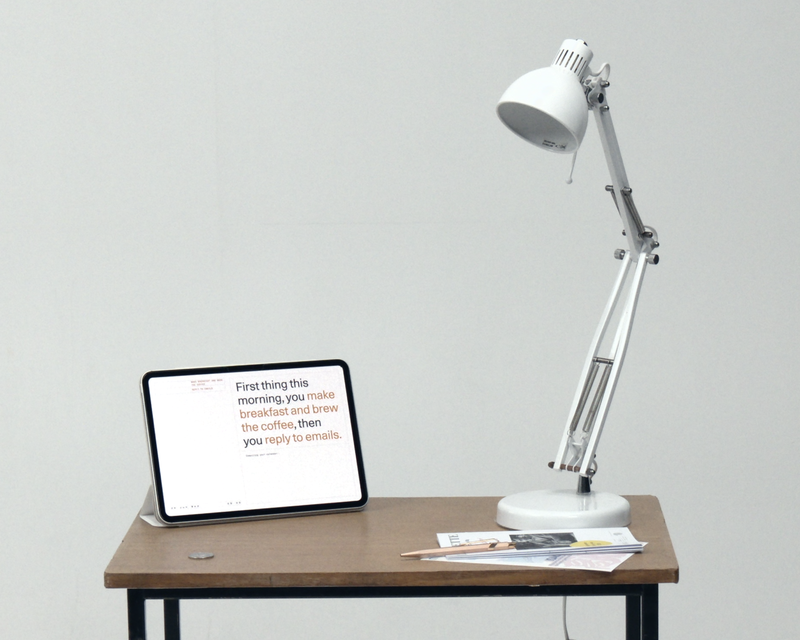
The Mind Reader Interface shifts computing from the reactive to the proactive: from a system that obeys commands to one that anticipates them. Where smart environments cast their users as pilots issuing constant instructions, this project removes the friction of instruction altogether. Intention is no longer declared through a screen or a button. It is inferred. Reading context, habit and the signals of presence, the interface acts before it is asked. It sheds the form of the device to become a Ghost in the Room that senses rather than obeys. The user no longer pilots the space; they inhabit it. The system does not read thoughts, only traces, and stages the distance between anticipation and understanding: what we gain, and what we quietly surrender, when a space begins to act on our behalf.

Sasha Iatsenia – LittleCubes

BA MEDIA & INTERACTION DESIGN

Sasha Iatsenia – LittleCubes

by Sasha Iatsenia

Today, 1 in 15 children are affected by a disorder that alters their behaviors, impacting their educational, socialization, and communication skills. LittleCubes were designed as therapeutic toys to help develop these skills through light and play. Using a cube that lights up and responds to natural gestures, therapists can create fun and engaging exercises using an intuitive app. While designing this project, I discovered that I have autistic traits, inspiring me to build a toy I would have loved as a child. My goal is to build bridges between neurotypical and neurodiverse experiences, making the world more inclusive for all. To date, I have tested the cube with more than 15 therapists and 30 children (ASD, motor deficiencies and associated disorders). I hope to continue this project after my diploma. This project is supported by Fondation Dr Combe.

Julie Turin – Star's Bags - The Tree Bag

BA MEDIA & INTERACTION DESIGN

Julie Turin – Star's Bags - The Tree Bag

by Julie Turin

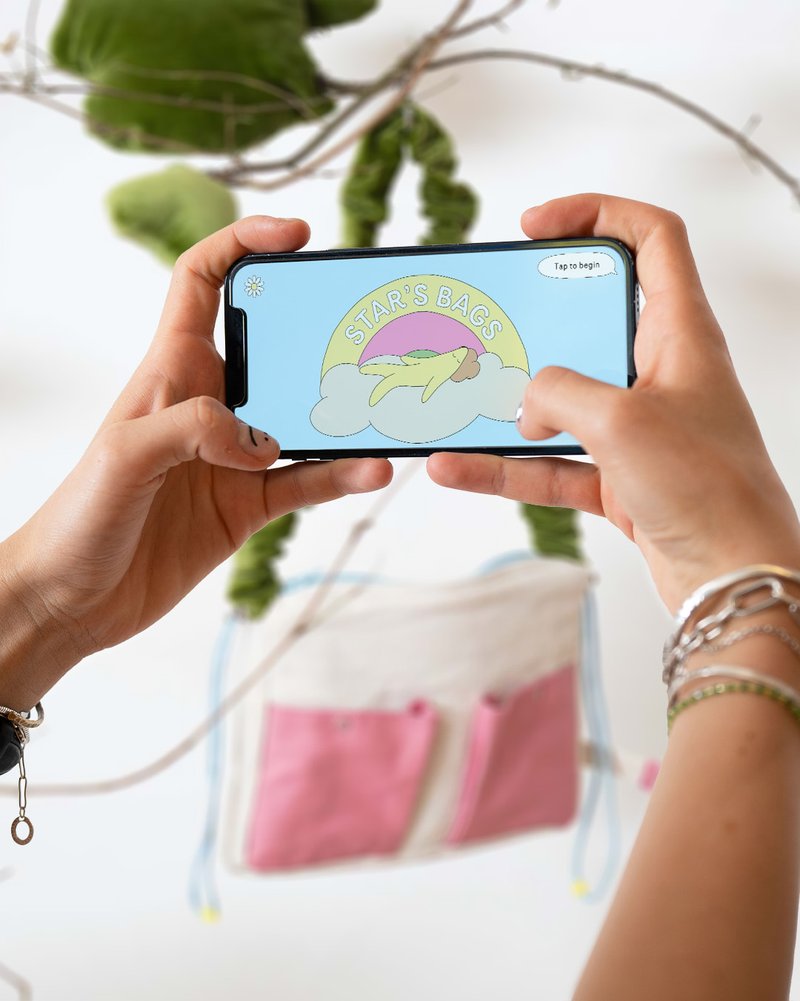
Assembly line work and online orders have become the norm, even in craftsmanship. The Star's Bags app is a seamstress's response to this trend, offering an immersive shopping experience to highlight manual labor before the customer receives their bag. "The Tree Bag" is the first collection from this app, which can expand into other themes. Through this experience, the customer participates in every step of the bag's creation over several days: gathering materials, placing patterns, cutting, sewing, pinning, addressing, and shipping. By following this process, the customer appreciates the effort involved and retains a special memory of their purchase, enhancing the value of the product received.

Livia Schmid – Trail Sync

BA MEDIA & INTERACTION DESIGN

Livia Schmid – Trail Sync

with Pauline Saglio, Christophe Guignard, Alain Bellet, Laura Nieder, Gaël Hugo, Lara Défayes

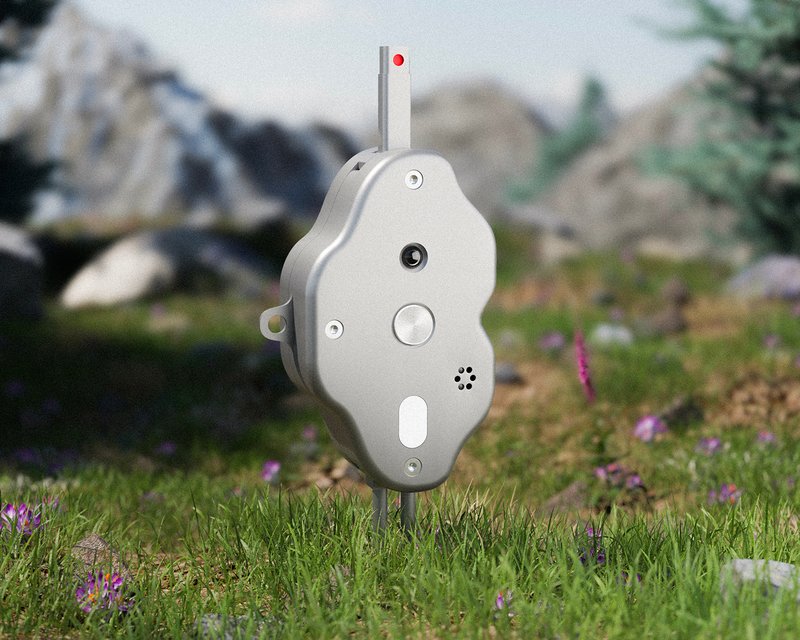
In remote alpine regions, access to reliable information – such as trail conditions or weather alerts – becomes difficult in the absence of network coverage. Trail Sync addresses this challenge through a participatory and decentralized approach: local information boxes, integrated into hiking infrastructure, are passively updated by hikers using an offline mobile application. Each person passing near a box synchronizes contextual data, leaving a digital trace that benefits those who follow. Reinforcing existing signage without increasing technological dependency, the system is rooted in the mountain values of collective responsibility and solidarity.

Viktor Gagné – Serialized Saplings

BA MEDIA & INTERACTION DESIGN

Viktor Gagné – Serialized Saplings

by Viktor Gagné

The weight of materials produced by humans is now believed to exceed that of all terrestrial biomass. How will these artifacts integrate into the rest of the environment in a million years? Serialized Saplings is an interactive installation that speculates on a potential form of vegetation to come, heavily altered by the excesses of human production, here crystallized through the symbol of the electrical outlet. By manipulating the connections of several power strips, the participant is invited to program the "genetic code" of hybrid plant species that do not yet exist and whose appearance resembles our industrial standards. This generated vegetation is then classified in the form of a digital herbarium that can be consulted and studied.

Related courses