ECAL × SDOL, Horizon Ouest, Regards sur la métamorphose urbaine

ECAL × SDOL, Horizon Ouest, Regards sur la métamorphose urbaine

New transport infrastructure is emerging, while former industrial wastelands are giving way to modern buildings and redesigned outdoor spaces. Gradually, residents are moving into these new neighborhoods and adopting new habits.  To capture the first moments of life in these spaces, the association "Ouest lausannois: Prix Wakker 2011" has invited second-year students from the ECAL Bachelor of Photography program to observe them throughout 2024.  

This project highlights 18 ongoing construction sites or recently completed neighborhoods. Through their perspectives, the students offer original approaches to discovering, understanding, and appropriating these new spaces.  Photography maintains a unique relationship with the world around us, as it often depends on it. Far from merely documenting reality in a strict sense, it has the power to transfigure and reveal the invisible or the unspeakable. This is the approach adopted by the ECAL photography students at the request of the "Ouest lausannois: Prix Wakker 2011" association, as they explored various territories in western Lausanne.  

As part of this commission, each student was randomly assigned a specific location—be it a new neighborhood, a construction site, or a distinctive building—on which they worked over an academic year. Faced with spaces that were sometimes unphotogenic or even resistant to imagery, the challenge was to look beyond appearances, to resonate with these places in order to grasp their unique dynamics.  

The photographs question our perception of these recent landscapes and bear witness to the human activity unfolding within them. What do they reveal about our ways of living and moving? Who are the people inhabiting these spaces? What new landscapes emerge from these rapid transformations?  Through approaches that are sometimes sensitive and intimate, sometimes detached and analytical, or even driven by a formal fascination with the objects captured, the works presented reveal the density and diversity of everyday life. They bring forth a poetic vision of the city, inviting us to consider these territories not merely as functional backdrops but as fully-fledged spaces, rich with history, form, and identity—fluid and multifaceted, just like those who inhabit them.

Collaboration (2025) by Belinda Kiela, Eliot Pizzera, Emanuele Delpozzo, Ettore Bruni, Jerome Luginbühl, Héloïse Tourrenc, Adel Debabéche, Inès Riber, Rebecca Dubuis, Kristina Yenza, Fredrik Maag, Lester Kielstein, Delio Testa, Maude Bally, Gabrielle Coué, Nicolas Lehni, Maël Le Guével, Sofia Grytsiv, Cedric Zellweger

Assistants
Gaétan Uldry
Know-how
Documentary
Héloïse Tourrenc - ECAL x SDOL

1/3

Ettore Bruni - ECAL x SDOL

1/4

Adel Debabéche - ECAL x SDOL

1/3

Maël Le Guével - ECAL x SDOL

1/3

Lester Kielstein - ECAL x SDOL

1/3

Inès Riber - ECAL x SDOL

1/2

Fredrik Maag - ECAL x SDOL

1/3

Cedric Zellweger - ECAL x SDOL

1/1

Projects related to Documentary

Workshop with Rineke Dijkstra

BA PHOTOGRAPHY

Workshop with Rineke Dijkstra

with Rineke Dijkstra

What is good portrait? What technique do you choose? What kind of light do you use? Daylight or flash? What location or backdrop do you choose for? How do you choose your subject? How do you approach someone you don’t know? In this workshop, the students have explored what makes a good portrait and which tools you can use to create one.

Arnaud Wenger – How You Read, How You Know

BA GRAPHIC DESIGN

Arnaud Wenger – How You Read, How You Know

by Arnaud Wenger

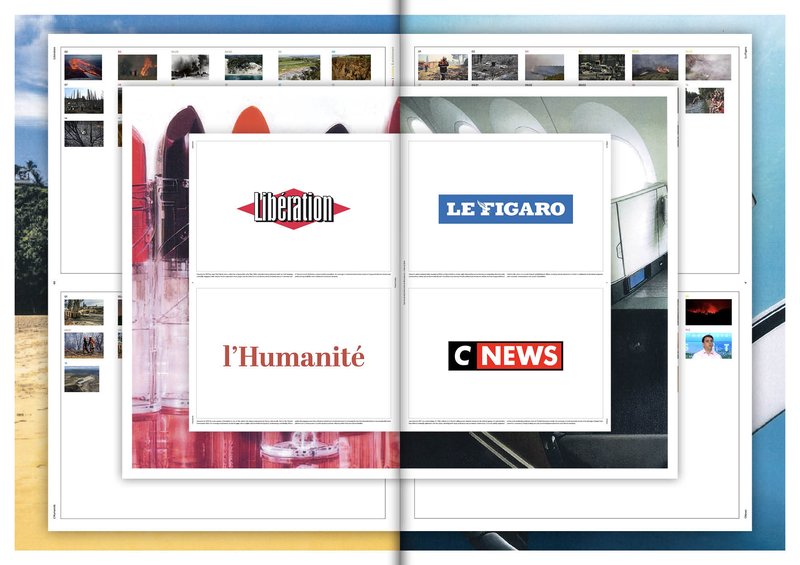
Our perception of climate change depends on what we read. How You Read, How You Know is an investigation into the invisible architecture of information. When a wildfire burns, the facts are the same: the hectares, the wind, the displaced lives. But the story told about it never quite is. It shifts depending on who writes, from where, and for whom. This project analyzes the media coverage of two wildfires in 2025: the Los Angeles wildfires in January, and the Corbières wildfires, in the south of France, in August.

Documentary film workshop with Verena Paravel - 2026

BA FILM STUDIES

Documentary film workshop with Verena Paravel - 2026

with Verena Paravel

The 2026 documentary film workshop for 2nd year students was lead by french director and visual anthropologist Verena Paravel.

Joanna Metz – Galerie Nationale

BA GRAPHIC DESIGN

Joanna Metz – Galerie Nationale

by Joanna Metz

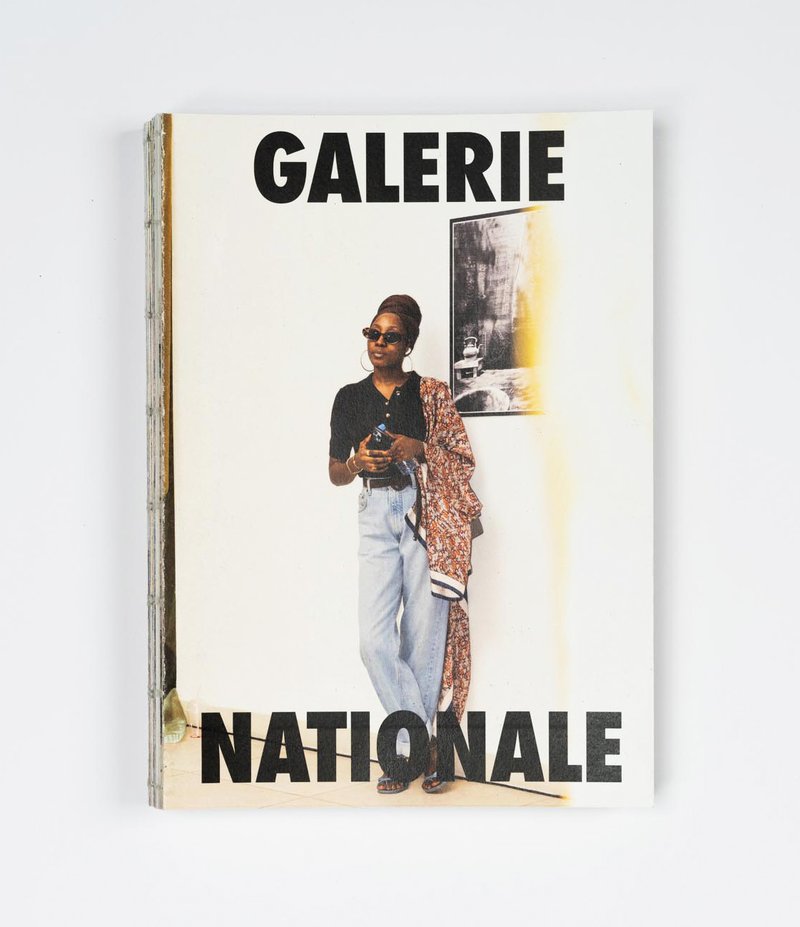
Galerie Nationale offers a glimpse of the young photographic scene in Dakar. In collaboration with a team of Senegalese photographers, the artist organised the exhibition Li Nu Boole, What connects us, which culminated in an opening in May, 2026 at the National Gallery in Dakar. This book documents the preparation of the event, the environment, the artists and their artworks, as well as the spectators taking part as actors during the opening. Through conversations and texts, the artists share their journeys, their visions of what connects us, as well as their reactions to the project. Throughout this project, the artist took on the roles of artistic director, curator, and graphic designer, while living an artistic and human experience in the country of her childhood.

Documentary Film Workshop with Marie-Eve Hildbrand - 2026

BA FILM STUDIES

Documentary Film Workshop with Marie-Eve Hildbrand - 2026

with Marie-Eve Hildbrand

The 2026 documentary film workshop for 1st year students was lead by swiss director Marie-Eve Hildbrand.

Related courses