Feed

Type

Course

Know-how

Years

2006 2022
Caterina Valletta – Up & Down

DESIGN FOR LUXURY & CRAFTSMANSHIP

Caterina Valletta – Up & Down

by Caterina Valletta

Since ancient times, cutlery has always featured in light-hearted, shared moments around the dining room table. Yet, it has always been considered as purely functional, designed for savouring and appreciating dishes and very often relegated to the background, unlike plates and glasses, as we forget its importance from an aesthetic point of view. Up & Down offers to revisit cutlery by creating a non-traditional set with a strong character. Starting with a 2D cut-out on a steel plate, a small detail raises the cutlery so that it does not touch the surface, thus solving a problem that is both functional and aesthetic.

Alexis Perron-Corriveau – Flip Off

DESIGN FOR LUXURY & CRAFTSMANSHIP

Alexis Perron-Corriveau – Flip Off

by Alexis Perron-Corriveau

This project seeks to explore the world of sunglasses and its related fashion accessories. The side shields used for mountaineering glasses combined with the unique style of the cycling cap were the conceptual premises of this research. The reinterpretation of these elements gives this pair of sunglasses a distinctive chic, sporty look – a must-have accessory. Stand alone, these handmade glasses are versatile. However, the possibility of adding a visor easily, thanks to a magnetic clip, allows the wearer to be ready for action and stylish at the same time.

JiYeong Kim – Epiphany

DESIGN FOR LUXURY & CRAFTSMANSHIP

JiYeong Kim – Epiphany

by JiYeong Kim

Epiphany refers to a sense of or insight into eternity that is suddenly experienced in ordinary and everyday objects. I wanted to create a meditation object for everyday life that attracts curiosity and encourages us to immerse ourselves in a meditative journey, as I believe in the saying “the unconscious determines our destiny”. The world of the human unconscious is an unknown one that many people try to reach through meditation. But we cannot meditate as often as monks. If you meditate a little every day in your daily life, you will feel a deep sense of peace. Inspired by amazing natural phenomena such as fire, water and fog, this project aims to help your mind stop for a moment and explore its subconscious.

Valentin Calame – Jean Starobinski. Relations critiques

Design Research for Digital Innovation (EPFL+ECAL Lab)

Valentin Calame – Jean Starobinski. Relations critiques

by Valentin Calame

Jean Starobinski. Relations critiques is a research project on the curation of digitised literary artefacts. Initiated by the Swiss National Library, it is structured around an online exhibition based on the archive of prominent critic Jean Starobinski. Through this project, I explored how to take advantage of emerging technologies to create alternative experiences for the public. Around concepts such as the “Aura” of digital artefacts, “Tangiality” and adaptive spaces, I was able to define parameters to increase cognitive gain, visitor engagement and emotional connection with digitised objects. The knowledge generated by this first exhibition will serve as a model for future iterations. In collaboration with: Swiss National Library (NL), Apptitude SA

Romain Talou – Future Heritage

Design Research for Digital Innovation (EPFL+ECAL Lab)

Romain Talou – Future Heritage

by Romain Talou

Future Heritage investigates how to make long-term, high-density information storage technologies more tangible. Working in the context of cultural heritage, the project allows institutions to keep their archives alive using DNA data storage for generations to come. Through a process of design research, the Future Heritage project explores how to make this synthetic DNA storage relevant for institutions today and far into the future. The resulting DNA storage object is designed to withstand environmental and societal changes over the next two thousand years. Using nano-engraving and a semiological approach, the object gives tangible hints and previews of the rich content that lies within it. In collaboration with: Claude Nobs Fondation, Swiss National Library (NL)

André Andrade – Poster World

Design Research for Digital Innovation (EPFL+ECAL Lab)

André Andrade – Poster World

by André Andrade

Poster World is a design research project in collaboration with the Museum für Gestaltung Zürich. Through the museum’s archives of posters, one of the most extensive and important in the world, the project offers a new way of engaging the public with digitised heritage. It materialises in an interactive installation and offers automated associations of posters by combining metadata with artificial intelligence. Key visual features are isolated and graphically illustrated to make the associations explicit. The project opens perspectives on how to represent digitised heritage and how to engage the public. In collaboration with: Computer Vision Laboratory (CVLab, EPFL), Digital Humanities Laboratory (DHLAB, EPFL)

Gala Espel – Archéologie du futur

DESIGN FOR LUXURY & CRAFTSMANSHIP

Gala Espel – Archéologie du futur

by Gala Espel

What will future archaeological discoveries look like? What meaning will they give our present time through the objects that will have been unearthed? Archéologie du futur (Archaeology of the Future) is a futuristic project featuring a series of objects that give a prospective representation of our material footprint. This project uses photogrammetry – a common tool in archaeology – to scan existing items and, based on these, to create, recompose and think up a possible scenario. A plant wraps around a container eroded by time. A shell fossilises around a metallic rod. A set of objects is created evoking a future where industrial forms are eventually taken over by nature. In time, this digital collection will materialise into silverware and jewellery made with this technology applied to design.

Kévin Goury – Intersection

DESIGN FOR LUXURY & CRAFTSMANSHIP

Kévin Goury – Intersection

by Kévin Goury

Intersection explores the work of lines with glass. The project takes shape through a dialogue between designer and craftsperson. This set of vases, divisible into three parts, provides containers that can be adapted to all types of flowers. Small and compact bouquet, traditional container or soliflore. Each piece is decorated with colourful motifs. These are the result of graphic research on the weave and creation by accumulation. Through conversations and experimentation with the glassblower, they grow in shape, size and shades to adapt to the practice of this unique material. The superimposed motifs respond to one another and create new ones when assembled. At this moment, the vase takes on a totemic and sculptural aspect that livens up the room it occupies. Photo credit: Samuel Spreyz

Briac Laforge – Time in Balance

DESIGN FOR LUXURY & CRAFTSMANSHIP

Briac Laforge – Time in Balance

by Briac Laforge

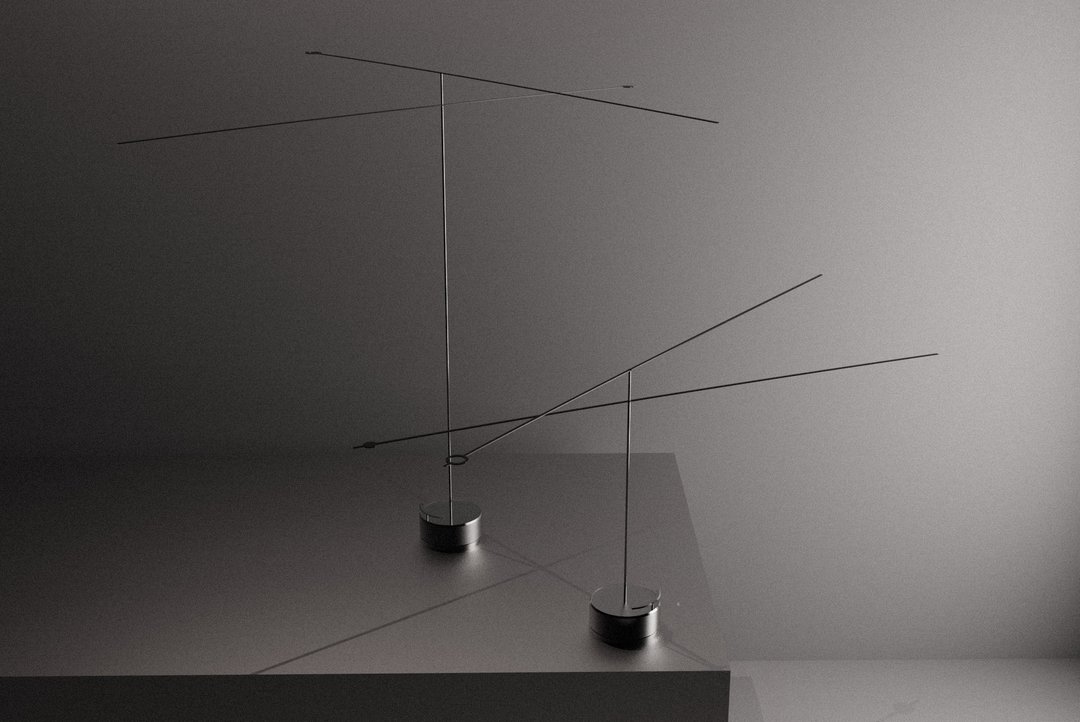
Having spent a year in Switzerland and being interested in the world of watchmaking, I naturally turned to this universe for my graduation project. I liked the idea of using the codes of Swiss watchmaking to adapt them to my work. For my graduation project, I sought to create an object using the precision, details and materials of various Swiss manufactures. The final object is a mobile clock with two balanced hands. The appearance of the object is simple and ethereal, due to the small number of visible parts. Nevertheless, the mobile hides a complex mechanism inside. The goal was to intrigue the user by creating a magical effect with these two balanced hands. Depending on the light, it is possible to read the time thanks to the shadow cast by the object on the ground.

Seungmok Lee – Play Collection for Picnic

DESIGN FOR LUXURY & CRAFTSMANSHIP

Seungmok Lee – Play Collection for Picnic

by Seungmok Lee

My project is based on a personal experience in Switzerland. Whenever I go for a picnic in parks or by the lake in Switzerland, I see people playing cards on the train or giant chess in the park with their family and friends. There is always a joyful atmosphere and a sense of happiness around them. That is why I decided to design this Play collection for picnic. I used sustainable materials like cork and paper, but at the same time, I sought to keep the aesthetics of the object. A thing of long-lasting beauty is engraving. Not only does it reduce chemical ink for printing but it also allows people to feel the contrast between light and shadow through the object.

Clementine Le Guerec – Contact

DESIGN FOR LUXURY & CRAFTSMANSHIP

Clementine Le Guerec – Contact

by Clementine Le Guerec

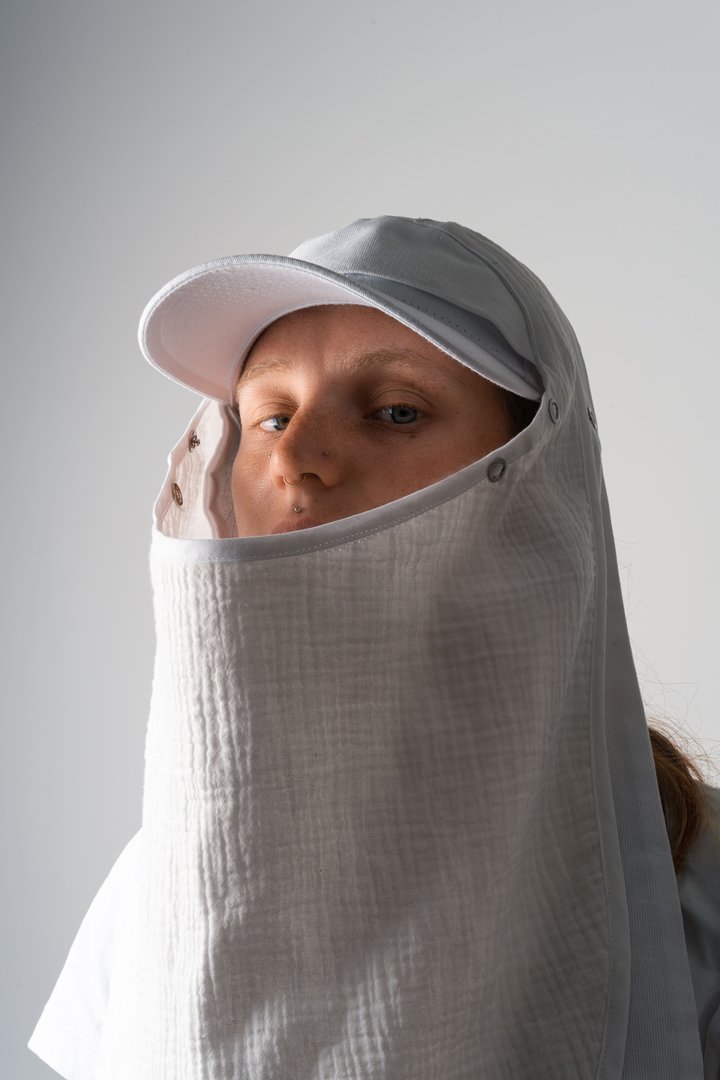
Contact is a collection of various visors that play with the notion of the gaze. After the recent pandemic, the majority of our interactions and emotions are read through the eyes. They play a key role in our interactions but we sometimes feel the need to isolate ourselves and cut ourselves off from the world. Inspired by different hat shapes, each model is designed according to a precise functional principle and plays with the gaze. The intention through this exploration of functional, hybrid and playful forms is to allow the wearer to play with the gaze of others, as well as to isolate him- or herself and create a bubble through the feeling of comfort and security that these accessories can provide. Contact protects you as well as it reveals you.

Roxanne Del Val – Noue-moi un bijou

DESIGN FOR LUXURY & CRAFTSMANSHIP

Roxanne Del Val – Noue-moi un bijou

by Roxanne Del Val

When I started climbing, I had to learn the various knots. I immediately liked their shape, but also their meaning: they catch us if we fall, but they also allow us to move forward and progress on the climbing wall. Noue-moi un bijou (Tie me a jewel) is a collection of three items of jewellery inspired by climbing knots. I wanted to decontextualise them by using well-known types of jewellery such as rings, bracelets and necklaces. By modifying the shape of the knots, I created three pieces that wrap themselves around the hand, the finger and the chest. The jewellery is made of nylon paracord, to recall the primary inspiration of the collection. I also created small silver attachments that allow the jewellery to adjust to the shapes of the body.

Camille Dutoit – Eclipse

DESIGN FOR LUXURY & CRAFTSMANSHIP

Camille Dutoit – Eclipse

by Camille Dutoit

Nowadays, we are constantly confronted with the vision of our appearance, whether through a reflection on a window, a mirror in a shop or even on the screens of our mobile phones. Halfway between a figurative and functional object, this table mirror enables people wishing to see themselves to measure the intensity of their reflection thanks to a circular surface coloured with a gradient from intense black to transparent. By rotating this disc, you can discover your own reflection in a poetic way, play with its intensity and admire yourself. Eclipse is also a figurative object. Indeed, thanks to the interplay of reflections and transparency, it has the advantage of being subtly present and enhancing the room in which it is placed.

Ömer Akkas – Chevron

DESIGN FOR LUXURY & CRAFTSMANSHIP

Ömer Akkas – Chevron

by Ömer Akkas

This project is a study that aims to explore and design playful items of jewellery based on the link between the human body and jewellery in terms of emotions to create different shapes by rotating layers, a process inspired by traditional Turkish mosaics.

Yuoning Chien – Grid Collection

DESIGN FOR LUXURY & CRAFTSMANSHIP

Yuoning Chien – Grid Collection

by Yuoning Chien

Based on basic graphic design elements, this research focuses on the functionality of graphic shapes from two- to three-dimensional objects. This is a collection of vases made with different grid arrangements. Whether on the floor or on a desk, they are crafted like an art sculpture. To put the flowers into the vase, make the vase work as a three-dimensional painting.

Charlotte Angéloz – Weave It

DESIGN FOR LUXURY & CRAFTSMANSHIP

Charlotte Angéloz – Weave It

by Charlotte Angéloz

How does one create volumes using perforated material and fabric? This graphic and technical research focuses on the grid and weaving. I am interested in the construction of a volume from a graphic cut. The pattern cut into the leather gives rhythm to the creation and acts as a support for the weave. This helps create shapes and volumes. Following this research, I have chosen to design three bags that fit into a pop and colourful universe. The volumes created give the bag its shape and the place for the handles. The manufacturing system of these accessories allows for multiple possibilities. You can play with sizes and integrate various materials. You can also use scraps of fabric, recycled materials, and easily change parts when they are worn.

Yann Difford – Is it a mirage or an oasis?

PHOTOGRAPHY

Yann Difford – Is it a mirage or an oasis?

by Yann Difford

“Exoticism stems from what is distant and unfamiliar, but above all from a point of view. This project questions the desire for exoticism, the way it is expressed and unfolded, in a generally unidirectional Western context; i.e. from the West to the rest of the globe. This reconsideration helps us grasp that this is not a state of affairs, but rather a process of exoticisation. I deconstruct this process by decontextualising and recontextualising exotic symbols.“

Jamy Herrmann – MEMOGRAM

MEDIA & INTERACTION DESIGN

Jamy Herrmann – MEMOGRAM

with Alain Bellet, Christophe Guignard, Gaël Hugo, Laura Nieder, Pauline Saglio

Today, for many, the memories that remain are only those of images taken with digital cameras. Through this continuous storage process, we offload those moments by trusting instantaneous backups. MEMOGRAM challenges this delegation by offering a time capsule in the form of tickets, accompanying our memories with textual clues and descriptions. www.memogram.ch

Nora Fatehi – Mirror Me-rror

MEDIA & INTERACTION DESIGN

Nora Fatehi – Mirror Me-rror

with Alain Bellet, Christophe Guignard, Gaël Hugo, Laura Nieder, Pauline Saglio

In an environment where the line between digital and tangible is becoming increasingly thin, having an existence in immaterial spaces implies shaping and maintaining an avatar that is often created in one’s own image. Living in these in-between worlds inevitably leads to the development of a more or less strong connection with one’s own digital representations. This is notably the case of my own avatar, with whom I share more than just a well-defined clothing style. In Mirror Me-rror, she and I become one. By using my physical and digital data to influence her abilities as my “virtual self”, I find myself constantly connected to her. With this project, I question the relationship that each of us nurtures with our digital identities and offer a gamified perspective of our own lives.

Elodie Anglade – Digital DNA

MEDIA & INTERACTION DESIGN

Elodie Anglade – Digital DNA

with Alain Bellet, Christophe Guignard, Gaël Hugo, Laura Nieder, Pauline Saglio

Digital DNA is a 3D data visualisation platform that displays an analysis of the content that is shown to me on Instagram. The interface compares the duality of my perception with that of the algorithm. It results in a virtual space representing a digital genome that visitors are invited to explore in order to discover the subtleties of the intersection between human and algorithmic perspectives. While studying these “smart” systems, I became aware that their ability to analyse is somewhat biased. Some of the categories I was assigned were unexpected and did not match the visuals presented. In this way, Digital DNA highlights the gap created by this contrast between the categories and the visuals that are displayed. Try it here

Samuel Dumez – Public Lectures

MEDIA & INTERACTION DESIGN

Samuel Dumez – Public Lectures

with Alain Bellet, Christophe Guignard, Gaël Hugo, Laura Nieder, Pauline Saglio

How can artists/designers share and enrich their practice in a context where videoconferencing is becoming one of the most used means of disseminating content? In the form of a mini web-conference, Public Lectures consists of a succinct presentation of the work of people active in the field of culture through audiovisual content. Encouraging interaction, through comments and content exchange, Public Lectures seeks to erase the usual boundaries between presenter and viewer. A form of horizontality is thus born within the platform, inviting people to contribute in order to bring out innovative forms of dialogue and to meet the challenges of this new means of communication.

Marine Dang – For the Times They Are a-Changin’

GRAPHIC DESIGN

Marine Dang – For the Times They Are a-Changin’

by Marine Dang

For the Times They Are a-Changin’ is a graphic interpretation of the play PRLMNT written by Camille de Toledo in 2017. The anticipatory fiction is divided into two parts: the first one is set in a capitalist system with unlimited expansion and power, while the second one seeks resilience and recognition of the rights of non-humans. The challenge of this publication is to bring these ideologies into dialogue, to offer a parallel reading of the two scripts. To do this, I experimented with the materiality of the object. Through the choice of formats, papers and fonts, I both oppose and mix these statements. Through images, I offer new settings for the play, taking the audience into the ruins of their own world. www.marinedang.ch

Mélanie Fontaine – Latent*

MEDIA & INTERACTION DESIGN

Mélanie Fontaine – Latent*

with Alain Bellet, Christophe Guignard, Gaël Hugo, Laura Nieder, Pauline Saglio

The mirroring system of instant messaging implies the presumed availability of the interlocutor. However, while waiting for a response, certain questions become recurrent: “Alex is online, why isn’t he answering? What is he doing?” Latent* is a chat application that allows you to converse with your friends by developing the context of the discussion and what is not said. Just like theatre, it fuels the conversation by adding didascalies generated according to the collected data (response time, location). By highlighting the unsaid parts of an exchange, the generated reading mode enriches the discussion, creates poetic tension, and allows the interlocutors to become the characters of their own play. www.melaniefontaine.ch

Leonardo Pellicanò – Crooked Thoughts Along the Crooked Path

FINE ARTS

Leonardo Pellicanò – Crooked Thoughts Along the Crooked Path

by Leonardo Pellicanò

The pieces on display feature a wide range of pictorial expressions, oscillating between narrative figuration and abstraction. They play on archetypes drawn from myth and folklore that come to surface in an intimate language of fragile apparitions. Untitled and Crooked Thoughts Along the Crooked Path are small-scale works on unprepared wood that illustrate the presence of ghostly and eerie narratives. Between the two, there is the big square canvas Lilac Unseen, apparently a monochrome on raw linen, which upon closer inspection reveals many shades of colour, functioning almost as a macro expansion of the smaller works or a fragment of a rarefied landscape.

Alex Nguyen – Potential Objects

INDUSTRIAL DESIGN

Alex Nguyen – Potential Objects

with Stéphane Halmaï-Voisard, Maddalena Casadei

Potential Objects is a project in the form of a video game/digital tool in virtual reality. The game invites users to a fictional world in which they can move and design objects from a library of elements that can be linked together. In order to have varied results regarding the produced objects, people will be able to integrate pieces designed by previous users when creating a new object.

Carolin Schelkle – The Black Sheep of the Wool Industry

PRODUCT DESIGN

Carolin Schelkle – The Black Sheep of the Wool Industry

with Augustin Scott de Martinville, Camille Blin

There are more than 1000 sheep breeds in the world, producing fibres of different colours, lengths, and textures, but only the finest wool is suitable for the textile industry. Since European wool does not reach these high standards, large amounts of raw wool have turned from a source of income into a waste product. With increasing interest in sustainable use of natural resources, wool should be re-considered as an underrated and underused renewable resource, worthy of better exploration. This project investigates the potential of European wool by exploring a new production process, i.e., automatic felting. The resulting jacket illustrates the potential of this technology and takes advantage of the natural properties of wool, turning it from waste into a valuable raw material.

Nikolai Frerichs – Carrie Ann

PHOTOGRAPHY

Nikolai Frerichs – Carrie Ann

by Nikolai Frerichs

The movie Carrie Ann questions the concept of standardisation. Individuality and losing control seem impossible to achieve in digital environments. Nevertheless software developers are constantly trying to build new tools and possibilities to simulate our world as realistically as possible. However, when we take a closer look, we recognise that these tools and representations are full of stereotypes. Is it possible to speak about love in a controlled and unnatural synthetic world? Is our Idea of love just another readymade asset in our mind, formed by the ideals and clichés of the society we live in, or can love resist it? Is it truly something bigger or just a projection of our imagination? Does it have the power to save us from the standardisation of everything?

Clemens Fischer – Sticks and Wires

PHOTOGRAPHY

Clemens Fischer – Sticks and Wires

by Clemens Fischer

Designed as a laboratory, this work consists of camera installations that speculate on a future where imagery is created and consumed without us being present. The camera becomes an independent actor that will have to learn to work, fail and interpret by itself. Equipped with minimal gear and tasks, the machines created are thrown into existence to find out their purpose and connection to the world around them. Clumsy, naive but at the same time heavily charged with our nostalgic heritage, these installations invite us to reflect on a temporary, improvised state of photography and our own importance as its creators.

Balthus Kiss – In Vitro (Screenplay)

FILM STUDIES

Balthus Kiss – In Vitro (Screenplay)

with Alice Winocour, Nadine Lamari, Michel Spinoza

Through Caillou’s point of view, In Vitro enables us to look at the world as through a broken mirror. Which reflection should we trust?

HsinHung Chou – Nimble

PRODUCT DESIGN

HsinHung Chou – Nimble

with Augustin Scott de Martinville, Camille Blin

Changing posture while working at a desk not only benefits your physical and mental health but also increases productivity and concentration. Unlike the desk-centric environments of the past, the office of the future will be a gathering space that facilitates interaction and collaboration. Nimble is an active task chair with an inviting shape and adaptive mechanism that encourages changes in posture and dynamic sitting. Its pared-down aesthetics and carefully selected materials break with the traditional office chair. This simple yet versatile chair is a handy companion that serves numerous contemporary work scenarios such as co-working spaces and home offices.

Amélie Gallay – Phaedon

TYPE DESIGN

Amélie Gallay – Phaedon

with Matthieu Cortat, Alice Savoie

Phaedon is an elegant typeface family based on Ancien Romain, an Elzevir metal type issued by the French type foundry Deberny & Cie around 1880–1890. Driven by the desire to keep the nobility and fragility of the original, Phaedon’s lighter weights are a faithful reinterpretation of Ancien Romain while the bolder weights are personal interpretations. A text style compliments the family. With its four display weights, matching italics, and a text style, Phaedon is intended for contemporary use and stands out with its highly contrasted, slightly condensed and delicate attributes.

Danpeng Cai – TEXTure

PRODUCT DESIGN

Danpeng Cai – TEXTure

with Augustin Scott de Martinville, Camille Blin

TEXTure is a fingerprint for physical objects that integrate information through a texture on their surface. It converts encoded texts to assigned machine-readable textures, which were once relatively arbitrary. Inspired by the Turing pattern, a reaction-diffusion system portrays how nature brings uniqueness to each creation, TEXTure can develop automatically and individuate each product through fabricating processes like 3D printing. An embedded fingerprint enables industrial products to move toward full life cycle traceability. It has a high potential for phone-scannable accessibility, anti-counterfeiting, extended producer responsibility, recycling, vintage markets, etc.

Alexey Chernikov – Above Everything

PHOTOGRAPHY

Alexey Chernikov – Above Everything

by Alexey Chernikov

Developed during the war in Ukraine, this project focuses on the fragility of our peaceful existence, the power of surveillance and uncertainty about the future. The project uses the visual vocabulary of military drones. A thermal camera is mounted on a drone that provides recognisable black and white imagery. The medium itself has a vital role as it conveys the aesthetic appearance of the work. A huge amount of images from battlefields are shot from the sky. This footage most often ends with a bomb strike. In Above Everything, a parallel reality is created where the ending of each video is unpredictable. The video sequences, together with distorted propeller sounds, create a feeling of constant threat, depicting the tension caused by the war that is happening thousands of kilometres away.

Paul Rees – Futuristic Objects

PRODUCT DESIGN

Paul Rees – Futuristic Objects

with Augustin Scott de Martinville, Camille Blin

Futuristic Objects is a collection of props representing daily scenes caused by contemporary environmental issues. Existing objects are adapted to projected changes caused by environmental deterioration to make potential future realities more tangible. The resulting changes in behaviour are represented in imagery and video. The current discourse on climate change and environmental issues seems to be repetitive and stuck in a dilemma between scientific facts that call for change and immutable, established systems. The project provides an alternative communication tool to long scientific papers or legislation, intending to re-establish our emotional connection with these pressing issues.

Michail Galanopoulos – The Parade (Direction)

FILM STUDIES

Michail Galanopoulos – The Parade (Direction)

with Stéphane Batut

A day in the life of a group of high school students in Athens, Greece, during the day of the national military parade.

Filippo Bisagni – Un jardin d’Egypte

FINE ARTS

Filippo Bisagni – Un jardin d’Egypte

by Filippo Bisagni

The installation Un jardin d’Egypte brings together two subjects that are opposite in terms of content and message, but which share similar aspects in terms of visual composition: Marcel Broodthaers’ Un Jardin d’Hiver (1974) and the so-called Egyptian Room in the Villa San Martino, Napoleon’s summer residence during his exile on Elba. What they have in common is a small group of plants arranged in a circle. Broodthaers’ installation displays palm plants that represent a critical reflection on colonialism. The Villa San Martino room displays papyrus plants which represent a nostalgic and apologetic message referring to the Egyptian Campaign. Papyrus or palms That we sow That grow A garden in Egypt ?

Roxane Christinet – Truthfully, I Don’t Know What it Means to Feel Self-confident

FINE ARTS

Roxane Christinet – Truthfully, I Don’t Know What it Means to Feel Self-confident

by Roxane Christinet

Dissect a plant or a body. Breathable material. Evidence of different liquids.

Angèle Marignac-Serra – Isula Anima

PHOTOGRAPHY

Angèle Marignac-Serra – Isula Anima

by Angèle Marignac-Serra

« As everything regenerates, I wander the island of my ancestors. This book captures my encounter with the souls of this place and the invisible realm. I am confronted with a harsh and confidential geological world. None of my close family members reside there anymore. The various protagonists constitute clues, traces bearing the three kingdoms of the living. They become my clan. I become an archaeologist of this land. Animated by ancestral vernacular beliefs, the landscapes become anthropomorphised. It is a tribute to the secret nature, to the imperceptible, in search of a face in the stone, the trees, the sky. I leave room for my imagination and fantasise modern ruins like posthumous signs. The border with death becomes more and more tangible.»

Alisa Strub – My Grind Bears Fruit

PHOTOGRAPHY

Alisa Strub – My Grind Bears Fruit

by Alisa Strub

My Grind Bears Fruit is an installation of projected self-portraits combined with manually painted text which chart territory in my engagement with identity, self-revelation and contemporary media culture. It explores the tension between public and private life, the need to talk about ourselves and our thoughts while creating a blurry line between intimate documentation and a constructed point of view. The seemingly still but slightly moving images are situations where I perform for the camera, influenced by the perception of what I consume online daily. They combine and collide with an intuitive, free, yet deliberately scripted use of words culled from net culture and create a rhythmic counterpoint that challenges viewers to confront their own experiential thresholds.

Jiahui Huang – The mountains are still growing (Editing)

FILM STUDIES

Jiahui Huang – The mountains are still growing (Editing)

with Gion Reto Killias

Laurence, a Parisian in her fifties, is spending a few days in an isolated holiday cottage in southern France. There she meets Antoine, the young owner of the place. Antoine is a little boorish and macho and tries to seduce her. But Laurence is there for a specific purpose: to give him a letter containing a secret.

Mahalia Taje Giotto – Existential Boner

PHOTOGRAPHY

Mahalia Taje Giotto – Existential Boner

by Mahalia Taje Giotto

existential boner is a book about obsessions. Obsessions linked to the body, gender identity, sexuality and desire. Mahalia Taje Giotto, born in 1992, was assigned female at birth. Going through several phases of physical transformation - from writing on their skin as a child to tattoos as an adult and eating disorders as an adolescent - Taje began their transition in 2020. This identity journey is at the heart of their work, which expresses the incessant thoughts that drive them through a play of superimpositions. The daily observation of physical changes is transcribed in images and texts, somewhere between abstract and concrete. The result is an articulated chaos that reflects the way in which taje is experiencing their transformation, with a sculptural approach to the book as a reflection of the changes in her body. The artist explores their desires and fluid identity, while giving visibility to the transgender community from which they come.

Matthias Joulaud – Ramboy (Direction)

FILM STUDIES

Matthias Joulaud – Ramboy (Direction)

with Jacqueline Zünd

Ramboy is a 30-minute documentary short film, the result of work done with a family of sheep farmers on an Irish island. Being immersed for several months in this island allowed me to weave strong links and to offer a documentary which condenses at the same time problems related to the adolescence of a young boy, and to the hard social and economic reality of a trade whose traditions are under threat.

Charly Derouault – Europa

TYPE DESIGN

Charly Derouault – Europa

with Kai Bernau, Alice Savoie

Europa is a multi-script typeface that builds on the history of European Grotesque typography. Its forms are inherited from Akzidenz Grotesk but developed through a more subtle contrast. The typeface is stable, contemporary. Applied to a utopian project, i.e., the creation of a new pan-European motorway network born under the agreement of all the countries on the continent, the three scripts which compose Europa were drawn jointly, the design of each script significantly influencing the design of the others. Envisaged as an additional or alternative solution to the European motorway signage, the typographic system is completed by a less contrasted, more condensed and rationalised signage body.

Karima Deghayli – Yameen and Meel

TYPE DESIGN

Karima Deghayli – Yameen and Meel

with Alice Savoie, Irene Vlachou

As the world becomes increasingly connected, the need for multiscript type families grows significantly. Yameen is a variable multiscript typeface covering Arabic and Latin. Designed for text, its weights range from regular to bold. The Arabic was inspired by Naskh calligraphy, retaining in its outlines the character of the Qalam. The Latin forms present the same sharp aesthetic taken from the parallel pen offering a calligraphic interpretation of old-style typefaces. Preserving both scripts’ authenticity, Yameen is designed for harmonious bilingual typesetting. Meel is an Arabic display font inspired by various sources: from vintage music albums to vernacular Beirut type. Exploring the Ruqaa style, its boldness excels in large sizes and its flowing character merges the tool and the digital.

Alexis Colin – I wanted to design a desert

FINE ARTS

Alexis Colin – I wanted to design a desert

by Alexis Colin

"I was working as an interior designer in New York; one morning John Allen called me and said: - I want you to design the desert!"

Clara Bertière – Yum

INDUSTRIAL DESIGN

Clara Bertière – Yum

with Stéphane Halmaï-Voisard, Maddalena Casadei

During a visit at the CHUV, I noticed that there were no specific dishes for small children. Parents most often have to bring their own glasses or cutlery. This is why I created Yum, a set of tableware accessories for hospitalised children. The silicone set includes a children’s plate rim for children who can only use one arm, a holder for glass jars, and handles to slide over cutlery which help improve the child’s grip. With Yum, children are more autonomous and eating becomes more enjoyable thanks to the colours and shapes. Meals become a moment of conviviality with the handles of the cutlery that turn into playful companions!

Laure Wasser – Eventa

INDUSTRIAL DESIGN

Laure Wasser – Eventa

with Stéphane Halmaï-Voisard, Maddalena Casadei

Eventa is an adapted diary that is designed for elderly people with cognitive problems, particularly relating to memory, and can be essential in enabling them to remain independent in their own home while offering complete peace of mind. On a tablet of their choice, elderly people use a digital app that enables them to contact their loved ones by text message or phone call. It also provides them with a diary that emits sounds to remind them of their daily events. The simplified keyboard is integrated into the shell of the tablet. It allows direct, non-touch navigation in the application. The device evolves as the disease worsens. In addition, caregivers and relatives can easily interact with Eventa by text message or by adding events to monitor the patient.

Sophie van der Bij – Deky

INDUSTRIAL DESIGN

Sophie van der Bij – Deky

with Stéphane Halmaï-Voisard, Maddalena Casadei

Deky is a plaid-like garment for elderly people who are often cold. Its loose and enveloping shape allows seniors to keep warm and dress effortlessly using Velcro and colour coding. It is also ideal for elderly people with limited movement: caregivers can take off the back buttons to dress the person easily. The back is shorter than the front, allowing Deky to be worn seated without inconvenience and without disrupting daily actions. The quilted fabric is made of light and warm polyester foam covered with soft and fluid gabardine. Deky is an everyday companion to facilitate the life of elderly people by keeping them warm and providing a feeling of security and comfort.

Noémie Soriano – Matalàs

INDUSTRIAL DESIGN

Noémie Soriano – Matalàs

with Maddalena Casadei, Stéphane Halmaï-Voisard

Every year more than 30 million mattresses are thrown away in Europe. Despite the establishment of dismantling centres, only half of these mattresses are recycled. Those whose materials cannot be separated end up incinerated. This is due to the excessive use of glue and the mixing of different materials. Matalàs offers an alternative to this problem by taking into account its recycling from the design stage. Designed in three parts, it facilitates the extraction of wool and springs, thus becoming part of a circular economy.

Basil Pérot – As Long as You Wait

PHOTOGRAPHY

Basil Pérot – As Long as You Wait

by Basil Pérot

This short film is about expressing our inability to come to terms with reality, especially during traumatic events. To reach this state of osmosis, we try to observe, feel, and listen as intensely as we can. This is how Pola’s character tries to grasp reality, as she slowly sinks into madness, between paranoia and identity crisis. The project appears as a transcription of Pola’s point of view and of the feelings she experiences. A book will compile Pola’s thoughts that she writes throughout the film in a burst of lucidity through which she tries to convince herself that what she is experiencing is real.

Filter