RAPID LIQUID PRINT

RAPID LIQUID PRINT


A short and engaging workshop held in collaboration with Rapid Liquid Print, a Boston-based startup and spinoff of the MIT Self-Assembly Lab, explored the fundamentals of Embedded 3D Printing by questioning, in both technical and poetic terms, what defines a curve, a surface, or a thickened volume as it transitions from the digital to the physical world.
 

Workshop (2023) with Bjorn Sparrman, Hamilton Forsythe

Assistants
Sebastiano Gallizia
Students
Théophile Narcy, Abla Bolassi Owoussi, Aurélien Clerc, Cindy Sacher, Violeta Kostadinova, Matteo De Carlo, Jeffrey Krieger, Jacobo Zunzunegui, Till Seegräber, Gion Luginbühl, François Ader, Charlotte Jobin, Anouk Quillet, Teo Primo Frizzarin, Matheo Dusong, Cyprien Cossy, Clara Uzunovic, Matthieu Rigelo, Zoé Letoucque, Alice Graff, Marion Gomes, Romain Ricci, Louise Dupont, Arthur Moreillon, Denise Merlette, Jonas Meynet, Danpeng Cai

Working with a silicone-based material that is body-compatible, food-safe, heat-resistant, elastic, and airtight (even inflatable), participants embraced both the capabilities and limitations of this liquid printing technique. In teams, they were tasked with designing objects for specific parts of the human body—such as the leg, arm, torso, or head.

Images by ECAL/Jasmine Deporta

1/10

Video by ECAL / Marvin Merkel

The outcomes ranged from medical or prosthesis-inspired pieces to fashion accessories and experimental body-related tools. This hands-on workshop emphasized speculative thinking, material sensitivity, and a unique form of digital craftsmanship through robotics and custom extrusion.

Workshop Results

1/8

Titled TECHNO WORKSHOPS, a series of workshops explored the creative potential of different technologies in the context of industrial design. Students were able to discover Additive Manufacturing with Rapid Liquid Print, Artificial Intelligence with the EPFL+ECAL Lab, and 3D Scanning with Michel Charlot and the Technopôle Sainte-Croix. These workshops gave them the opportunity to experiment with and reflect on the potential of such technologies, and to envision how they can be integrated into the design process — from early ideation and exploration to the tangible realization of objects and concepts.

TECHNO WORKSHOPS - Video by ECAL / Marvin Merkel
FIND THE OTHER WORKSHOPS HERE:


Projets similaires

Damien Barman – Terrasse en place

BA INDUSTRIAL DESIGN

Damien Barman – Terrasse en place

by Damien Barman

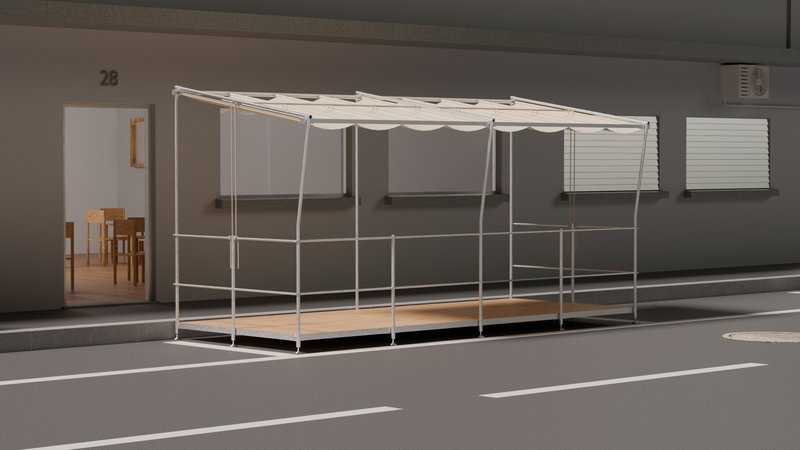
Modular Parking Terrace Designed for restaurants that temporarily occupy parking spaces during the summer, this modular terrace offers a standardized alternative to custom-built installations. It is a reusable solution that can be adapted to different locations and expanded when needed. The terrace is composed of half-parking-space modules that connect together to fit a variable number of parking spaces. It features a fabric roof that unfolds accordion-style along rails using a rope system, allowing it to be opened or closed from the end of the terrace without disturbing users. Fully demountable for easy winter storage, the structure is made of galvanized steel, while the flooring is constructed from maritime pine panels.

Laura Cipriano – Roll3

BA INDUSTRIAL DESIGN

Laura Cipriano – Roll3

by Laura Cipriano

Roll3 is a universally adjustable pair of 3D glasses that explores a new way of inhabiting vision. Flexible, rollable, and made from a single material, it adapts to different face shapes as well as to the wearing of prescription glasses. It replaces traditional temples with a support system based on gentle pressure at the temples, allowing for quick and intuitive placement, either directly on the face or over other glasses. Made from PET, it simplifies manufacturing and facilitates recycling at the end of its life cycle. In a context where around 640,000 pairs of 3D glasses were used in Switzerland in 2025 and 81% of the population wears some form of visual aid, Roll3 questions the sustainability of these ephemeral objects and their potential for transformation.

Benjamin Claus – UKS

BA INDUSTRIAL DESIGN

Benjamin Claus – UKS

by Benjamin Claus

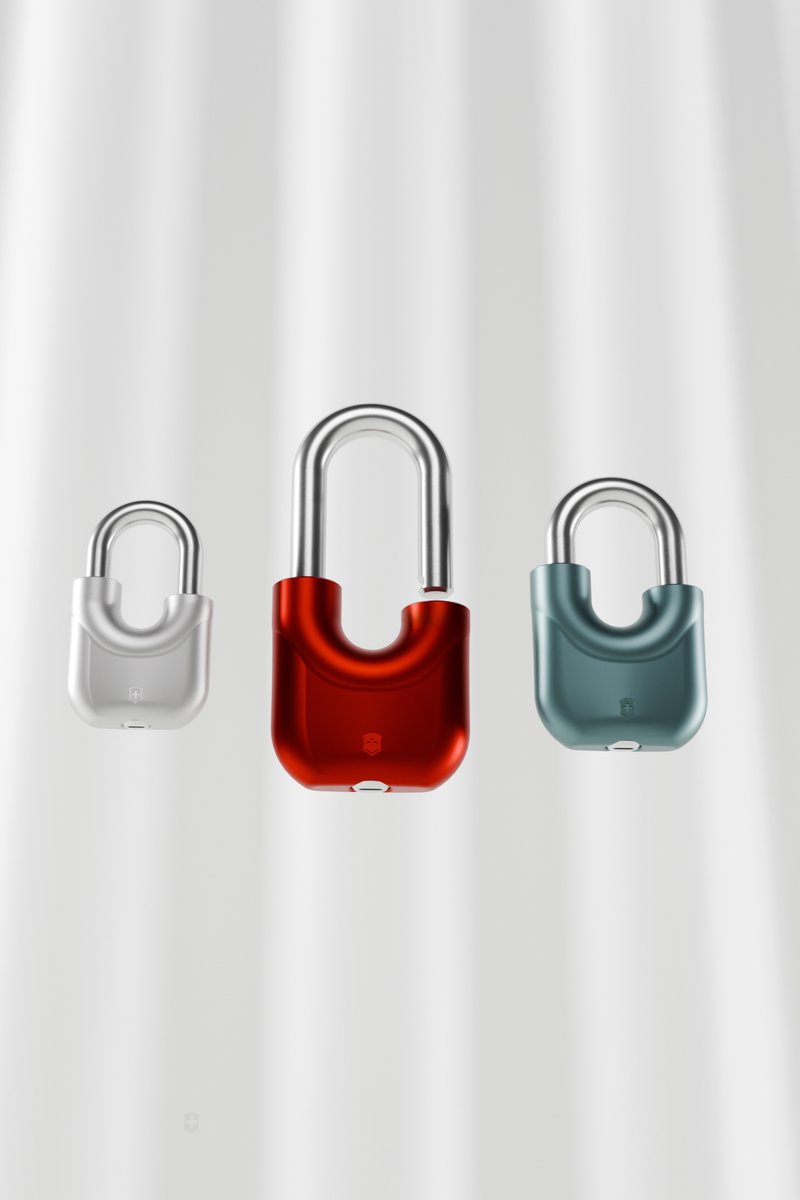
UKS (Urban Keep Safe) is an urban storage system designed for municipalities and event organisers. Conceived for temporary deployments, festivals, marathons or seasonal installations, it offers a simple infrastructure for users to secure their personal belongings. The flexible bags rely on a stainless steel mesh combined with water-resistant fabric to offer a lighter and more compact solution to traditional lockers, while remaining weather-resistant and theft-deterrent. UKS fits on a standard pallet when disassembled, ready to be stored away and redeployed the following next big event.

Mélissa Da Silva Nicolet – No Wings

BA INDUSTRIAL DESIGN

Mélissa Da Silva Nicolet – No Wings

by Mélissa Da Silva Nicolet

There is someone who lives alone and wants to be a bird. We don't know why they stopped going out. We don't know why they decided to become a bird. It happened gradually. The apartment transforms in silence, in a quiet and luminous strangeness. From this script, three objects were designed, each tied to a scene from this character's daily life: a perch, a bathing object, and a sleep wrap. Each one answers a human need, translated through the logic of a bird's life. The project takes the form of a set built around these objects, an atmosphere, a fragment of the life of someone who chose, in their own way, to live differently.

Matheo Dusong – NEX-1

BA INDUSTRIAL DESIGN

Matheo Dusong – NEX-1

by Matheo Dusong

What happens to a desktop computer when not in use? In the era of remote work, this question hits close to home. Designed for those working from home, the computer often remains as an intrusive black rectangle in our living space once the workday is over. NEX-1 offers an alternative: a computer with a flexible screen that rolls into its base. Moving from a work tool to a discreet piece of furniture, it clears the visual space and helps separate personal and professional life. By redefining this typology, and while AI infiltrates every smart home device, NEX-1 chooses the opposite approach: an advanced technology capable of disappearing from our daily lives.

Related courses