The Theory of

The Theory of

The students were presented with subject matter that at one point or another has been characterised as pseudoscience by academics or researchers. These characterisations were made in the context of educating the public about questionable or potentially fraudulent claims and practices–efforts to define the nature of science, or humorous parodies of poor scientific reasoning. The majority of the ideas are unrealistic, and fanatical. Criticism of pseudoscience, generally by the scientific community or skeptical organisations, involves critiques of the logical, methodological, or rhetorical bases of the topic in question. Though some of the ideas continue to be investigated scientifically, others were only subject to scientific research in the past and today are considered refuted but resurrected in a pseudoscientific fashion, such as the world is flat. Other ideas presented here are entirely non-scientific, but have Ibn one way or another infringed on scientific domains or practices.

Workshop (2016)

The students were presented with subject matter that at one point or another has been characterised as pseudoscience by academics or researchers. These characterisations were made in the context of educating the public about questionable or potentially fraudulent claims and practices–efforts to define the nature of science, or humorous parodies of poor scientific reasoning. The majority of the ideas are unrealistic, and fanatical. Criticism of pseudoscience, generally by the scientific community or skeptical organisations, involves critiques of the logical, methodological, or rhetorical bases of the topic in question. Though some of the ideas continue to be investigated scientifically, others were only subject to scientific research in the past and today are considered refuted but resurrected in a pseudoscientific fashion, such as the world is flat. Other ideas presented here are entirely non-scientific, but have Ibn one way or another infringed on scientific domains or practices.

1/7

Projets similaires

Design Typographique BA2 – S1 2025

BA DESIGN GRAPHIQUE

Design Typographique BA2 – S1 2025

with Aurèle Sack

Les élèves de deuxième année ont du développer à la main, les minuscules de deux police de caractère. 

Identité Visuelle – BA2 S1 2025

BA DESIGN GRAPHIQUE

Identité Visuelle – BA2 S1 2025

with Adeline Mollard

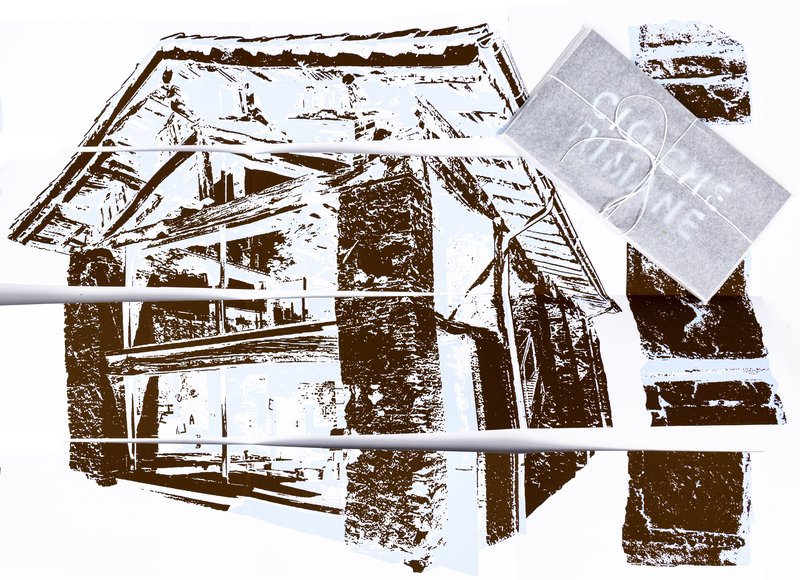
Dans le cadre du cours d’identité visuelle avec Adeline Mollard, les étudiant·e·s ont développé une identité visuelle à partir d’une carte de visite tirée au hasard. En s’appropriant un élément graphique et son intitulé, chaque projet propose une interprétation singulière de celle-ci. L’identité est déclinée sur une série de supports, de la carte de visite au format F4, comprenant affiches, flyers, cartes de visite ainsi qu’une affiche animée. 

Design éditorial – BA2 S1 2025

BA DESIGN GRAPHIQUE

Design éditorial – BA2 S1 2025

with Diego Bontognali

Dans le cadre de ce cours de design éditorial, les étudiant·e·s ont développé un travail de recherche et de mise en forme de textes autour d’un thème commun. À partir d’une sélection de sources, chaque projet propose deux éditions au contenu identique, déclinées dans un grand et un petit format.

Design en contexte – BA2 S1 2025

BA DESIGN GRAPHIQUE

Design en contexte – BA2 S1 2025

with Nicole Udry

Genius Loci, “l’esprit du lieu”, désigne l’identité spécifique d’un lieu, son essence. En architecture, selon ce principe, les caractéristiques uniques d’un lieu sont prolongées dans une réalisation. Les élèves de 2ème année en Design graphique ont travaillé sur une communication basée sur ce principe et sur la réalisation architecturale qui s’y réfère afin d’en faire la promotion, ou de prolonger la communication du lieu.

WORK AND TURN W/ GEOFF HAN

BA DESIGN GRAPHIQUE

WORK AND TURN W/ GEOFF HAN

by Leandra Adler, Cansu Celen, Layana Comte, Anaïs Dermont, Camille Genoud, Eve Gremaud, Eloïse Guillod, Mathis Harmant, Marie Hintzy, Matteo Lucca, Maxime Manera, Gaëtan Mauclair, Mathys Mauron, Emma Morisseau, Sara Pedersoli, Lucie Pittet, Hélène Prongué, Leonardo Mariucci, Alice Refachinho, Justine Renevey, Gaspard Schlatter, Laura Simons, Vu Toni Thien Duc, Maïa Yassin, Jonas Zesiger

En novembre 2025, 27 étudiant·e·s de l'ECAL ont participé au workshop Work and Turn, dirigé par Geoff Han, autour du thème du travail et du travail invisible au sein de l’école. Installée dans une ancienne usine de tricotage IRIL à Renens, l'ECAL occupe aujourd’hui un vaste bâtiment dont le fonctionnement quotidien repose sur de nombreuses formes de travail souvent peu visibles. Pendant cinq jours, les étudiant·e·s ont été réparti·e·s en équipes afin de produire une publication collective de 96 pages au format poche. Chaque duo a réalisé un essai visuel photographique de 8 pages explorant une dimension du travail à l'ECAL, non pas à travers des portraits traditionnels, mais en cherchant des manières plus poétiques et indirectes de révéler les traces du travail, des gestes et des infrastructures. L’ensemble de la publication a été imprimé manuellement sur presse offset par les étudiant·e·s eux-mêmes, en noir ou en rouge et noir. Le processus d’impression faisait partie intégrante du workshop : les participant·e·s ont préparé les plaques, réglé la machine et imprimé les pages. Cette dimension matérielle et collective de la production constituait ainsi une part essentielle du projet, en écho au thème du travail exploré dans le livre.  

Formations liées